

TL;DR:
- Spanish meal times are later than most Western countries, with the main meal in the early afternoon and dinner beginning around 21:00 or later. Engaging in sobremesa, the act of lingering at the table to converse after a meal, is highly valued and fosters genuine relationships in Spain. Greetings typically involve two cheek kisses starting with the right cheek, and adapting to local customs enhances social integration quickly.
Spanish cultural habits are the social practices and unwritten rules that shape daily life, relationships, and belonging in Spain. For English speakers living in or visiting the country, understanding this list of Spanish cultural customs is the difference between feeling like a permanent outsider and genuinely connecting with the people around you. The must-know Spanish cultural habits covered here include meal timing, the art of sobremesa, physical greetings, weekend rhythms, and the social norms that Spaniards absorb from childhood. Get these right, and Spain opens up in ways that no guidebook photograph can capture.
1. Must-know Spanish cultural habits start with meal timing
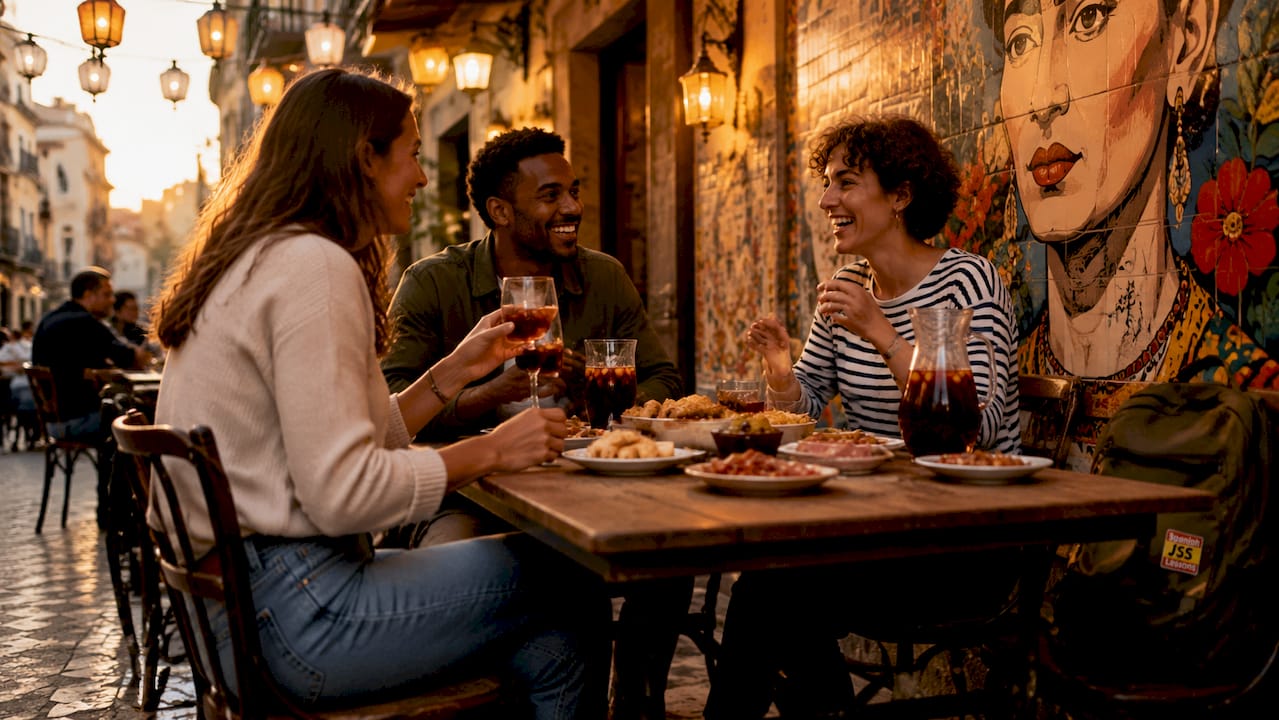
Spanish meal timing is shifted later than almost anywhere else in Western Europe, and it structures the entire day. Lunch, known as la comida, runs from roughly 14:00 to 15:30 and is the main meal of the day, not dinner. Dinner rarely starts before 21:00, and in Madrid or southern Spain, 21:30 is perfectly normal.
Between those two meals sits the merienda, a light afternoon snack taken between 17:30 and 19:00. It exists precisely because the gap between a 14:30 lunch and a 21:30 dinner would otherwise be punishing. A coffee and a pastry at a local bar is the classic form.
Why does this matter for integration? Because if you schedule a dinner invitation for 19:00, your Spanish neighbours will either arrive confused or quietly assume you have not quite settled in yet. Adapting your own eating schedule, even partially, signals respect and makes shared meals far more natural.
- Lunch is the main meal: plan your heaviest eating for early afternoon
- Dinner before 21:00 is considered early; 21:30 to 22:00 is the social norm
- Merienda at a local bar is an easy, low-pressure way to build neighbourhood connections
Pro Tip: Use the merienda as your adjustment tool. Shift your afternoon snack to 18:00 and your body clock will adapt to late dinners within a fortnight without the hunger pangs.
2. Sobremesa: the social habit that defines Spanish relationships
Sobremesa is the practice of lingering at the table after a meal, talking, laughing, and simply being present with the people you have just eaten with. There is no direct English translation, which tells you something about how differently Spain and the UK approach shared time. On weekdays, sobremesa typically lasts around 45 minutes. On weekends, it can stretch well beyond two hours.
The habit reflects a clear social value: relationships take priority over schedules. Rushing away from the table signals that you have somewhere more important to be, which reads as dismissive rather than efficient. Ordering the bill immediately after dessert is considered impolite if the group is still mid-conversation. The correct move is to wait until the conversation naturally winds down.
Sobremesa is not wasted time. It is the point of the meal.
For newcomers, sobremesa is one of the most rewarding habits to adopt. It is where real friendships form, where neighbours become friends, and where you hear the kind of local knowledge no app will give you.
- Stay at the table after eating, even if you have finished your coffee
- Contribute to the conversation rather than checking your phone
- Let the host or the group signal when the gathering is ending
Pro Tip: Learn a handful of conversational phrases before your first Spanish dinner invitation. Jamesspanishschool covers exactly this kind of polite everyday Spanish so you can hold your own during sobremesa without freezing up.
3. Greeting customs: cheeks, handshakes, and reading the room
Spanish greetings use two cheek kisses in casual and social settings, starting with the right cheek. This applies between women and between men and women. Men greeting men typically use a firm handshake, though close male friends often add a brief embrace. In formal or business contexts, a handshake is standard for everyone.
The physical closeness of Spanish greetings surprises many British and American visitors. Standing at arm’s length while offering a hand can come across as cold or unfriendly, even when that is the last thing you intend. The two-kiss greeting communicates warmth and acceptance, and refusing or fumbling it awkwardly can create an unintended distance.
If you are unsure which greeting to use, the simplest approach is to pause briefly and follow the other person’s lead. Spaniards are generally forgiving of foreigners who try, even imperfectly. The effort itself signals goodwill.
- Right cheek first, always, in a two-kiss greeting
- Handshakes are for formal settings and first business meetings
- When in doubt, mirror what the other person initiates
- Do not pull back or stiffen; lean in naturally and make brief eye contact
Understanding Spanish greeting customs is one of the fastest ways to shift from being treated as a tourist to being treated as a neighbour.
4. Sunday culture: family, rest, and closed shops
Sunday in Spain is family-centred, and the rhythm of the day reflects that clearly. Most retail shops are closed. Supermarkets in smaller towns often shut entirely. The streets that were busy on Saturday afternoon take on a quieter, more domestic character by Sunday morning.
The practical implication is straightforward: do your shopping on Saturday. The exception is the farmacia de guardia, the duty pharmacy, which operates on a rota system to cover emergencies. Some museums also open free of charge on Sunday afternoons, making them worth planning around.
| Sunday activity | What to expect |
|---|---|
| Retail shopping | Most shops closed; plan ahead on Saturday |
| Pharmacies | Duty pharmacy (farmacia de guardia) open on rota |
| Museums | Many offer free Sunday afternoon entry |
| Restaurants | Busy from 14:00 for the family Sunday lunch |
| Rastros (flea markets) | Open Sunday mornings in many towns and cities |
The Sunday family lunch is the social anchor of the week for many Spanish households. Extended families gather, the meal runs long, and sobremesa follows. If you are invited to a Spanish family’s Sunday lunch, treat it as a significant gesture of inclusion.
5. Tipping: modest, discretionary, and never obligatory
Tipping in Spain is not mandatory, and service charges are included in restaurant prices by law. Leaving no tip at a bar or café is entirely normal and carries no social stigma. This is a meaningful difference from the United States or the UK, where not tipping can feel like a statement.
When the service has been genuinely good at a restaurant, a tip of 5 to 10% is appreciated but not expected. At bars, rounding up the bill or leaving small coins is the common practice. Taxi drivers are similarly happy with a round-up rather than a percentage calculation.
Understanding that service is included removes a layer of social anxiety that many British expats carry from home. You are not being rude by not tipping; you are simply following local norms. Over-tipping can occasionally read as performative rather than generous.
6. Noise, queues, and conversational style
Spanish social interaction is louder and physically closer than most Northern European norms. A bar in Seville or Valencia at lunchtime sounds chaotic to a newly arrived British visitor. It is not an argument; it is Tuesday. Animated, overlapping conversation is a sign of engagement, not aggression.
Queue behaviour also differs. In Spain, making eye contact and establishing your presence is how you signal your place in an informal queue, particularly at market stalls or deli counters. The British habit of standing silently at a distance and waiting to be noticed does not translate well. Step forward, make eye contact, and say “¿Quién es el último?” (who is last?) to establish your position politely.
Punctuality for social gatherings is flexible. Arriving 15 to 30 minutes late to a dinner or party is entirely normal and not considered rude. Arriving exactly on time can occasionally catch a host still preparing. This does not apply to medical appointments, official meetings, or transport.
Pro Tip: Local bars function as semi-public living rooms. Becoming a regular at one neighbourhood bar builds social credibility faster than any other single habit. The staff will remember your order, introduce you to regulars, and give you a window into the community that no language course alone can provide.
| Behaviour | UK norm | Spanish norm |
|---|---|---|
| Conversation volume | Moderate, contained | Loud, expressive, overlapping |
| Queue etiquette | Silent, orderly line | Eye contact, verbal check-in |
| Social punctuality | On time or slightly early | 15 to 30 minutes late is standard |
| Tipping | 10 to 15% expected | Optional; rounding up is sufficient |
Key takeaways
Mastering Spanish cultural habits requires adapting to late meal times, embracing physical warmth in greetings, respecting sobremesa, and understanding that Sunday and social punctuality follow entirely different rules from the UK.
| Point | Details |
|---|---|
| Meal timing | Lunch at 14:00 to 15:30 is the main meal; dinner starts at 21:00 or later. |
| Sobremesa | Lingering after meals for 45 minutes to two hours is expected and socially valued. |
| Greetings | Two cheek kisses, right cheek first, are standard in casual social settings. |
| Sunday rhythm | Most shops close; plan errands on Saturday and expect family-centred leisure. |
| Tipping and noise | Tips are optional; animated conversation and informal queues are normal social behaviour. |
Forty years of watching people get this wrong
I have lived in Spain for four decades, and the pattern I see most often among newly arrived English speakers is the same one repeated endlessly. They arrive with good intentions, they are polite and friendly, and then they wonder why genuine friendships take so long to form. Almost always, the gap is not language. It is timing and presence.
The people who integrate fastest are not necessarily the ones with the best Spanish. They are the ones who show up at the right time, stay at the table long enough, and treat a Sunday lunch invitation as the serious social gesture it is. I have watched fluent Spanish speakers remain on the periphery of local life because they kept eating at 19:00 and leaving restaurants the moment the bill arrived.
The sobremesa habit is the one I would press hardest. It feels unproductive to a Northern European mind. You have eaten, the food is gone, why are you still sitting there? But that is precisely the point. The conversation after the meal is where trust is built. It is where you stop being the English neighbour and start being a friend.
Greetings matter more than most people expect too. A confident, warm two-kiss greeting tells a Spaniard something about you immediately. It says you have made the effort to understand how things work here. That small signal opens doors that a handshake from a distance quietly closes.
If you want to go deeper on authentic Spanish culture beyond the surface habits, the understanding is richer than most visitors ever reach.
— James
Learn the language that brings these habits to life
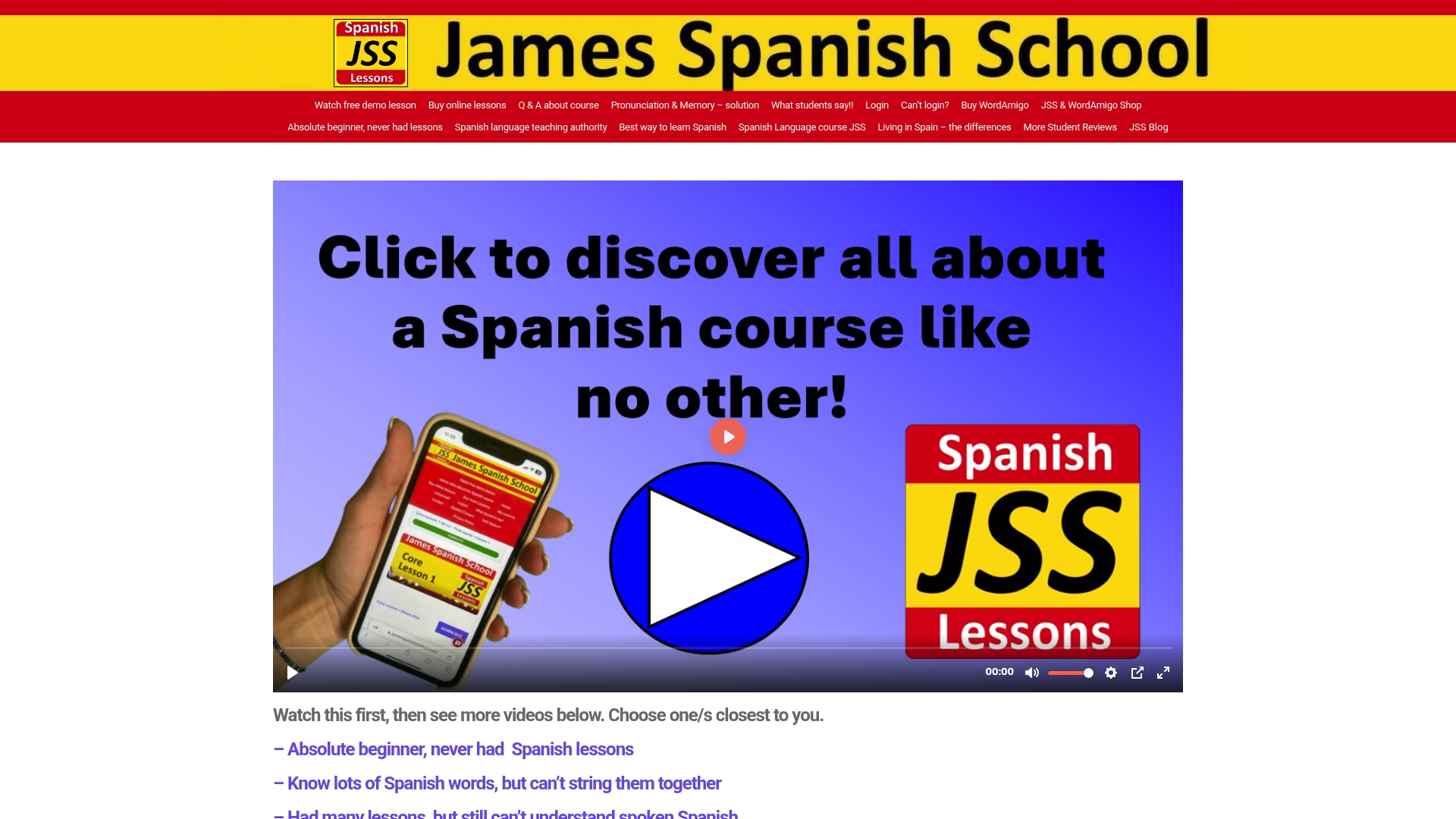
Understanding Spanish cultural habits is one half of the equation. The other half is having the language to participate in them. James Spanish School was built specifically for English-speaking adults living in or moving to Spain, with 100 on-demand lessons covering real conversations with neighbours, tradespeople, health workers, and local officials. The WordAmigo system permanently embeds vocabulary and pronunciation using a five-step retention loop, so the words you need for sobremesa, greetings, and bar conversations actually stay in memory. Explore the full course at Jamesspanishschool and start speaking the Spain you are living in.
FAQ
What time do Spanish people typically eat dinner?
Dinner in Spain starts at 21:00 or later, with 21:30 being common in Madrid and southern regions. This is significantly later than UK or US norms and reflects the structure of the Spanish day around a substantial midday lunch.
What is sobremesa in Spanish culture?
Sobremesa is the practice of remaining at the table after a meal to talk and socialise. It typically lasts around 45 minutes on weekdays and over two hours on weekends, and leaving early is considered impolite.
Are two cheek kisses always expected in Spain?
Two cheek kisses are standard in casual and social settings, starting with the right cheek. Handshakes are used in formal or business contexts. When uncertain, follow the other person’s lead rather than initiating.
Is it rude not to tip in Spain?
No. Tipping is discretionary in Spain and service is included in restaurant prices. Leaving no tip at a bar or café carries no social stigma; rounding up is the most common form of appreciation.
Why are most shops closed on Sundays in Spain?
Sunday is reserved for family time and rest in Spanish culture. Most retail shops close, though duty pharmacies (farmacias de guardia) operate on a rota, and many museums offer free entry on Sunday afternoons.