

TL;DR:
- Knowing basic polite phrases and cultural norms helps English speakers communicate effectively with Spanish tradesmen.
- Using WhatsApp for scheduling, problem descriptions, and written confirmations strengthens trust and clarity.
Knowing how to chat with Spanish tradesmen is the single most practical skill an English speaker in Spain can develop for home life. The formal term is professional Spanish communication, but what matters on the ground is simpler: a handful of polite phrases, a grasp of cultural expectations, and the right tools. Platforms like Habitissimo connect homeowners with verified local professionals, yet even there, the real relationship begins the moment you open your mouth or send that first WhatsApp message. James Spanish School was built precisely for situations like this.
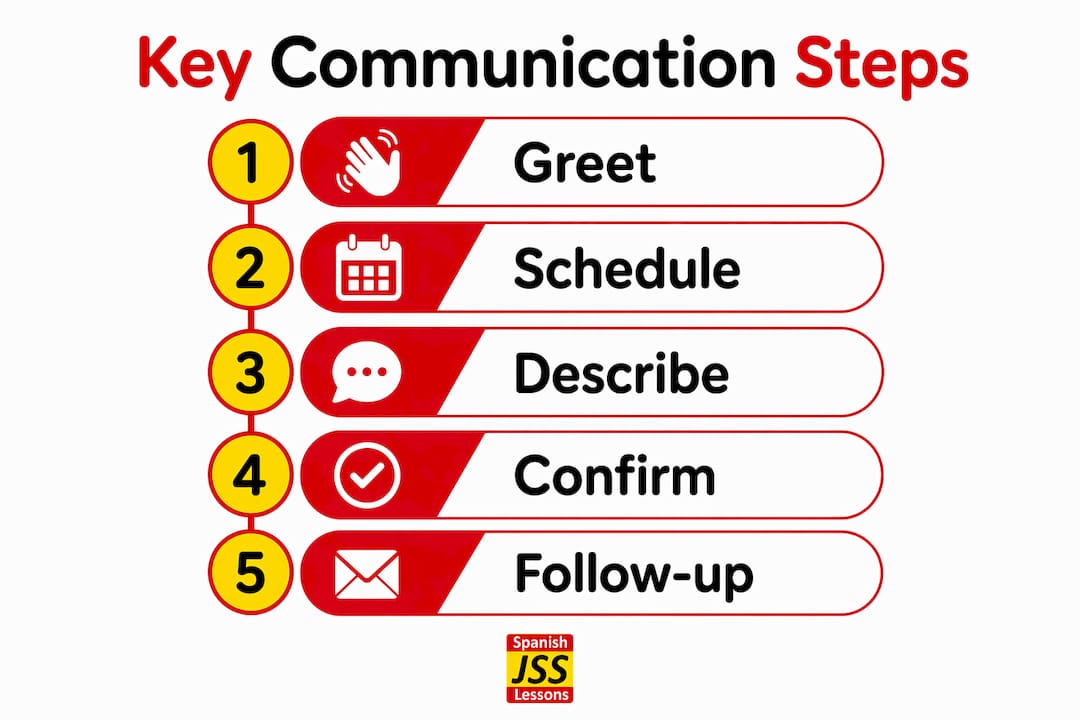
How to chat with Spanish tradesmen: scheduling and first contact
The first conversation sets the tone for everything that follows. Polite, specific phrases like “Necesito agendar una cita” (I need to book an appointment) and “Por favor” (please) signal respect immediately and put the tradesman at ease.
Asking about availability is equally direct. “¿Cuándo está disponible?” means “When are you available?” and works perfectly by phone or WhatsApp. Keep your sentences short. Tradesmen are busy, and a clear, brief message gets a faster reply than a long, complicated one.
Cost is the other priority to address before anyone arrives at your door. Tradespeople often charge a service call fee, so asking “¿Cuál es el coste de la visita?” (What is the cost of the call-out?) before they travel saves both sides from an awkward conversation later. Confirming the fee in writing via WhatsApp creates a record you can refer back to.
The table below gives you a ready reference for the most common scheduling phrases.
| Spanish phrase | English meaning |
|---|---|
| Necesito agendar una cita | I need to book an appointment |
| ¿Cuándo está disponible? | When are you available? |
| ¿Cuál es el coste de la visita? | What is the call-out charge? |
| Por favor, confírmeme la hora | Please confirm the time for me |
| ¿Puede venir esta semana? | Can you come this week? |
| Le espero a las diez | I will expect you at ten o’clock |
Pro Tip: Always confirm the appointment time and the call-out cost in writing via WhatsApp before the tradesman travels. A short voice note or text message creates a clear record and removes any room for misunderstanding.
How do you describe a problem to a Spanish tradesman?
Describing what has gone wrong is where many English speakers in Spain lose confidence. The good news is that you do not need complex grammar. A simple structure works every time: “El problema es que…” (The problem is that…) followed by a short description.
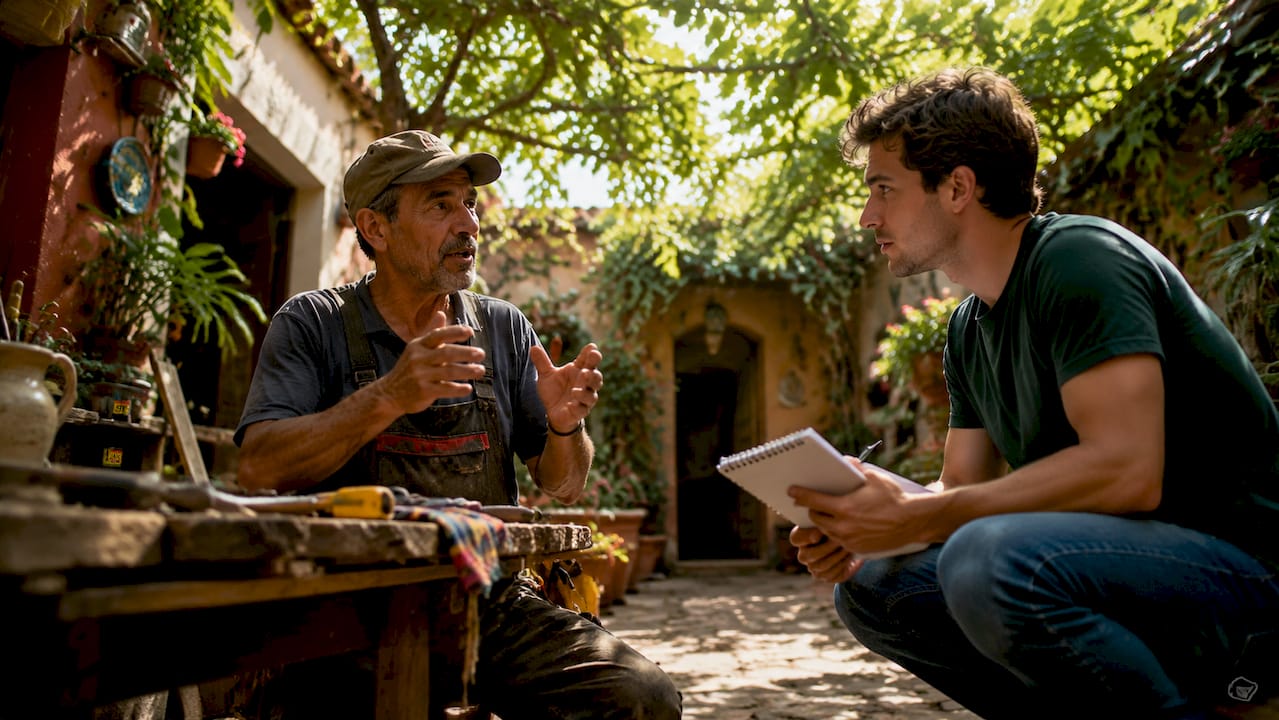
For things that have stopped working entirely, “No funciona” (It does not work) covers a wide range of situations, from a broken boiler to a faulty light switch. Pair it with a location and you have a complete sentence: “La caldera no funciona” (The boiler does not work). Open-ended questions like “¿Cuál es el problema exacto?” (What exactly is the problem?) also show the tradesman you want to understand their assessment, not just nod along.
Once the tradesman starts explaining, active listening matters as much as speaking. Phrases like “Entiendo” (I understand) and “¿Puede repetirlo más despacio, por favor?” (Can you repeat that more slowly, please?) keep the dialogue moving without embarrassment.
Here are the most useful phrases for describing problems, discussing scope, and agreeing timelines:
Describing the problem:
- “El problema es que…” (The problem is that…)
- “No funciona” (It does not work)
- “Hay una fuga” (There is a leak)
- “Está roto” (It is broken)
Understanding the scope of work:
- “¿Qué incluye el trabajo?” (What does the work include?)
- “¿Necesita materiales nuevos?” (Do you need new materials?)
- “¿Cuánto tiempo llevará?” (How long will it take?)
Agreeing on timing:
- “¿Cuándo puede empezar?” (When can you start?)
- “¿Cuándo estará terminado?” (When will it be finished?)
- “¿Puede darme un presupuesto por escrito?” (Can you give me a written quote?)
Asking for a written quote, “un presupuesto por escrito,” is standard practice in Spain and no tradesman will be offended by the request. Clear communication with tradespeople improves cost control and professional trust well beyond basic language fluency. That means a written quote protects you both.
You can build confidence with these structures through practical speaking situations designed specifically for real-life interactions in Spain.
What cultural etiquette helps when dealing with Spanish tradespeople?
Cultural knowledge is as important as vocabulary when you communicate with Spanish workers. Maintaining a warm, friendly, and respectful tone with tradespeople is equally important as language proficiency for getting good results. A cold or impatient manner, even in perfect Spanish, closes doors.
Start every interaction with a proper greeting. “Buenos días” (Good morning) or “Buenas tardes” (Good afternoon) costs nothing and signals that you respect the person in front of you. Spanish professional culture values this formality at the start of a conversation, even a brief one.
Offering hospitality such as coffee or water during a workday is a valued cultural gesture that builds rapport and encourages tradesmen to prioritise your calls in future. This is not about bribery. It is about fitting into the social fabric of how work relationships function in Spain. A tradesman who feels welcomed will return your call faster next time.
WhatsApp dominates professional communication in Spain’s trades sector. Tradespeople use it for scheduling, sending photos of problems, voice notes, and even invoices as PDFs. If you are not already comfortable using WhatsApp for voice notes, practise now. Sending a short voice note in Spanish is often faster and clearer than typing, and most tradesmen prefer it.
Pro Tip: Send a photo of the problem via WhatsApp before the tradesman arrives. It saves time, helps them bring the right parts, and shows you are organised. A prepared client is a valued client.
Finding a good tradesman in the first place also relies on cultural understanding. Word of mouth, known in Spain as el boca a boca, remains the most reliable way to find reputable tradespeople through social connections. Ask neighbours, friends, or your local expat community before turning to cold online searches. A personal recommendation carries far more weight than an anonymous online listing. You can read more about Spanish cultural habits for expats to build a fuller picture of how these social norms work day to day.
For a broader grounding in professional etiquette, Spanish business etiquette guidance offers useful context on polite language and cultural expectations in professional conversations.
What common mistakes should you avoid with Spanish tradesmen?
The most common mistake English speakers make is assuming the tradesman understands English. Many tradesmen in Spain, particularly outside tourist areas, work entirely in Spanish. Assuming comprehension without checking leads to misquoted jobs, wrong materials, and missed appointments.
The second mistake is using complicated language. Long sentences with multiple clauses are hard to follow even for a native speaker under pressure. Keep every sentence to one idea. “La tubería está rota” (The pipe is broken) is better than a long explanation involving past events and future concerns all at once.
Here are the most practical tips for avoiding communication breakdowns:
- Confirm everything twice. Repeat back what you have understood: “Entonces, viene el martes a las nueve, ¿verdad?” (So, you are coming Tuesday at nine, correct?)
- Use photos. A photo sent via WhatsApp removes ambiguity about the location or nature of a problem faster than any phrase.
- Speak slowly and clearly. Tradesmen will appreciate the effort and will usually slow down in return.
- Ask for clarification politely. “No entiendo bien, ¿puede explicarlo de otra manera?” (I do not understand well, can you explain it another way?) is a phrase worth memorising.
- Write key details down. After a verbal agreement, send a WhatsApp summary: date, time, job description, and agreed price.
Well-established communication promotes efficiency, trust, and safety, reducing costs and delays in repair work. That principle applies whether you are managing a full renovation or fixing a leaking tap. The tradesman who trusts you communicates more openly, flags problems earlier, and is more likely to return your call promptly.
Building your ear for fast spoken Spanish is the other side of this coin. Tradesmen speak at full speed, using regional vocabulary and trade slang. Conversational Spanish confidence comes from practising real speech patterns, not just reading phrase lists.
Key takeaways
Effective communication with Spanish tradesmen requires simple, polite Spanish phrases, WhatsApp fluency, and cultural warmth in equal measure.
| Point | Details |
|---|---|
| Start with polite phrases | Use “Por favor” and “Buenos días” to set a respectful tone from the first contact. |
| Confirm costs before arrival | Ask “¿Cuál es el costo de la visita?” to avoid unexpected call-out charges. |
| Use WhatsApp for everything | Send photos, voice notes, and written confirmations to create a clear record of all agreements. |
| Offer hospitality on site | Coffee or water builds rapport and encourages tradesmen to prioritise your future calls. |
| Find tradesmen via el boca a boca | Personal recommendations from neighbours and expat networks are more reliable than cold online searches. |
Building your Spanish for real home life in Spain
Phrase lists get you started. Real confidence comes from understanding what the tradesman says back to you, at full speed, in a regional accent, using trade vocabulary you have never seen in a textbook.
James Spanish School was built for exactly this situation. The 100-lesson course uses Radical Simplification to teach Spanish structure through plain English, with dedicated “ear-tuning” lessons that train you to follow fast native speech. The WordAmigo system embeds vocabulary and pronunciation through a five-step retention loop, so the phrases you learn this week are still there when you need them in three months. You can browse the full course range at James Spanish School and find the option that fits your schedule and starting level.
FAQ
What are the most useful Spanish phrases for tradesmen?
The most useful phrases cover four areas: booking (“Necesito agendar una cita”), describing problems (“El problema es que… / No funciona”), asking about cost (“¿Cuál es el coste de la visita?”), and confirming details (“¿Puede darme un presupuesto por escrito?”). These cover the majority of real interactions.
Is WhatsApp really used for professional trades communication in Spain?
WhatsApp is the primary business tool for tradespeople in Spain, used for scheduling, sending photos, voice notes, and invoices as PDFs. Knowing how to send a voice note or photo via WhatsApp is as practical as knowing the phrases themselves.
How do I find a trustworthy tradesman in Spain?
Word of mouth, el boca a boca, is the most reliable method. Ask neighbours, local friends, or your expat community for personal recommendations before using online directories. Platforms like Habitissimo also provide client ratings for verified professionals.
What cultural gestures help when speaking with Spanish tradespeople?
Offering coffee or water during a workday is a valued cultural gesture that builds rapport and encourages tradesmen to prioritise your future calls. A warm greeting at the start of every visit costs nothing and makes a real difference.
What should I do if I do not understand what the tradesman says?
Ask politely: “No entiendo bien, ¿puede explicarlo de otra manera?” (I do not understand well, can you explain it another way?). Most tradesmen will slow down and simplify. Sending a WhatsApp summary of what you understood afterwards confirms the agreement in writing.