

Spanish speaking situations list
TL;DR:
- Focus on high-frequency, practical scenarios like ordering, directions, and shopping for real fluency.
- Practice actively through shadowing, role-play, and recording to build confidence under real-world conditions.
- Scenario-based learning creates better memory retention and adaptability than abstract studying.
Knowing which Spanish situations to practise first is genuinely one of the hardest decisions a language learner faces. Spend too long drilling abstract vocabulary lists, and you will still freeze when the café waiter rattles off the day’s specials at full speed. Focus on the wrong scenarios, and progress feels painfully slow. What actually works is narrowing your attention to the specific, high-frequency moments that come up again and again in real Spanish life. This article gives you a clear, structured list of those situations, explains how to choose them wisely, and shows you practical ways to turn practice into genuine confidence.
Table of Contents
- How to choose the Spanish situations that maximise your learning
- Top everyday Spanish speaking situations to master
- Comparison: Spanish scenarios for different levels and needs
- Practical methods to practise Spanish situations for real progress
- Why scenario-based Spanish learning outperforms generic study
- Take your Spanish conversations further with guided resources
- Frequently asked questions
Key Takeaways
| Point | Details |
|---|---|
| Prioritise real-life scenarios | Focus on everyday Spanish situations you are most likely to encounter to build confidence faster. |
| Practise actively | Use techniques like role-play, shadowing, and recording your voice for better fluency and recall. |
| Adapt to your level | Select scenarios that match your stage and gradually progress to more complex contexts. |
| Use connectors | Incorporating words like ‘y’ and ‘pero’ makes your Spanish sound more natural and coherent. |
| Personalise your practice | Tailor your Spanish speaking situations to your own needs, plans, and interests for better engagement. |
How to choose the Spanish situations that maximise your learning
Having set the foundation, let’s look at how to identify the most powerful situations to practise.
Not all Spanish scenarios are created equal. Memorising the vocabulary for a formal business presentation may feel impressive, but if you live in or visit Spain, you are far more likely to need the language for buying bread, calling a plumber, or explaining a symptom to a pharmacist. The golden rule is simple: practise what you will actually use.
There are three clear criteria for choosing the right situations:
- Frequency. How often will you genuinely encounter this scenario in daily Spanish life? Ordering at a bar, asking for directions, and chatting with a neighbour are daily events for expats and visitors alike.
- Relevance to your life stage. A retiree moving to the Costa Blanca needs different vocabulary from a backpacker passing through Seville. Choose situations that reflect your real circumstances.
- Real-world payoff. Will getting this right reduce stress, build goodwill with locals, or solve a practical problem? If yes, it belongs at the top of your list.
Once you have chosen your priority situations, the method matters enormously. Building real skills for everyday fluency means going beyond passive reading and actually producing Spanish out loud. Real-life conversation criteria always involve spontaneous response, not scripted recitation.
The most effective active techniques include shadowing native dialogues, recreating conversations from memory, recording yourself and listening back critically, and using connectors. Connectors are small linking words such as y (and), pero (but), and también (also). As research on dialogue practice confirms, using connectors gives your speech natural cohesion and makes you sound far less robotic. Most learners skip this step entirely, which is why their Spanish sounds stilted even when their vocabulary is solid.
Pro Tip: Before each practice session, write down the three phrases you most expect to need in your target scenario. Say them aloud ten times each. This primes your brain to retrieve them automatically when you need them under pressure.
Top everyday Spanish speaking situations to master
Now that you know how to choose, here’s a list of the most practical Spanish speaking situations for everyday life.
Real-life fluency is built situation by situation. The scenarios below cover the conversations that actually arise for English-speaking adults living in or travelling to Spain. Basic Spanish conversation steps are best learned in context, not in isolation.
Research backs up this focused approach. Five key conversation scenarios identified for practical learners include visiting a restaurant, speaking to a doctor, booking a hotel, asking for directions, and handling a job interview. Meanwhile, a widely shared list of thirty beginner scenarios includes everyday moments such as ordering coffee, asking for the bill, buying groceries, and introducing yourself to neighbours.
Here are the most essential situations to master, along with example phrases to get you started:
- Ordering at a café or bar. “Un café con leche, por favor” (A white coffee, please). Learn to ask for the bill: “¿Me das la cuenta?”
- Asking for directions. “¿Dónde está la farmacia más cercana?” (Where is the nearest chemist?)
- Shopping at a market or supermarket. “¿Cuánto cuesta esto?” (How much does this cost?) and “¿Tienes algo más barato?” (Do you have anything cheaper?)
- At the doctor’s or pharmacy. “Me duele aquí” (It hurts here) and “¿Necesito receta?” (Do I need a prescription?)
- Booking accommodation. “Quiero reservar una habitación para dos noches” (I would like to book a room for two nights).
- Introducing yourself. “Me llamo…, soy inglés/a y vivo en…” (My name is…, I am English and I live in…)
- Making small talk with neighbours. Commenting on the weather, asking about local events, and thanking people are all essential social glue in Spanish culture.
The table below maps each scenario to its most useful features:
| Scenario | Key phrases | Why it matters |
|---|---|---|
| Café or bar | Ordering, asking for the bill | Daily interaction with locals |
| Directions | Asking and understanding answers | Reduces dependency on phone maps |
| Shopping | Prices, quantities, alternatives | Practical and confidence-building |
| Doctor or pharmacy | Symptoms, prescriptions, advice | Safety-critical in emergencies |
| Booking accommodation | Dates, room types, payment | Essential for independent travel |
| Introductions | Name, nationality, location | Social foundation with neighbours |
| Small talk | Weather, news, local life | Builds genuine relationships |
Mastering even three or four of these situations will transform the way you feel when you step into a Spanish-speaking environment. The key is to practise before you need them, so the words come naturally rather than in a panic.
Comparison: Spanish scenarios for different levels and needs
So, which situations should you focus on at your stage? Let’s compare options by level and value.
Different learning stages call for different priorities. A complete beginner needs scenarios with short, predictable exchanges and limited vocabulary. An intermediate learner can start handling unexpected responses. Someone at an advanced level can tackle nuanced conversations involving opinions, humour, and cultural references.
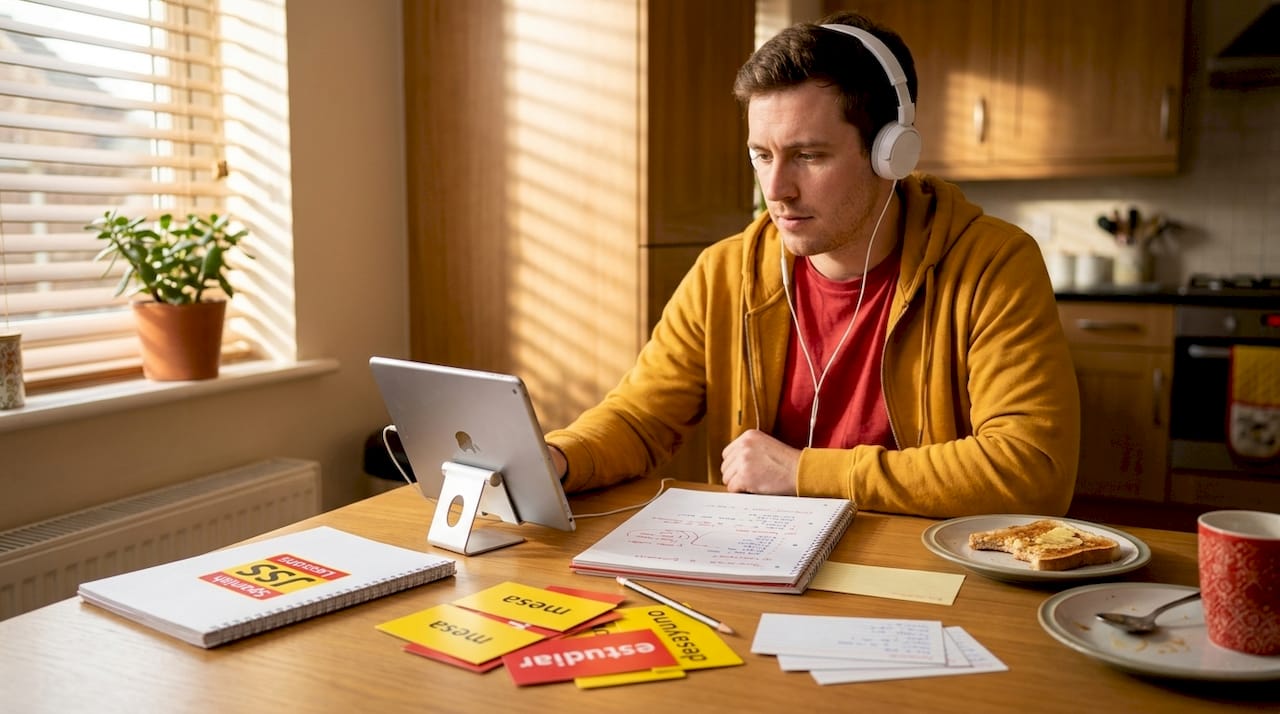
The thirty beginner conversation scenarios circulated widely among learners confirm that the most accessible starting points involve predictable, formulaic language. Ordering coffee follows the same pattern almost every time. That predictability is your friend at the beginning.
Here is a comparison of recommended priorities by level:
| Level | Top 3 priority scenarios | Why |
|---|---|---|
| Starter | Café orders, introductions, asking directions | Short, formulaic, high frequency |
| Intermediate | Shopping, doctor’s visit, booking services | Longer exchanges, some problem-solving |
| Advanced | Complaints, local bureaucracy, social debates | Spontaneous, culturally nuanced |
Breaking this down into numbered recommendations makes it easier to act on:
- Starters: Begin with café orders. The transaction is brief, the vocabulary is limited, and getting it right provides an immediate boost to confidence.
- Starters: Move on to basic introductions. You will use this almost every day as an expat or visitor, and it opens the door to deeper relationships.
- Starters: Practise asking for directions even if you use a map. Understanding the reply, which includes words like a la derecha (to the right) and todo recto (straight ahead), is a vital listening skill.
- Intermediate learners: Prioritise the doctor’s visit. This is emotionally high-stakes and vocabulary-specific. Practise it well before you need it.
- Intermediate learners: Work on difficulty and value for different levels by including service scenarios such as calling a tradesman or booking a car service.
- Advanced learners: Push yourself into civic and social situations: town hall enquiries, neighbourhood disputes, and conversations with local officials. This is where real integration happens.
Pro Tip: Record your practice runs at each level. Play them back a fortnight later. You will be genuinely surprised by how much your fluency and pronunciation have improved, and that progress is motivating.
Adapting scenarios to personal goals is equally important. If you are a keen cook, practising at a market or following a Spanish recipe aloud is highly relevant. If you have health concerns, the doctor and pharmacy scenarios deserve extra attention. Learning Spanish becomes far more enjoyable when your practice reflects your actual life.
Practical methods to practise Spanish situations for real progress
Choosing scenarios is only half the challenge; how you practise them is just as important.
Having a list of the right situations is valuable. But sitting and reading that list will not build fluency. You need active, production-focused practice that forces your brain to retrieve and use Spanish under mild pressure. The following methods are grounded in what actually works.
- Shadowing. Listen to a native Spanish dialogue and speak along with it, mirroring the rhythm, speed, and intonation as closely as possible. Do not worry about perfect understanding at first. The goal is to train your mouth and ear to work together at natural speed.
- Active recall. Read a short dialogue, close the script, and try to recreate it from memory. Write it down or say it aloud. This is far more powerful than re-reading, because retrieval strengthens memory.
- Role-play with a script. Create simple scripts for your target scenarios and act them out, either alone or with a partner. Vary the details each time so you are not simply reciting lines.
- Record and review. Record your role-play sessions on your phone and listen back. Pay attention to pronunciation, pacing, and whether you are using connectors naturally. Most learners find this uncomfortable at first, but it produces rapid improvement.
- Use connectors deliberately. As dialogue practice research shows, connectors such as y, pero, and también give your speech natural cohesion and help you link ideas rather than producing disconnected fragments.
The power of this kind of active practice is well documented:
“Practise via shadowing dialogues, active recall (recreate from memory), role-plays; record and review for pronunciation and fluency. Use connectors for cohesion.”
Explore these proven practice methods in more detail to build a structured routine around your chosen scenarios. Consistency matters more than session length. Twenty focused minutes daily will outperform a two-hour weekend session every time.
One more thing worth mentioning: do not wait until you feel “ready” before using your Spanish in real situations. Waiting for perfection is the single biggest reason adult learners stall. The mistakes you make in a real café will teach you more than ten hours of practice at home, because the emotional impact makes the lesson stick.
Why scenario-based Spanish learning outperforms generic study
With the methods and priorities clear, consider this perspective on why scenarios are the unbeatable route to fluency.
Here is an uncomfortable truth about language learning: most adults remember conversations, not grammar tables. Think back to a holiday abroad where something went memorably right or hilariously wrong. You remember the situation vividly, including the Spanish you used or fumbled over. You do not remember the verb conjugation chart you studied the night before.
This is not a coincidence. The brain encodes memory most effectively when there is emotional context, real stakes, and genuine need. Abstract study delivers none of those things. Scenario-based practice delivers all three. When you practise ordering at a café, you are not just drilling vocabulary. You are rehearsing a social interaction with a beginning, middle, and end. That narrative structure is far more memorable.
The other major advantage of scenario-based learning for fluency is that it builds tolerance for imperfection. Real conversations never go exactly as planned. A native speaker replies faster than expected, uses a regional expression, or asks a follow-up question you didn’t anticipate. Scenario practice builds the mental flexibility to handle these moments without falling apart.
Embrace the mistake. Every error made in a real context is a data point. It tells you exactly what to practise next. That is far more valuable than a textbook exercise you got right first time.
Take your Spanish conversations further with guided resources
To translate insight into everyday skills, explore these guided options designed for real-life situations.
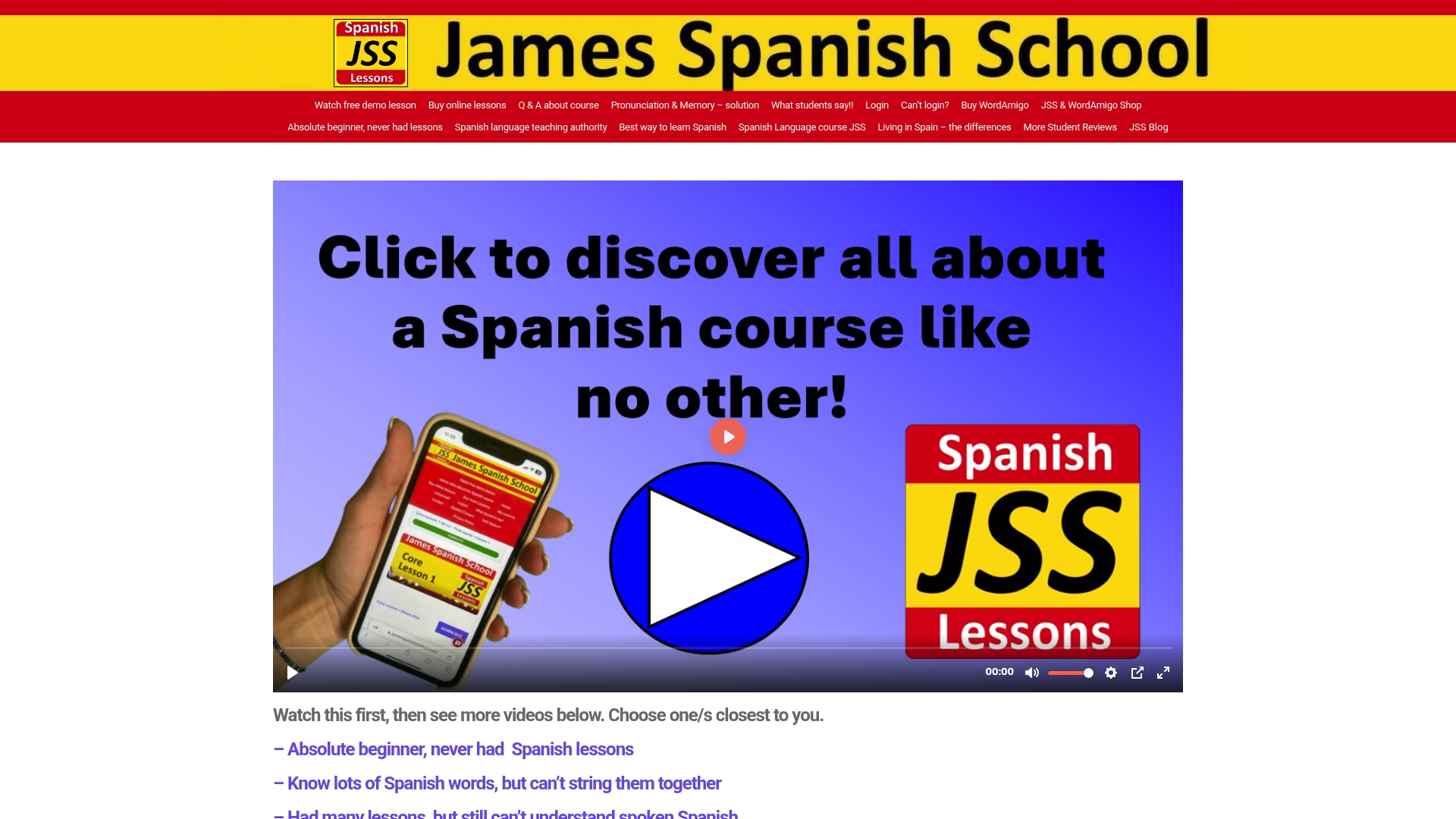
James Spanish School is built specifically for English-speaking adults who want to communicate in real Spain, not pass academic exams. The 100-lesson course covers exactly the kinds of scenarios covered in this article, from chatting with neighbours to handling health appointments and local bureaucracy. James’s method of Radical Simplification removes confusing grammar terminology and replaces it with plain English explanations that actually make sense. You can explore practical tips for Spanish fluency on the site, browse the Spanish learning shop for targeted resources, and work through Spanish verbs essentials at your own pace, on any device, with no countdown clock and no expiry date.
Frequently asked questions
What are the most common Spanish speaking situations for beginners?
The most common are ordering at a café, asking for directions, shopping, introducing yourself, and booking accommodation, all of which appear in key scenario lists for practical learners.
How can I practise real-life Spanish situations at home?
You can use shadowing, role-play, and recording to build fluency; record yourself speaking through each scenario and listen back to catch errors and track progress.
Which Spanish situations should I prioritise if I’m travelling to Spain?
Focus on ordering food, asking for directions, buying tickets, and medical scenarios; these thirty beginner scenarios cover the essential everyday moments you will encounter most frequently.
What’s the best way to remember useful Spanish phrases for specific situations?
Practise them actively in realistic role-play contexts, say them aloud repeatedly, and use connectors for cohesion such as y, pero, and también to string phrases together naturally.