James Spanish School

Categories
Insights

Examples of polite Spanish language for daily life


TL;DR:

  • Politeness in Spain relies on specific words, verb forms, and social context to show respect.
  • Mastering respectful phrases like por favor, disculpe, and using formal address enhances social interactions.

Living in Spain as an English speaker, you quickly discover that knowing a few polite Spanish phrases is not a nicety — it is a necessity. The examples of polite Spanish language covered in this article are the ones that actually come up in daily life: ordering coffee, asking for directions, apologising to a neighbour, or navigating a government office. Get these right and people treat you warmly. Get them wrong and you can come across as rude without ever meaning to. Here is exactly what you need to know, phrase by phrase.

Table of Contents

Key Takeaways

Point Details
Core polite words Por favor, gracias, and de nada form the foundation of politeness in Spanish.
Attention phrases Use disculpe for formal and perdón for casual situations when getting someone’s attention.
Softened requests Conditional forms like ¿Podría…? and phrases like quisiera sound more polite than direct commands.
Context matters Politeness depends on tone, verb form, social relationship, and situation, not just words.
Cultural reassurance No pasa nada is the common way to say ‘no problem’ and calm social tension in Spain.

Basic polite expressions everyone should know

The first examples of polite Spanish language most learners encounter are the short, high-frequency words that appear in virtually every conversation. Think of them as the basic polite expressions in Spanish that underpin everything else you will say.

Core polite vocabulary in everyday European Spanish includes por favor (“please”), gracias (“thank you”), and de nada (“you’re welcome”), and you will use them in almost every social interaction in Spain. Simple as they appear, their impact is enormous.

Here is what each one covers and how to use it:

  • Por favor (“please”): Place it at the end of a request to soften the tone immediately. Un café, por favor is perfectly natural in any café or bar.
  • Gracias (“thank you”): Used constantly. You can intensify it with muchas gracias (many thanks) or muchísimas gracias (thank you so very much) when genuine appreciation is needed.
  • De nada (“you’re welcome”): The standard polite reply to thanks. In some regions of Spain you may also hear no hay de qué, which carries a similar meaning.
  • Buenos días / buenas tardes / buenas noches: These greetings signal respect before any request. Walking into a shop without one can feel abrupt to Spanish ears.
  • Con mucho gusto: Less common in Spain than in Latin America, but still understood as a warm, formal acknowledgement.

Pro Tip: When you enter a small shop in Spain and greet the assistant with buenos días before anything else, you signal social awareness. That five-second investment can change the entire tone of the interaction.

Polite ways to get attention and apologise

Once you have the core vocabulary in place, the next challenge is catching someone’s attention or stepping back with a polite apology. This is where English speakers often stumble, reaching for a plain “excuse me” and not knowing which Spanish word fits.

Perdón versus disculpe tells you a lot about Spanish social register: perdón is a bit more casual, while disculpe is more formal and works particularly well when addressing someone with usted.

The practical breakdown looks like this:

  • Disculpe: Use this in shops, offices, banks, or with strangers you address formally. It signals respect before you even state your request.
  • Perdón: Reach for this when you nudge someone in a queue, interrupt a friend mid-sentence, or step around someone on the pavement. It is polite but relaxed.
  • Disculpe, ¿podría ayudarme?: A complete, respectful phrase meaning “Excuse me, could you help me?” It is the kind of politeness and context in Spanish that James Bretherton stresses for real-world use.
  • Perdona (informal singular) vs perdone (formal singular): In spoken Spain, perdona is common among friends; perdone shows deference to strangers or older adults.

The distinction matters more than most learners realise. Using perdón with a senior bank official when you meant to use disculpe does not cause offence, but it does reduce your register. Over time, getting it right makes you sound genuinely polished rather than merely functional.

Pro Tip: When entering a busy pharmacy or government office, lead with disculpe rather than just stating your need. It frames you as someone who respects the social protocol, which often speeds up the service you receive.

Softening requests with conditional phrases and modal verbs

This is the area where learners make the biggest gains in perceived politeness. Most beginners default to the present tense: Quiero un vaso de agua (“I want a glass of water”). It is grammatically correct but sounds blunt. The fix is elegant and not as difficult as it first appears.

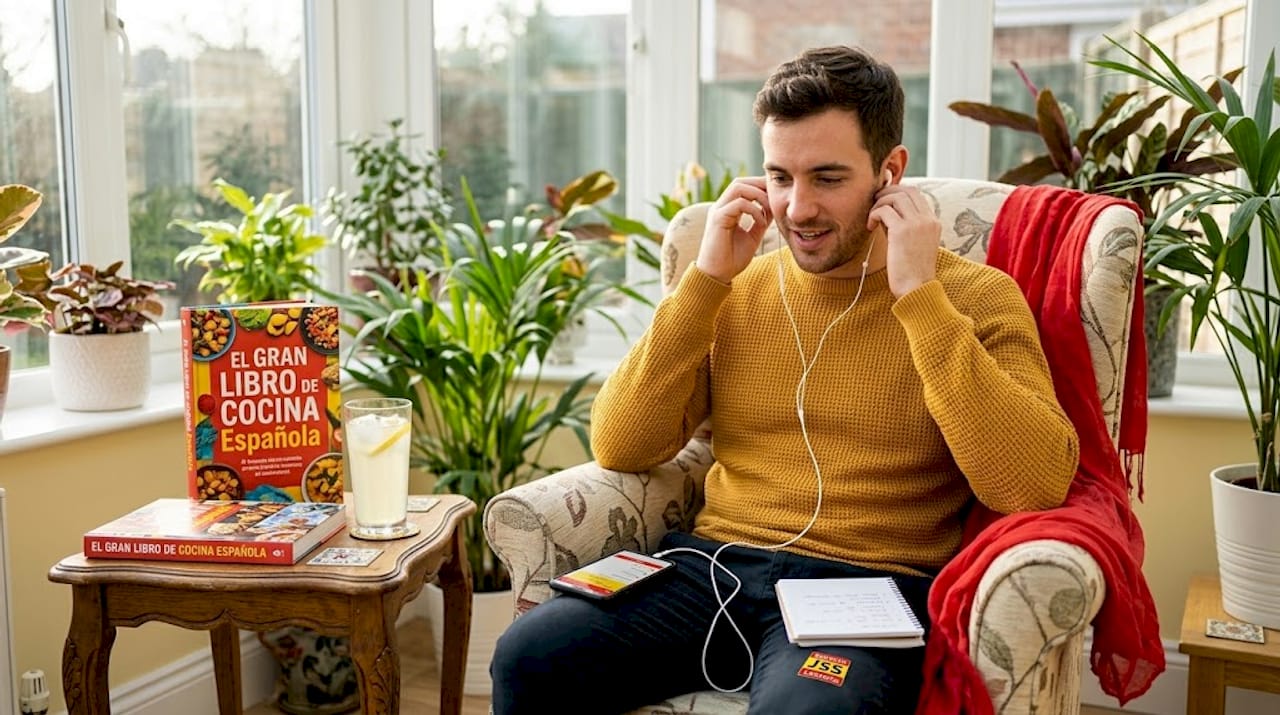
Man politely making request at Spanish café

To make requests more polite in Spain, use softened forms such as ¿Podría…? or ¿Podrías…? and choose quisiera or me gustaría instead of the direct quiero. These conditional polite requests are the engine room of courteous conversation.

Here is how to build polite requests step by step:

  • ¿Podría ayudarme? (“Could you help me?”): The conditional of poder softens the request without making it sound uncertain or weak.
  • Quisiera reservar una mesa (“I would like to book a table”): Quisiera is the imperfect subjunctive of querer, but you do not need to know the grammar label. Just learn that it sounds softer and more respectful than quiero.
  • Me gustaría hablar con el director (“I would like to speak to the manager”): Ideal for formal or professional settings.
  • ¿Le importaría…? (“Would you mind…?”): A very polite construction for asking someone to do something, especially with usted.

Combine these polite request phrases for shopping with por favor at the close and you have a phrase that any Spanish speaker will respond to warmly. Quisiera una barra de pan, por favor is a small sentence with a large amount of social intelligence built into it.

Pro Tip: Think of the conditional as a politeness dial you can turn up when needed. You do not always need it with close friends, but in shops, restaurants, offices, and formal conversations, it is the difference between acceptable and impressive.

Everyday polite phrases for transactions and social interactions

Beyond single words, everyday life in Spain calls for short, culturally loaded phrases that show you understand how social exchange works here. These are the common polite expressions that Spanish people use without thinking and that instantly mark you as someone who has made the effort.

Daily transaction phrases include asking for things in restaurants and shops with por favor plus the request, such as Un café, por favor or ¿Podría traernos la cuenta?, and asking for permission with Con permiso when passing or entering a space.

Here are the phrases worth learning for everyday situations:

  • Con permiso: Used when you need to pass someone in a narrow aisle, enter a room, or squeeze past at a market stall. It is not optional in Spain; skipping it can feel rude.
  • No pasa nada: Literally “nothing is happening” but used to mean “no problem” or “don’t worry.” When someone apologises to you, this is the culturally common response in Spain that puts people at ease.
  • ¿Me pone un café, por favor?: A natural and polite way to order in a bar. ¿Me pone…? is specific to Spain and sounds far more local than simply saying quiero.
  • ¿Puede repetir más despacio, por favor?: “Could you repeat that more slowly, please?” Invaluable when native speakers talk at machine-gun speed.
Phrase Meaning Best used when
Con permiso Excuse me / may I pass Moving past someone
No pasa nada No problem / don’t worry Responding to an apology
¿Me pone…? Could you give me… Ordering in bars or cafés
¿Podría traernos la cuenta? Could you bring us the bill? At a restaurant
Muchas gracias Many thanks After any service

These polite Spanish for shops and restaurants situations are exactly where confidence grows fastest.

Comparing polite phrases: when and how to use each appropriately

Understanding that politeness in Spanish depends on combining the right words with the right verb forms and social context brings everything together. Choosing between disculpe and perdón, or between gracias and le agradezco mucho, is not guesswork — it follows clear logic.

Here is a practical comparison to help you choose polite phrases in Spain with confidence:

Phrase Register Typical setting
Perdón Informal, casual Friends, acquaintances, light interruptions
Disculpe Formal, respectful Shops, offices, strangers, elderly people
Gracias Neutral Any setting
Le agradezco mucho Very formal Professional, official interactions
No pasa nada Informal, warm Everyday reassurance after apologies
Con permiso Neutral to formal Passing someone, entering a space

Follow this numbered approach to match phrases to situations:

  1. Identify your relationship with the person: stranger, colleague, friend, or authority figure.
  2. Assess the setting: shop, office, bar, neighbour’s doorstep, or health centre.
  3. Choose your verb form: usted for formal situations, for familiar ones.
  4. Select the opening: disculpe for formal attention, perdón for casual.
  5. Build your request: add ¿podría…? or quisiera rather than a direct command.
  6. Close with por favor and gracias: always end politely, regardless of register.

This six-step thought process becomes automatic quickly. Within weeks of practising in real situations in Spain, you will find it feels natural rather than calculated.

What most learners miss about politeness in Spanish

After years of observing English speakers in Spain, one pattern stands out above all others. People learn the polite phrases but miss the system behind them. They memorise por favor and gracias but then fire off requests like commands, wondering why interactions feel cold. The truth is that politeness in Spanish is not a list of words — it is a layered architecture of word choice, verb form, social context, and tone working together.

The most effective habit you can develop is the two-step politeness pattern: attention or permission first, then the request. Disculpe, ¿podría ayudarme? lands far better than jumping straight to the request. It mirrors exactly how Spanish speakers navigate social interactions and it signals that you understand the importance of context in Spanish politeness.

Small differences in formality carry real social weight here. Calling a shop assistant when usted is expected is not catastrophic, but it does alter how you are perceived. Using usted consistently with strangers and older adults, on the other hand, signals cultural intelligence. Spanish people do not expect perfection from learners. What they do notice and appreciate is the effort to engage on their terms.

Genuine warmth matters too. A well-pronounced buenos días with eye contact will open more doors in Spain than a grammatically flawless sentence delivered while staring at your phone. Politeness in any language is ultimately about attention and respect. Spanish just has specific tools for expressing it, and learning those tools changes how you experience life here.

How James Spanish School can help you master polite Spanish

Ready to move from isolated phrases to genuinely confident, contextually correct Spanish? James Spanish School is built specifically for English-speaking adults living in Spain, with learning designed around real interactions rather than academic exercises.

https://jamesspanishschool.com

The shop polite Spanish learning resources at James Spanish School include structured modules covering the social situations you actually face: cafés, pharmacies, government offices, and conversations with neighbours. James Bretherton draws on 40 years living in Spain to explain not just what to say but why it works. The context-based Spanish learning approach means you understand tone and register, not just vocabulary. You can also practise polite phrases in shops with on-demand lessons available 24/7, at your own pace, with no expiry date and no pressure.

Frequently asked questions

What is the most common way to say please politely in Spanish?

Por favor is the standard term for “please” in Spanish and works in virtually any situation, from formal offices to casual café orders.

How do I politely get someone’s attention in Spanish?

Use disculpe for formal settings and perdón for more casual situations; both are polite, but disculpe carries more deference, especially when using usted.

How can I make requests sound softer and more polite in Spanish?

Replace the direct quiero with quisiera or me gustaría, or frame your request using ¿Podría…? to add courtesy without complexity.

What phrase do Spanish speakers use to say ‘no problem’ or ‘it’s okay’ politely?

No pasa nada is the natural, culturally warm response to an apology in Spain and means “no problem” or “don’t worry about it.”

How important is using usted versus for politeness in Spanish?

Usted is essential in professional, official, or first-contact situations with business transactions, while is reserved for friends and familiar relationships.

Categories
Insights

What is spaced repetition in Spanish? Your complete guide


TL;DR:

  • Most Spanish learners make the mistake of relying on cramming and passive recognition, which impairs long-term memory. Spaced repetition schedules vocabulary reviews at increasing intervals combined with active recall to strengthen recall and embed words into long-term storage. Implementing this method through apps or manual flashcards enhances conversational fluency and makes language learning more efficient and adaptable.

Most Spanish learners make the same mistake. They read through vocabulary lists, feel confident, then discover three days later that the words have completely vanished. This is not a memory problem. It is a method problem. Understanding what is spaced repetition in Spanish learning is the single most valuable shift you can make to your study routine. Rather than cramming everything into one sitting, spaced repetition reviews vocabulary at increasing intervals versus re-reading everything repeatedly, working with your brain’s natural memory processes rather than fighting them. The result is vocabulary that actually stays.


Table of Contents

Key Takeaways

Point Details
Spaced repetition explained It schedules reviews at increasing intervals to embed Spanish vocabulary in long-term memory.
Active recall matters Producing Spanish words from memory strengthens pathways better than passive recognition.
Adapt your schedule Adjust review intervals according to word difficulty and your learning pace for best results.
Consistency over cramming Regular short review sessions beat occasional long study marathons for retention.
Use tech wisely Apps can automate spaced repetition schedules for efficiency but manual systems also work well.

What is spaced repetition and how does it work?

Spaced repetition is a learning technique that schedules your vocabulary reviews at carefully timed intervals. Instead of reviewing a word once and hoping it sticks, you revisit it multiple times over days and weeks, each time just before your brain is about to forget it. That timing is not accidental. It is the entire engine of the method.

Vertical infographic showing spaced repetition process

Here is how the memory mechanism works in practice. When you first learn a Spanish word, the memory trace is weak. If you review it the next day, that trace is reinforced before it fades completely. If you wait too long, the trace disappears and you are back to square one. Spaced repetition reviews at gradually increasing intervals, such as after 1 day, 3 days, 7 days, and 14 days, catching the memory at exactly the right moment.

Man reviewing Spanish words at kitchen island

The second ingredient is active recall. This is where many learners go wrong. Passive recognition, which is seeing a word and thinking “yes, I know that one,” creates a false sense of mastery. Active recall means covering the answer and forcing your brain to retrieve the Spanish word from scratch. This retrieval effort is what strengthens memory pathways and makes words accessible in real conversation.

The practical effect for spaced repetition for Spanish learners is significant. Words move from fragile short-term memory into long-term storage, where they become available automatically. That is the difference between laboriously translating in your head and speaking with genuine fluency.

The core mechanics at a glance:

  • Review is scheduled before the memory fades, not after it is gone
  • Each successful recall extends the next interval
  • Failed recall shortens the next interval so the word gets more attention
  • Over time, well-known words require less frequent review, freeing up your time

Variations in spaced repetition methods for Spanish learners

Having understood the basic mechanism, let us compare various practical ways you can apply spaced repetition and tailor it to your Spanish learning needs.

Spaced repetition can be applied using either a fixed manual schedule or through apps that adapt intervals based on your actual recall performance. Both approaches work. The question is which suits your lifestyle and learning style.

Manual methods involve physical flashcards sorted into boxes (a classic system called the Leitner box), or a simple spreadsheet where you record review dates. Words you know well move to later boxes with longer intervals. Words you struggle with stay in the early boxes for more frequent review.

App-based spaced repetition software handles the scheduling automatically. When you rate how easily you recalled a word, the app adjusts the next review date accordingly. Words you find easy are pushed further out; harder ones come back sooner.

Feature Manual flashcards Spaced repetition apps
Setup effort Low Moderate
Scheduling You decide Automated
Adaptability High (your choice) High (algorithm-driven)
Cost Free Free to paid
Portability Physical cards needed Phone/tablet
Ideal for Disciplined self-starters Busy adult learners

Adjusting review intervals based on difficulty is critical. A word like agua (water) needs far less attention than aunque (although/even though). Shortening intervals for tricky words and lengthening them for solid ones improves overall learning efficiency considerably.

What works best for most adult Spanish learners:

  • Start with app-based tools to get the interval timing right automatically
  • Add manual flashcards for high-priority vocabulary such as practical words for a spaced repetition workflow in everyday Spain situations
  • Review learning vocabulary with spaced repetition in themed batches, such as food, health, or transport
  • Keep your total daily card count manageable so reviews do not pile up

Pro Tip: Set a firm daily time limit of 20 minutes for spaced repetition reviews. If cards pile up beyond that, reduce how many new words you introduce each day. Consistency over many weeks beats marathon cramming sessions every time.


How to optimise spaced repetition for real Spanish conversation skills

To get the most from your spaced repetition practice, it is crucial to align it with your goal of speaking real Spanish confidently.

The most common mistake adult learners make is designing flashcards for recognition rather than production. Seeing the Spanish word farmacia and knowing it means pharmacy is useful. But in a real conversation, you need to go the other way: think “I need a pharmacy” and immediately produce farmacia. Those are two very different cognitive skills, and only one of them helps you speak.

Effective flashcards prompt you to produce the Spanish word or phrase from an English cue rather than simply recognise the Spanish. Set up your cards with the English on the front, Spanish on the back. Then cover the Spanish and speak it aloud before checking your answer. This single adjustment moves your practice much closer to real Spanish conversation practice.

Five practical tips for conversation-ready spaced repetition:

  • Write full phrases on flashcards, not just isolated words. ¿Dónde está la farmacia? is more useful than farmacia alone.
  • Say the Spanish out loud during every review, not just in your head.
  • Include the sound of the word, not just the spelling. Pronunciation is part of the memory.
  • Review in short bursts rather than long sessions to keep recall sharp.
  • If you miss a session, shorten the interval and retest soon rather than trying to catch up by rereading everything.

Pro Tip: When you encounter a new Spanish word in a real-life situation, such as on a sign, in a conversation with a neighbour, or at the market, add it to your spaced repetition deck that same day. Real-world words carry emotional context, which makes them stick faster.


Setting up your spaced repetition schedule: tips and example timelines

Let us now break down a practical timetable you can follow daily to embed your Spanish vocabulary firmly into memory.

The most important review is the first one. Starting your first review within 24 hours of learning, then repeating at increasing gaps such as 72 hours and one week, is what separates spaced repetition from ordinary study. Miss that first 24-hour window and the memory trace weakens considerably.

How to set up your schedule in five steps:

  1. Learn new words in a session of no more than 15 minutes. Introduce 5 to 10 new words or phrases maximum.
  2. Review within 24 hours. Even five minutes the following morning is enough to reinforce the initial memory.
  3. Review again after 3 days. At this point you are testing whether the memory has begun to consolidate.
  4. Review after one week. Successfully recalled words now move to a two-week interval.
  5. Continue extending the interval for well-known words, reducing it immediately for anything you struggle with.
Review session Interval Purpose
Session 1 Day of learning Initial encoding
Session 2 24 hours later First consolidation
Session 3 3 days later Strengthening the trace
Session 4 7 days later Moving to medium-term memory
Session 5 14 days later Long-term storage
Ongoing 30+ days Maintenance review

Capping daily review time at 15 to 30 minutes prevents the dreaded pile-up of overdue cards, which tempts learners into cramming. A shorter, consistent session every day is worth far more than an occasional two-hour marathon. For setting your spaced repetition schedule, treat it as a daily habit, like brushing your teeth, not as an exam revision sprint.

Pro Tip: If life gets in the way and you miss two or three days, do not panic. Simply pick up where you left off. Any spaced review is better than none, and the method is forgiving of the occasional gap as long as you return to it promptly.


Benefits and long-term impact of spaced repetition for Spanish learners

Having explored how to implement spaced repetition, let us summarise the tangible benefits that make this method indispensable for Spanish learners.

The science behind this is well established. Spaced repetition combats the forgetting curve by reviewing just before you forget, maximising retention and making recall easier each time. Each successful retrieval strengthens the neural pathway slightly more than the last, so the word eventually becomes automatic.

What consistent spaced repetition delivers over time:

  • Vocabulary that surfaces instantly in conversation, without conscious translation
  • Reduced total study time because you only review words when they need it
  • Greater confidence when speaking, because words are genuinely there when you need them
  • A growing bank of phrases available for spontaneous use, not just recognition
  • Less frustration from forgetting words you thought you had already learnt

Studies show spaced repetition can significantly improve learning efficiency and reduce the total time required to reach fluency. For adult learners with busy lives, that is not a minor benefit. It is the difference between making real progress and feeling stuck.

The spaced repetition benefits also compound over time. The more vocabulary you consolidate, the easier it becomes to acquire new words, because your brain starts to recognise patterns in Spanish structure and sound.

“The goal is not to review more. It is to review smarter. Spaced repetition turns time into an ally rather than an obstacle.”


Why typical study habits fall short and how spaced repetition truly changes things

Let us reflect on why merely spending time on Spanish is not enough and how shifting to spaced repetition can transform your language journey.

Here is an uncomfortable truth: most adult learners feel busy but are not actually learning efficiently. Re-reading a vocabulary list, watching Spanish television passively, and highlighting phrases in a notebook all feel productive. They are not. Re-reading and highlighting do not stick. Retrieval practice combined with spacing study is what actually builds durable memory.

The reason cramming feels effective is that it creates a short-term sense of familiarity. Walk into a conversation 48 hours later and that familiarity has largely evaporated. Spaced repetition with active recall works differently. It builds retrieval pathways that get stronger with each use, which is exactly what conversation demands.

Expanding the time between recall sessions alongside active recall produces significantly better retention than equal-interval reviews or passive methods. This is not opinion. It is consistently supported by memory research.

What this means practically is that the effort of retrieval is the point. When your brain has to work slightly harder to pull up a Spanish word, the memory becomes stronger, not weaker. The slight difficulty you feel is the learning happening. This is why effective Spanish learning tips consistently point toward active methods over passive ones.

The other dimension worth addressing is flexibility. Spaced repetition does not require a rigid timetable. Miss a day and simply continue. Travel, work, and family life will occasionally interrupt your schedule, and that is fine. The method tolerates gaps far better than cramming-based approaches, which demand unbroken study blocks to function at all. For adult learners, particularly those managing a move to Spain or retirement alongside their studies, that flexibility is not a luxury. It is essential.


How James Spanish School can support your spaced repetition journey

Knowing what spaced repetition is and actually applying it to your Spanish learning are two different things. The approach works brilliantly when paired with the right vocabulary, real-life context, and structured conversation practice.

https://jamesspanishschool.com

At James Spanish School, the WordAmigo system is built precisely around this principle. It is an AI-powered vocabulary and pronunciation tool that uses strategic repetition to permanently embed words into long-term memory, automating a full loop of reading, listening, speaking, and writing exposure. James Bretherton, a dual-native speaker with 40 years of life in Spain, designed the module-based Spanish learning approach around exactly the conversations adult learners need: with neighbours, tradespeople, health workers, and local officials. Browse the Spanish learning resources shop to see what fits your current level, or explore the learner reviews to find out how other adult learners are making consistent progress.


Frequently asked questions

What is spaced repetition in Spanish learning?

Spaced repetition is a method that schedules reviews of Spanish words or phrases at increasing time intervals to improve long-term memory retention, working with the brain’s natural forgetting curve rather than against it.

How often should I review Spanish vocabulary using spaced repetition?

Start your first review within 24 hours of learning, then repeat after approximately 3 days, one week, and two weeks, with typical schedules following those exact gaps and adjusting based on how confidently you recall each word.

Can I use apps to help with spaced repetition for Spanish?

Yes, apps adapt review intervals based on how well you recall each item, meaning scheduling adjusts automatically to make your learning more efficient and personalised without manual tracking.

Is spaced repetition better than cramming for memorising Spanish?

Yes. Spaced repetition is proven to improve retention and reduce forgetting far more effectively than one-time cramming, because it combats the forgetting curve by reviewing at the optimal moment rather than overloading memory in a single session.

How do I handle missed review sessions in spaced repetition?

Do not try to catch up by rereading. Instead, shorten the interval and retest soon to reinforce the memory pathway, which is far more effective than passively going back through material you have already seen.

Categories
Insights

Essential Spanish vocabulary for expats: speak easily in Spain


Essential Spanish vocabulary for expats


TL;DR:

  • Most English-speaking expats in Spain struggle due to limited local English, especially outside tourist zones.
  • Focusing on practical phrases for greetings, directions, shopping, and emergencies helps build confidence in daily interactions.
  • Using contextual, culturally polite expressions and practicing real-life conversations enables smoother integration into Spanish life.

Imagine standing at a pharmacy counter, a worried look on your face, trying to explain what you need to a pharmacist who speaks no English. Or picture yourself on a rural bus, unsure whether you have missed your stop because you could not understand the driver’s rapid announcement. For most English-speaking expats in Spain, only about 25% of Spaniards speak any English at all, and that figure drops sharply once you step away from coastal tourist zones. The good news is that a well-chosen set of Spanish words and phrases, practised properly, transforms those moments of anxiety into confident everyday exchanges.

Table of Contents

Key Takeaways

Point Details
Prioritise survival vocabulary Focus on greetings, requests, directions, shopping, and emergency phrases for a smooth start.
Phrase context matters Using words in full sentences ensures you are understood and helps with cultural integration.
Practice over memorisation Engage in real conversations to build confidence rather than relying only on vocabulary lists.
Politeness is powerful Key phrases like ‘por favor’ improve interactions and open doors with locals.

How to choose which words matter most

Now that you understand why vocabulary matters, let us clarify which words to focus on first. Not all vocabulary is created equal. A beginner learner who spends weeks memorising the names of exotic vegetables will struggle far more than someone who has mastered a core set of practical phrases used in real daily life.

The most effective approach is to build your vocabulary around what specialists call “survival scenarios.” These are the predictable situations every expat faces, regardless of where they live in Spain. Think of them as the recurring scenes in the film of your daily life. Essential vocabulary for expats clusters naturally into these six categories:

  • Greetings and farewells (buenos días, hola, adiós, buenas tardes)
  • Polite expressions (por favor, gracias, perdón, de nada)
  • Directions and locations (¿Dónde está…?, a la derecha, a la izquierda)
  • Shopping and money (¿Cuánto cuesta?, la cuenta, efectivo, tarjeta)
  • Transport (el autobús, la parada, el tren, el taxi)
  • Medical and emergency (médico, farmacia, ayuda, necesito ayuda)

Working through these categories in order gives you maximum practical return for the time you invest. Covering practical spoken Spanish in each of these areas means you are ready for the situations that come up most often, not just the ones that appear in textbooks.

“Learning single words is like buying individual bricks without a plan. What you need are ready-built phrases you can use immediately.” — James Bretherton, James Spanish School

One important cultural point: Spaniards place real value on polite, formulaic language. Mastering requests with ¿Podría… por favor? (“Could you… please?”) signals respect and dramatically increases the likelihood that people will slow down, repeat themselves, or go out of their way to help you. It is not just politeness for its own sake; it is a practical tool.

Pro Tip: Always learn phrases in context rather than isolated words. “Water” alone tells you nothing, but “Un vaso de agua, por favor” (A glass of water, please) gets you a drink. Check the Spanish situations list for a full set of real-life contexts to build around.

Everyday essentials: greetings, politeness, and daily life

Once you know which types of words matter most, start with essential everyday interactions. These are the phrases that open doors, literally and figuratively. Spanish people genuinely warm to foreigners who make the effort, and a well-timed “buenos días” can change the entire tone of a conversation before it has even properly begun.

Core greetings to learn immediately:

  • Hola — Hello (informal, universally used)
  • Buenos días — Good morning (use until around lunchtime)
  • Buenas tardes — Good afternoon/evening (from around 2pm onwards)
  • Buenas noches — Good night (evening farewell or late greeting)
  • ¿Cómo está usted? — How are you? (formal, respectful)
  • ¿Cómo estás? — How are you? (informal, with people you know)
  • Adiós / Hasta luego — Goodbye / See you later

Polite phrases that make a real difference:

  • Por favor — Please
  • Gracias — Thank you
  • De nada — You’re welcome
  • Perdón / Disculpe — Excuse me / Sorry
  • ¿Podría ayudarme, por favor? — Could you help me, please?
  • No entiendo — I don’t understand
  • ¿Puede repetir más despacio? — Can you repeat more slowly?

Here is a quick reference table for building polite everyday exchanges:

English phrase Spanish equivalent Context note
Good morning Buenos días Use until approximately 2pm
Please Por favor Always add to requests
Thank you very much Muchas gracias Warmer than gracias alone
Excuse me (to get attention) Disculpe Polite, formal register
I don’t understand No entiendo Opens the door to slower repetition
Could you help me? ¿Podría ayudarme? Very polite; adds por favor at end
See you later Hasta luego Casual but widely used farewell

Polite formulaic expressions like ¿Podría… por favor? are essential for cultural integration; they signal that you respect local norms rather than expecting people to adapt to you. This matters more than many expats realise when they first arrive.

Pro Tip: In Spain, tips for Spanish fluency always emphasise tone as much as vocabulary. A warm, unhurried delivery of even a simple phrase lands far better than a technically correct sentence delivered with stress or impatience. Slow down, smile, and let the words do their work.

Building comfort with these basic Spanish conversations is the first real milestone for any expat. Once daily greetings feel natural, everything else becomes easier to layer on top.

Greeting barista in Spanish café

Getting around: directions and transport phrases

Having established polite basics, let us address travel and finding your way. Getting lost is frustrating in your own language. In a foreign country, it can feel genuinely alarming, particularly in rural towns where English signage is essentially non-existent.

Step-by-step guide to asking for directions:

  1. Start with a polite opener: Disculpe, perdone… (Excuse me…)
  2. Ask where something is: ¿Dónde está…? (Where is…?)
  3. Confirm you are looking for the right thing: ¿Es por aquí? (Is it this way?)
  4. Listen for key direction words: a la derecha (to the right), a la izquierda (to the left), recto or todo recto (straight ahead)
  5. Ask for repetition if needed: ¿Puede repetir más despacio, por favor?
  6. Thank them warmly: Muchas gracias, muy amable (Thank you very much, very kind)

This six-step framework keeps you in control even when the reply comes at the machine-gun speed of a native speaker.

Only 1 in 4 Spaniards speak English, and that proportion falls sharply outside tourist zones. Knowing your direction phrases in Spanish is not optional — it is one of the most practical investments you can make.

Here is a comparison table for common transport and location terms:

English Spanish Usage context
Bus stop La parada de autobús Ask “¿Dónde está la parada?”
Train station La estación de tren Ticketing and platform queries
Airport El aeropuerto Arrivals, departures, transfers
Town hall El ayuntamiento Official paperwork and queries
Chemist / Pharmacy La farmacia Medicine and basic health needs
Hospital El hospital Urgent medical attention
Taxi rank La parada de taxis Locating taxis in town centres
Return ticket Un billete de ida y vuelta Booking train or bus travel

For navigating common transport scenarios like boarding a local bus or negotiating a taxi fare, having these terms ready dramatically reduces the chance of a costly or stressful misunderstanding. Knowing how to ask for the next stop (“¿Es la próxima parada?”) or confirm a departure time (“¿A qué hora sale?”) turns an intimidating experience into a routine one.

Shopping, food, and emergencies: vocabulary for life’s key moments

With navigation sorted, expats need to master everyday shopping and respond to emergencies quickly. These two areas cover opposite ends of the emotional spectrum — the pleasant routine of buying food and the urgent pressure of a crisis — yet both demand clear, confident Spanish.

Key shopping and food vocabulary:

  • ¿Cuánto cuesta? — How much does it cost?
  • La cuenta, por favor — The bill, please
  • Efectivo — Cash
  • Tarjeta — Card (payment)
  • ¿Tiene…? — Do you have…?
  • El menú del día — The set daily menu (a genuine Spanish institution)
  • Pan — Bread
  • Agua — Water (ask for “agua del grifo” for tap water)
  • Sin gluten / sin lactosa — Gluten-free / lactose-free
  • La tienda — The shop
  • El mercado — The market

Emergency and medical phrases to know before you need them:

  • ¡Ayúdame! — Help me!
  • Llame a una ambulancia — Call an ambulance
  • Necesito un médico — I need a doctor
  • ¿Dónde está la farmacia más cercana? — Where is the nearest chemist?
  • Me duele… — …hurts (e.g., “Me duele la cabeza” — I have a headache)
  • Soy alérgico/a a… — I am allergic to…

Key stat: Spanish is essential in most everyday interactions outside major tourist centres. For shopping, medical appointments, and financial transactions, fluency in even a basic set of phrases is the difference between independence and relying on someone else to speak for you.

Pro Tip: Practise money amounts out loud before you go shopping. Saying “son veinte y tres euros” (that’s twenty-three euros) and counting change in Spanish might feel awkward at first, but it builds the automatic recognition you need when a shopkeeper calls out your total quickly at a busy market. Explore practical spoken Spanish resources to sharpen these real-world skills, and use tools designed to reinforce Spanish skills between lessons so the vocabulary actually sticks.

Using full sentences in emergencies also matters. “¡Ayúdame!” alone works in a crisis, but “Necesito ayuda, soy británico/a y no hablo bien español” (I need help, I’m British and I don’t speak Spanish well) gives people the context to respond usefully and sympathetically.

Why vocabulary lists alone aren’t enough for expats

Here is the perspective many language guides quietly avoid: a list of words, no matter how well chosen, will not make you comfortable in Spanish conversation. And that gap between knowing words and actually using them fluently is exactly where most expats stall.

Consider what happens when you try to use a memorised word in a real exchange. A shopkeeper responds quickly, uses slang, changes the subject, or asks a follow-up question you did not anticipate. Suddenly your neatly memorised list is useless because language does not arrive in neat, predictable order. Real communication is messy, fast, and full of cultural shortcuts.

This is why context beats lists every single time. Words that you have only read on a flashcard live in isolation in your memory. Words that you have heard in a conversation, used in a sentence, and associated with a real moment of connection live somewhere far deeper and more accessible.

There is also the cultural layer that no vocabulary list captures. Tone, timing, and body language carry enormous weight in Spanish communication. A flat, mechanical delivery of “gracias” lands very differently from a warm, natural one. Spaniards read social cues fluently, and an expat who responds with appropriate warmth and good humour will always be met with more patience and generosity than one who appears tense or dismissive.

The lesson from decades of working with expats in Spain is this: knowing words is power; using them naturally is freedom. The path from one to the other runs directly through practising phrases in real scenarios, with real people, in the actual rhythm of Spanish life. Memorisation is the starting point, not the destination. The expats who integrate most successfully are not necessarily the most academically gifted; they are the ones who use what they know, make mistakes cheerfully, and keep showing up for the conversation.

Master Spanish for real life with James Spanish School

For expats wanting more than just words, actionable next steps make all the difference.

James Spanish School was built specifically for English-speaking adults living in Spain or planning to move there. It is not about passing exams or studying grammar charts. It is about gaining the confidence to talk to your neighbours, negotiate with tradesmen, handle medical appointments, and feel genuinely at home in Spain.

https://jamesspanishschool.com

The 100-lesson online course covers both sentence-building and “ear-tuning,” so you can follow fast spoken Spanish, not just produce it. The WordAmigo system uses AI-powered strategic repetition to permanently embed vocabulary and pronunciation, solving the two frustrations that defeat most adult learners. You can learn Spanish online at your own pace, on any device, with no expiry date. Browse the full range of resources in the JSS shop, or start with the WordAmigo to begin embedding the essential words covered in this guide right away.

Frequently asked questions

Is it possible to live in Spain only speaking English as an expat?

No, Spanish is essential in most regions; only about 25% of Spaniards speak English, and that is mostly concentrated in tourist areas rather than everyday communities.

Which Spanish phrases should I learn first as an expat?

Start with greetings, polite expressions, asking directions, shopping phrases, and emergency terms; these core categories cover the vast majority of everyday expat needs immediately.

How do I politely ask for help in Spanish?

Use ¿Podría ayudarme, por favor? for respectful requests; adding “por favor” is essential and signals genuine respect for local customs.

What should I do if I forget a Spanish word during a conversation?

Politely admit you are still learning and ask them to repeat or explain more slowly; most Spaniards will respond with warmth and patience when they see you are genuinely trying.

Are vocabulary apps a good substitute for real-world practice?

Apps help memorise words but cannot replace practising phrases naturally with locals; real context, tone, and social cues are only learned through actual conversation in everyday situations.

Categories
Insights

Unlock fluent Spanish conversation with mobile learning


What is mobile Spanish learning


TL;DR:

  • Mobile Spanish learning quickly develops conversational skills, with significant progress achievable in around 15 hours.
  • Pairing apps with real-life practice and structured guidance enhances fluency, bridging digital practice with community interactions.

Fifteen hours. That is all it takes for a complete beginner to match the Spanish conversational output of a first-semester university student, according to recent app-based studies. For English-speaking adults living in Spain, that figure is both startling and deeply encouraging. Mobile-Assisted Language Learning (MALL) uses smartphone apps to teach European Spanish through immersive, practical methods built for everyday conversations. This article cuts through the noise, examines what the research actually shows, compares the main approaches, and gives you concrete strategies to make mobile Spanish learning work in real life, not just on a screen.

Table of Contents

Key Takeaways

Point Details
Digital immersion works Mobile Spanish learning offers immersive techniques ideal for rapid, practical use in Spain.
Apps aren’t enough alone Research shows combining digital learning with in-person conversation is key to lasting fluency.
Customise your approach Match learning app style and support to your skill level, goals, and digital comfort.
Measurable results possible With focused practice, adults can reach conversational milestones faster than with traditional classroom methods alone.

Understanding mobile Spanish learning: beyond flashcards

Mobile Spanish learning is not simply a digital version of an old-fashioned phrasebook. It represents a genuine shift in how adults acquire language, and understanding that shift is the first step towards using it well.

“Mobile-Assisted Language Learning (MALL) focuses on immersive, conversational Spanish learning via smartphones, placing real-world communication at the centre of the experience rather than rote memorisation.” ScienceDirect

Traditional classroom methods tend to follow a predictable pattern: grammar rules first, then vocabulary lists, then slow, controlled speaking practice. Mobile learning flips that sequence. The best apps drop you into listening and responding straight away, mirroring how children absorb their first language through repeated, contextual exposure rather than conjugation tables.

For adults living in Spain, this distinction matters enormously. Your goals are not academic. You want to handle the pharmacy, negotiate with the plumber, chat with your neighbour over the fence, and follow what the local council notice actually says. That kind of real-life Spanish fluency demands a different kind of practice than passing a written exam.

What sets mobile learning apart from older methods:

  • On-demand access: lessons at 6 a.m., during a lunch break, or at midnight, with no commute to a class
  • Audio-rich content: listening and speaking features that train your ear for natural, flowing speech
  • Personalised pacing: repeat a lesson ten times without embarrassment or time pressure
  • Contextual vocabulary: words presented in realistic scenarios rather than isolated lists
  • Micro-learning sessions: five to fifteen minutes of focused practice that fits around a busy day

Each of these features addresses a specific frustration that adult learners describe repeatedly. Mobile platforms do not eliminate the hard work of learning Spanish, but they remove many of the practical barriers that cause adults to give up.

How mobile apps drive measurable Spanish progress

It is one thing to say mobile learning is effective. It is another to show you exactly what the numbers look like.

App / study Study institution Time invested Key outcome
Babbel NYU, 2023 15 hours 98% grammar precision in target areas
Busuu Independent research 15 hours Equivalent to one full university semester
General MALL apps Multiple studies Ongoing 15% higher vocab retention vs traditional methods

These figures are not marketing claims. The Babbel and Busuu data show that focused, structured app use over roughly 15 hours produces grammar precision of 98% and speaking gains 20% faster than traditional beginner instruction. For a retired professional who has been telling themselves they are “too old to learn languages,” these numbers offer genuine reassurance.

15%
That is how much higher vocabulary retention is for adult learners using MALL apps compared with those following traditional classroom instruction alone.

Infographic highlighting app learning statistics

The reasons behind that retention boost are not mysterious. Apps typically use spaced repetition systems (SRS), a method that presents words at precisely the right intervals to move them from short-term into long-term memory. Think of it like watering a plant on a schedule rather than flooding it once and hoping for the best. The timing is everything.

Where apps perform particularly well:

  • Building a foundational vocabulary of 500 to 1,000 high-frequency words
  • Drilling sentence patterns until they feel automatic
  • Training correct pronunciation through audio feedback
  • Keeping learners motivated through streaks and progress tracking

Where apps show clear limits:

  • Handling the machine-gun speed of a native speaker mid-flow
  • Understanding regional accents and colloquial expressions
  • Responding spontaneously in an unscripted conversation
  • Grasping the cultural context behind what is being said

Pro Tip: Aim for 15 focused minutes per day over a sustained period rather than sporadic hour-long sessions. Consistency beats intensity when it comes to vocabulary retention.

Building conversational Spanish confidence requires understanding both what apps do brilliantly and where they need reinforcement.

Comparing learning app styles: immersion, gamification, and hybrid models

Not all mobile Spanish apps work the same way. Choosing the right style for your situation can mean the difference between steady progress and frustrating stagnation.

App style Best for Strengths Weaknesses
Full immersion (Spanish-only from day 1) Motivated, intermediate learners Rapid ear adjustment, authentic exposure Can overwhelm true beginners
Gamified (points, streaks, levels) Habit-building beginners Motivation, consistency, low anxiety Shallow conversational depth at higher levels
Hybrid (structured lessons plus human elements) Adults wanting real fluency Depth, culture, speaking confidence Requires more time investment

Full immersion apps, such as Palteca, plunge you into Spanish from the very first session with no English explanations. For a motivated learner who already has some exposure to the language, this approach accelerates ear-tuning dramatically. You stop waiting for a translation and start processing meaning directly in Spanish. However, for a complete beginner who struggles to distinguish where one word ends and the next begins, total immersion can feel like being thrown into deep water before learning to swim.

Man practicing Spanish immersion at kitchen table

Gamified apps take the opposite approach. They wrap learning in rewards, encouraging daily habits through streaks, badges, and leaderboards. The motivational architecture is clever and genuinely effective at keeping beginners engaged during the fragile early weeks. The problem is that gamification tends to prioritise the experience of learning over the depth of it. You can maintain a 300-day streak and still freeze when the checkout assistant at the supermarket speaks at normal conversational speed.

Hybrid models combine structured lessons with real human interaction. These are, for most adults in Spain, the most practical route to genuine fluency. They give you the flexibility of app-based practice while ensuring that the gaps apps cannot fill are addressed by a real person or a professionally designed speaking programme.

When deciding which style suits you, consider:

  • Your starting level: complete beginners often need some English explanation before full immersion becomes useful
  • Your daily schedule: gamified apps work well for people who can only spare five minutes; hybrid models reward those with fifteen to thirty minutes
  • Your specific goals: chatting socially differs from navigating a medical appointment or a legal document
  • Your anxiety level: some adults find total immersion liberating; others find it paralysing

The honest answer is that most adults in Spain benefit from a blend. Start with a structured approach that explains Spanish through plain English, build vocabulary and sentence patterns, then add immersion experiences as your confidence grows. Finding the right way to practise Spanish conversation is what bridges the gap between digital learning and living the language.

Expert tips: making mobile Spanish learning stick

Knowing which apps to use is only half the battle. The bigger challenge is building the habits and supporting conditions that turn mobile practice into lasting fluency.

  1. Pair your app with a structured course. Research is unambiguous on this point: hybrid approaches combining apps with tutors achieve 68% conversational fluency compared to just 3% for apps used in isolation. That gap is enormous. It means app-only learners are almost certain to plateau well before they reach genuine conversational ability.
  2. Use spaced repetition deliberately. SRS works best when you engage actively rather than passively. When a word appears for review, try to recall it before the answer appears. That moment of effortful retrieval is where the memory gets reinforced most powerfully.
  3. Listen to real Spanish every day. Apps provide controlled audio. Real fluency requires exposure to uncontrolled speech: radio programmes, television, market conversations, your neighbour’s phone call through the garden wall. Even ten minutes of unscripted listening daily accelerates your ear-tuning far beyond what any app can replicate alone.
  4. Balance independence with guidance. Expert analysis suggests that optimal adult learning involves roughly 60 to 70% autonomous practice balanced with structured guidance. Too much hand-holding creates dependency. Too much independence, without feedback, embeds errors. The sweet spot is somewhere in the middle, where you are confident enough to explore but supported enough to correct mistakes before they solidify.
  5. Address digital literacy honestly. Not every adult finds apps intuitive. If navigating menus, managing notifications, or troubleshooting audio problems adds friction to your learning, that friction will eventually win. Choose an app with a clean, simple interface, and do not be embarrassed to ask for help getting set up.

Pro Tip: Create a step-by-step Spanish workflow for each day: five minutes of SRS vocabulary review, ten minutes of structured lesson content, and five minutes of real-audio listening. That twenty-minute daily habit, maintained consistently, will outperform most hour-long weekly sessions.

One further element that many adults overlook is the value of going back over material. Repeating a lesson is not a sign of failure. It is how memory consolidates. The best learning systems, digital or otherwise, are built to encourage that kind of reinforcement of Spanish skills without making you feel as though you are moving backwards.

A fresh perspective: mobile learning is the start, not the finish line

Here is something most language app marketing will never tell you. Mobile learning is an extraordinary engine for building momentum, but momentum is not the same as fluency. The adults who make the most impressive progress are not the ones who found the best app. They are the ones who used an app to lower their anxiety enough to start having real conversations.

There is a pattern that repeats itself constantly among English speakers in Spain. Someone downloads an app, works through it conscientiously, builds a solid foundation of vocabulary and grammar patterns, then hits a wall the moment a native speaker replies at full speed with an unfamiliar turn of phrase. The app prepared them for a controlled environment. Life in Spain is anything but controlled.

The solution is not to dismiss mobile learning. It is to see it clearly for what it is: a remarkable springboard. The flexibility of audio Spanish practice on a phone or tablet means you can build real foundations at your own pace, in your own time, without the anxiety of a classroom setting. That matters enormously for adult learners who have spent decades feeling embarrassed about not speaking Spanish despite living here.

What mobile learning cannot do is replicate the complexity of a real human exchange, the cultural subtext of a comment about the weather, or the warmth of a conversation that wanders unexpectedly into territory no app predicted. Those experiences require you to step away from the screen and into your community.

The wisest approach is this: use mobile learning to build confidence, then spend that confidence in real interactions. Let the app be the rehearsal room. Let Spain be the stage.

Your next steps to Spanish fluency

https://jamesspanishschool.com

If mobile learning has opened the door, the right structured support will take you all the way through it. James Spanish School is built specifically for English-speaking adults in Spain who want practical, everyday fluency, not exam results. James Bretherton’s method of Radical Simplification removes the intimidating grammar terminology and replaces it with plain English explanations that actually make sense to adult learners.

The Spanish vocabulary builder powered by the WordAmigo system uses AI-driven spaced repetition to embed words and pronunciation permanently, addressing the exact frustrations that mobile apps alone cannot solve. For those ready to go further, the spoken Spanish practice modules are available on demand, 24/7, with no expiry date and no pressure. Everything is designed around real life in Spain: neighbours, tradesmen, health workers, and local bureaucracy.

Frequently asked questions

How quickly can I become conversationally fluent using mobile Spanish apps?

With consistent daily use, adults can reach basic conversational fluency within 15 to 20 hours using leading apps, though Babbel and Busuu studies confirm that pairing apps with real speaking opportunities accelerates and deepens those gains significantly.

Do apps alone make you fluent in Spanish for life in Spain?

Apps build an impressive foundation, but research shows that hybrid approaches combining digital tools with human guidance achieve 68% conversational fluency compared to just 3% for app-only learners.

What features should I look for in a Spanish learning app as an adult in Spain?

Prioritise apps with practical conversation modules, spaced repetition, and real-life scenarios built for European Spanish via MALL, rather than generic language tools designed for travellers or classroom students.

How can I make mobile Spanish learning more effective for cultural engagement?

Pair your daily app practice with face-to-face conversations, local media such as Spanish radio or television, and culturally grounded learning materials that explain the context behind what people say, not just the words themselves.

Is mobile learning suitable if I struggle with digital apps?

A basic level of digital comfort helps, but MALL engagement does require some digital literacy, and blending a user-friendly app with a well-structured course or human support makes mobile learning accessible even for those who are less confident with technology.

Categories
Insights

How to memorise Spanish vocabulary for everyday fluency


How to memorize Spanish vocabulary


TL;DR:

  • Most learners forget Spanish words quickly because they rely on passive review and isolated lists. Spaced repetition with contextual, real-life vocabulary and active recall enhances long-term retention and automatic fluency. Focusing on high-frequency, situational words and consistent, brief daily practice creates practical mastery for living in Spain.

You’re standing at the pharmacy counter in Spain, and the word you need vanishes completely. It was there last night when you studied your list. Now it’s gone, replaced by an awkward silence and a polite but puzzled stare from the pharmacist. This is one of the most common and demoralising experiences for English-speaking adults living in Spain, and it happens not because of a lack of effort but because of how vocabulary is typically studied. This guide cuts through the guesswork and delivers proven, practical techniques for memorising European Spanish vocabulary so that the right words are available when you actually need them.

Table of Contents

Key Takeaways

Point Details
Spaced repetition works Reviewing vocabulary at increasing intervals is proven to boost long-term memory for Spanish words.
Active recall beats rereading Forcing yourself to recall words strengthens memory far more than simply re-reading lists.
Prioritise daily vocabulary Focus your efforts on the words you’ll use in actual conversations for faster, more meaningful progress.
Track progress and troubleshoot Regularly assessing your recall and fixing common mistakes will ensure continued improvement and fluency.

Why most people forget Spanish words (and how to avoid it)

The mechanics of forgetting are well understood, yet most learners ignore them entirely. German psychologist Hermann Ebbinghaus identified what is now called the “forgetting curve,” which shows that without any review, people lose roughly half of newly learned information within a day. For adult learners juggling daily life in Spain, this is not an abstract theory. It is the lived reality of studying on Sunday and drawing a blank by Tuesday.

The most common mistakes compound the problem:

  • Relying on long lists: Writing out fifty words and reading them repeatedly gives a false sense of progress. Recognition is not the same as recall.
  • Cramming sessions: Studying intensively for one or two hours once a week feels productive but produces short-lived memory traces.
  • Passive rereading: Going over notes or a vocabulary page without testing yourself is one of the weakest study strategies available.
  • No contextual anchor: Learning “el grifo” in isolation is harder than learning it through a sentence about calling a plumber.

“Memory is not a recording device. It is a reconstruction process, and what you rehearse is what you rebuild.”

The solution rests on a principle called spaced repetition, which means distributing your reviews over time rather than massing them together. Spaced conditions outperform massed practice on delayed recall tests, particularly for second-language vocabulary. Put simply, reviewing a word today, tomorrow, next week, and then a fortnight later locks it in far more reliably than reviewing it ten times in one sitting.

There is also a crucial link between context and retention. Using context not just lists when you learn vocabulary means each new word carries a situation, a feeling, or a sentence with it. That contextual anchor is what your brain grabs hold of when you are under pressure at the bank or the GP’s surgery. Prioritise words that fit your actual daily life in Spain. Obscure vocabulary can wait.

Essential tools and tips for memorising Spanish vocabulary

Understanding the forgetting process sets you up to work smarter. Here’s what you’ll need to memorise Spanish vocabulary efficiently.

The right tools reduce friction and keep you consistent. Here is a practical overview of what is available and what each does well:

Tool Type Best for Cost
Physical flashcards Analogue Beginners, tactile learners Free
Anki Digital app Spaced repetition scheduling Free
Mnemosyne Desktop app Detailed statistics, scheduling Free
WordAmigo (JSS) AI-powered system European Spanish, pronunciation 49.95
Notebook tracker Analogue Progress logging, personalisation Minimal

When choosing a digital tool, look for these features:

  • Custom word lists: You want to build lists around your actual life in Spain, not generic travel phrases.
  • Feedback after each response: Knowing whether you were right or wrong is what drives memory consolidation.
  • Intelligent scheduling: Spaced repetition systems use an algorithm that updates review intervals based on how well you recalled each item, so harder words appear more often.
  • Listening component: Hearing Spanish pronunciation alongside reading it accelerates both memory and comprehension.

Tracking your progress matters more than most learners realise. A simple notebook where you log new words learned, words mastered, and words still causing problems gives you an honest picture of your trajectory. It also builds motivation. Seeing fifty words move from the “shaky” column to the “solid” column is genuinely encouraging.

The link between repetition and fluency is direct and well established. The learners who make the fastest gains are not always the most talented. They are the most consistent. Short, daily sessions of fifteen to twenty minutes outperform a two-hour marathon every Saturday.

Man updating Spanish vocabulary progress journal

Pro Tip: Set a fixed time each day for vocabulary review, even if it is only ten minutes. First thing in the morning with a coffee or just before bed works well for most adults. The habit is more important than the duration.

Step-by-step: The most effective way to memorise Spanish words

With your tools ready, let’s walk through the most reliable process for embedding Spanish words in your memory.

1. Select vocabulary that matters right now
Focus on words you will use this week. If you have an appointment at the health centre, learn the vocabulary for symptoms, appointments, and instructions. If you are shopping at the market, target food names, quantities, and transaction phrases. Real-life vocabulary rooted in your immediate context is processed differently by the brain. It carries emotional weight and practical urgency, both of which strengthen retention.

Vertical steps for memorising Spanish vocabulary

2. Create a flashcard for each word, with a sentence
Write the Spanish word on one side. On the other, write the English meaning and a short sentence using the word in context. For example: “Me duele la cabeza” (My head hurts) rather than just cabeza (head).

3. Use active recall at every review
Cover the answer, say or write the Spanish word from memory, then reveal it. Active recall testing is a significantly higher-leverage technique than passive review for both initial learning and long-term memory consolidation. The effort of retrieval is exactly what strengthens the neural pathway.

4. Schedule your reviews using spaced intervals
A reliable starting schedule looks like this: review on day one, day two, day seven, day fourteen, and then monthly. For long-term retention, spaced retrieval practice at increasing intervals consistently outperforms any other method. Digital tools like Anki handle this scheduling automatically, which removes the mental overhead entirely.

5. Say the word aloud every time
Pronunciation is not a bonus step. It is part of the memory process. Hearing yourself say el ayuntamiento (the town hall) activates a different memory channel than simply reading it. Over time, the sound of the word becomes its own retrieval cue.

6. Use the word in a real interaction as soon as possible
Even a brief exchange with a shopkeeper or a neighbour uses the word in a live context and cements it. Conversational Spanish practice, however brief, is worth far more than an extra twenty minutes of desk study.

Active recall vs. passive review: a direct comparison

Approach Method Retention after one week Effort required
Passive review Rereading notes or lists Low Low
Active recall Testing yourself before revealing the answer High Moderate
Spaced active recall Active recall at scheduled intervals Very high Moderate
Contextual use Speaking or writing with real people Exceptionally high High

Pro Tip: Prioritise the ten words you are most likely to need in the next 48 hours. Reviewing these daily for a week will give you reliable access to them. Do not move on to the next batch until these feel automatic.

Verifying progress and fixing common mistakes

Once you’re using these strategies, here’s how to tell if they’re working and what to do if you get stuck.

Genuine progress looks specific. You are moving forward if you notice these signs:

  • Words come to you automatically in conversation, without that fraction-of-a-second mental search.
  • You use new words spontaneously in sentences rather than waiting to be prompted.
  • Hesitation decreases noticeably over two to three weeks of consistent practice.
  • You understand more of what is said to you, not just what you say yourself.

If progress stalls, these are the most likely culprits:

  • Skipping reviews: Even one missed day disrupts the spaced repetition schedule. Missing three days in a row can push words back to near zero in terms of reliable recall.
  • Sticking to isolated word lists: A word without a sentence, a situation, or a sound attached to it is fragile. One distraction and it disappears.
  • Not listening enough: Reading Spanish vocabulary without hearing it regularly creates a recognition gap. You recognise words on paper but cannot catch them in fast natural speech.
  • Avoiding output: If you only absorb Spanish and never attempt to speak or write it, your active vocabulary stays small regardless of how much you study.

The statistical case for spaced repetition over cramming is clear. Spaced practice consistently outperforms massed learning on delayed recall tests, which is precisely the test that matters in real life. Nobody cares whether you knew the word immediately after studying. What matters is whether you know it three weeks later when a plumber is explaining what is wrong with your boiler.

For stubborn words that simply will not stick, try building a vivid mental image that connects the Spanish sound to the English meaning. The stranger and more specific the image, the more durable the memory trace. Combining this with practising Spanish conversation in real interactions gives the word multiple pathways back to the surface when you need it.

What most guides get wrong about memorising Spanish words

Most vocabulary guides for Spanish learners operate on a flawed assumption: that the goal is to accumulate as many words as possible, as fast as possible. The advice tends to revolve around hitting milestones. Learn 500 words. Learn 1,000 words. Learn the top 2,000 most common Spanish words. It sounds logical. In practice, it produces learners who can recognise vocabulary in a quiet room but freeze the moment a Spaniard replies at natural speed in a regional accent.

The reality for adults living in Spain is quite different. You do not need 2,000 words. You need the right 300 to 400 words rehearsed to the point of automatic fluency, anchored in the specific situations you encounter every week. The vocabulary for dealing with your local ayuntamiento (town hall), ordering at a bar, describing a health problem to a doctor, or negotiating with a builder is finite, predictable, and highly learnable. Chasing a large vocabulary count at the expense of depth in your core set is counterproductive.

There is also a cultural dimension that standard guides overlook completely. European Spanish, particularly regional varieties spoken across Andalucía, Valencia, or Galicia, carries idiomatic expressions, local slang, and pronunciation habits that bear little resemblance to textbook Castilian. Learning vocabulary in isolation, without exposure to how it actually sounds in context, leaves learners baffled when real conversations happen at machine-gun speed. The words are in there somewhere. They just cannot surface quickly enough.

The most effective approach treats vocabulary as a tool for specific situations rather than an academic achievement. Small sets of high-priority words, reviewed frequently in real-life contexts, build the kind of automatic recall that makes everyday conversations flow. This is exactly the philosophy behind the real conversation workflow that experienced learners develop over time. Volume is not the goal. Reliability is.

Next steps: Memorise faster with expert Spanish resources

The strategies in this article work. But applying them alone, without structure or support, takes longer than it needs to. James Spanish School offers tools and resources built specifically for English-speaking adults living in Spain, covering every stage of the vocabulary journey.

https://jamesspanishschool.com

The guided vocabulary builder applies the principles covered here through an intelligent, structured approach designed for real-life European Spanish. The WordAmigo system goes further still, combining AI-powered spaced repetition with accurate pronunciation modelling so that you learn words correctly the first time and keep them reliably. For a broader range of supporting materials and full Spanish resources, explore the complete collection. And if you want practical, tested tips for speaking with locals, James shares insights drawn from four decades of daily life in Spain.

Frequently asked questions

What is the fastest way to memorise Spanish vocabulary for daily life?

Active recall with spaced repetition is consistently the most efficient method for long-term vocabulary retention, particularly for the everyday interactions that matter most when living in Spain.

How often should I review Spanish words to remember them permanently?

Review new words the next day, then after three to four days, then after one week, two weeks, and monthly thereafter. Spaced retrieval at increasing intervals is what converts short-term recognition into permanent recall.

Is it better to memorise whole sentences or individual Spanish words?

Memorising words within sentences or short phrases gives your brain a contextual hook, which means you recall and use vocabulary far more naturally and reliably during actual conversations.

Why doesn’t cramming Spanish vocabulary lists work for long-term memory?

Massed practice produces rapid initial learning but equally rapid forgetting. Spaced practice outperforms cramming significantly on delayed recall tests, which is the only test that truly matters when you are living your daily life in Spanish.

What vocabulary should I focus on first as an English speaker in Spain?

Start with high-frequency verbs, connectors, and phrases tied directly to your daily routine: shopping, health appointments, home maintenance, and local bureaucracy. These words pay dividends immediately and build the confidence to extend your vocabulary further.

Categories
Insights

Spanish for everyday situations: essential phrases for life in Spain


TL;DR:

  • Learning practical Spanish through situational dialogues improves fluency more effectively than memorizing isolated vocabulary. Focusing on core daily interactions, practicing consistently, and understanding cultural nuances help expats confidently navigate life in Spain. Engaging with real-life scenarios and contextual speech accelerates language acquisition beyond textbook rules.

Walking into a Spanish government office, a local pharmacy, or even a busy market without the right words is genuinely unsettling. That moment when a shop assistant fires off a rapid string of Spanish and you freeze, nodding blankly, is familiar to almost every English-speaking expat in Spain. The good news is that building practical Spanish does not require years of academic study. As beginner conversational learning shows, dialogue built around shopping, food, and everyday interactions produces far faster results than memorising isolated vocabulary. This article gives you the situational phrases, practical strategies, and clear understanding you need to navigate daily life in Spain with genuine confidence.

Table of Contents

Key Takeaways

Point Details
Scenario-based learning is key Real-life dialogue practice outperforms memorising vocabulary for daily Spanish use in Spain.
Phrase mastery unlocks access Polite, high-frequency phrases open doors and help English speakers handle essential tasks confidently.
Spanish is essential in Spain For full independence, relying on English is not enough—everyday Spanish makes the difference.
Practice routines accelerate progress Regular short practice with real scenarios solidifies memory and builds speaking confidence.
Embrace mistakes to improve Learning from everyday errors and using situational feedback leads to authentic fluency.

How to approach Spanish for everyday situations

The most effective foundation for real-life Spanish is not a grammar textbook. It is a clear map of the situations you face every single day and the language tools those situations demand. When you know why you are learning a phrase, it sticks far better than a word plucked from a list.

Practical Spanish for daily life centres on real tasks, not abstract rules. Think about what your week actually involves. Here are the core situations every English-speaking adult in Spain encounters regularly:

  • Buying food at a market or supermarket
  • Ordering meals and drinks at a café or restaurant
  • Asking for directions in the street or on public transport
  • Handling simple transactions at banks, chemists, or post offices
  • Speaking with tradespeople such as plumbers, builders, or electricians
  • Communicating at the doctor’s surgery or hospital
  • Dealing with local government offices and paperwork
  • Socialising with Spanish neighbours and acquaintances

Each of these situations has its own language pattern. When you organise your learning around them, effective study methods show that retention improves dramatically because the brain links new language to a real context rather than an abstract slot in a vocabulary list.

Short, daily practice sessions of ten to fifteen minutes are far more productive than one long weekly session. Consistency beats intensity every time for adult learners.

One area that trips up many learners is register, specifically the difference between (informal “you”) and usted (formal “you”). In Spain, is used widely even between strangers in casual settings, but usted shows respect in official or formal encounters, such as speaking with a doctor or a government official. Getting this right sends a signal that you understand Spanish culture, not just Spanish words.

“Scenario-based dialogue practice around personal and routine exchanges is superior for preparing to function confidently in Spain.”

Pro Tip: Pick one real situation from your week and prepare five phrases for it before you need them. Rehearse those five phrases out loud every morning. By the weekend, they will feel completely natural.

There are also excellent Spanish tips for real fluency that focus on the small linguistic habits that separate functioning conversationalists from frustrated beginners.

Top essential Spanish phrases by situation

Knowing which phrases to learn is just as important as learning them. You do not need hundreds of words to get through most daily encounters. According to 200 essential survival phrases, grouping language by real-life tasks gives you a targeted toolkit that works immediately.

Below is a practical reference table covering the most common situations:

Situation Spanish phrase English meaning
Greeting Buenos días / Buenas tardes Good morning / Good afternoon
Shopping ¿Cuánto cuesta esto? How much does this cost?
Ordering food Quisiera una mesa para dos I would like a table for two
Asking for help ¿Me puede ayudar, por favor? Could you help me, please?
Directions ¿Dónde está la farmacia? Where is the chemist?
Transport ¿Este autobús va al centro? Does this bus go to the centre?
Emergency Necesito un médico I need a doctor
Not understanding ¿Puede repetirlo más despacio? Could you repeat that more slowly?
Paying ¿Me cobra, por favor? Could I pay, please?
Politeness Muchas gracias / De nada Thank you very much / You’re welcome

Here are additional context points for each core area:

At the supermarket or market

  • ¿Tiene…? (“Do you have…?”) is your best opening line when searching for a product.
  • Un poco más (“A little more”) or un poco menos (“A little less”) is essential at the deli counter.
  • ¿Dónde están los…? (“Where are the…?”) helps you navigate large stores quickly.

Ordering food and drink

  • La cuenta, por favor (“The bill, please”) is non-negotiable. Waiters in Spain rarely bring the bill unprompted.
  • Sin gluten (“gluten-free”) or soy alérgico/a a… (“I am allergic to…”) could protect your health.
  • Saying está muy rico (“it is very tasty”) after a meal creates an immediate positive impression.

At the Spanish in shops level, knowing how to browse without commitment is helpful too: Solo estoy mirando (“I am just looking”) prevents awkward hovering by attentive sales staff.

For a fuller breakdown of situations and phrases, the Spanish situations list organises these by frequency and urgency. You can also cross-reference with essential phrases for daily use to expand your toolkit progressively.

Pro Tip: The single most powerful phrase for a beginner is ¿Puede hablar más despacio, por favor? (“Could you speak more slowly, please?”). Locals respond kindly to it, and it buys you the thinking time that makes real conversation possible.

Why Spanish matters more than English for daily life

Some expats arrive in Spain assuming English will carry them through. In resort areas or popular coastal towns, it often does, at first. But as English alone is insufficient for independent long-term living in Spain, where Spanish remains dominant in most daily and official settings.

Consider the impact of English in Spain across different environments. While tourism hotspots may have bilingual signage, the further you move from major tourist zones, the less English you will encounter. The vast majority of administrative, medical, and legal interactions take place in Spanish, regardless of where you live.

Here is a comparison that illustrates the difference clearly:

Setting English usable? Spanish required?
Tourist restaurant on the coast Often yes Helpful but not essential
Local village bar or market Rarely Almost always
Town hall or government office Very rarely Yes, in most cases
GP surgery or hospital Sometimes partially Strongly advisable
Spanish bank Occasionally Usually yes
Tradesperson (plumber, builder) Very rarely Yes
Neighbour or social interaction Depends on individual Strong advantage

The situations where English falls short tend to be the highest-stakes ones: medical appointments, legal paperwork, local authority dealings, and emergency situations. These are precisely the moments when communication errors carry real consequences.

Several problem zones stand out for non-Spanish speakers:

  • Medical emergencies: Describing symptoms accurately in Spanish can directly affect the quality of care you receive.
  • Bureaucracy: Residency applications, tax declarations, and property paperwork almost always require Spanish or a paid interpreter.
  • Tradespeople: Most local builders, plumbers, and electricians work in Spanish only. Misunderstandings cost money and time.
  • Social inclusion: Without conversational Spanish, genuine integration into local community life remains out of reach.

Even basic polite Spanish transforms the experience. When you greet your neighbour with buenos días, thank the cashier warmly, or ask the pharmacist a simple question in Spanish, you are no longer a tourist. You become someone who belongs, and locals respond accordingly with greater patience, warmth, and helpfulness. Explore real Spanish conversation explained to understand how even short exchanges build meaningful rapport over time.

Best ways to practise and remember everyday Spanish

Man greeting neighbor on Spanish street

Knowing the phrases is one thing. Having them ready at the moment you need them is another matter entirely. That gap between knowing and doing is where most learners get stuck. Here is how to close it.

Daily listening and speaking of ten to fifteen minutes is the recommended baseline for practical readiness. It is not a large investment of time, but it must be consistent. And structured, scenario-based practice builds fluency far more effectively than working through isolated word lists.

Follow this step-by-step rehearsal method:

  1. Choose one scenario per week. For example, visiting the chemist. Write out the likely conversation from start to finish, both sides.
  2. Read it aloud twice. Focus on the phrases you would actually say, not just the vocabulary.
  3. Listen to native audio for that scenario. Even ten minutes of focused listening trains your ear to follow real-speed Spanish.
  4. Practise the “recovery” phrases. What do you say when you do not understand? What if the person speeds up? Rehearse these specifically.
  5. Use it in real life that week. Find the genuine situation and do it. Even a small success reinforces the whole session.
  6. Replay the scenario. After your real-world attempt, revisit your script. What worked? What caught you off guard? Adjust accordingly.

This cycle mirrors how first-language children naturally acquire language: through repeated, contextual exposure rather than rote memorisation.

Creating micro-dialogues is one of the most underused strategies for expat learners. A micro-dialogue is a short, realistic exchange of four to six lines covering one task. Write your own based on real conversations you have had or expect to have. Keep them specific to your life in Spain.

Fitting practice into daily life does not require restructuring your routine. Listen to a short audio Spanish lessons recording while having breakfast. Run through five phrases in your head during your morning walk. Repeat the dialogue from your weekly scenario while waiting for the kettle.

“Small, daily habits compound over weeks and months into genuine competence. The consistency of ten focused minutes beats one intense hour, every time.”

For learners who want structured support in advancing their language level, building on these daily habits with a proper framework makes the progress feel purposeful rather than random.

Pro Tip: Record yourself doing a short scenario script on your phone. Play it back and listen critically. Most people are surprised by how much they improve within a fortnight of doing this regularly.

Our perspective: what truly unlocks Spanish for daily living

Here is something most language guides will not tell you directly. The problem is rarely vocabulary. Most expats have seen plenty of phrase lists. The problem is what happens to those words the moment a native speaker replies at full speed, with a regional accent, and with the casual shorthand of real conversation.

That machine-gun pace of native replies is where confidence collapses. And no amount of extra vocabulary solves it. What solves it is rehearsed familiarity with specific situations so that the cognitive load drops enough to actually hear what is being said.

Mistakes are not just inevitable. They are the mechanism. Every time you produce an imperfect sentence and a local understands you anyway, your brain registers that the channel is open. That is when real learning accelerates. Obsessing over perfect grammar before speaking is the single most common reason adult learners stall.

Cultural awareness matters just as much as correct vocabulary. Knowing when to step aside in a queue, how to greet someone you have met once before, or how to decline an offer politely without causing offence, these are not extras. They are part of the language. Authentic spoken Spanish is inseparable from the culture it lives in.

The expats who genuinely integrate are not the ones with the largest vocabulary. They are the ones who showed up, tried, made errors with good humour, and kept going. Choosing warmth and cultural awareness over robotic translation accuracy creates the rapport that makes neighbours invite you in for coffee and tradespeople arrive when they say they will.

Take your Spanish further: guided resources for real-life fluency

If this article has confirmed that situational, scenario-driven Spanish is the right path, the logical next step is a structured learning resource built specifically around real life in Spain, not academic examinations.

https://jamesspanishschool.com

James Spanish School offers exactly that. The Spanish Vocab Builder uses the WordAmigo AI system to embed vocabulary and pronunciation permanently through strategic repetition, solving the two frustrations that trip up most adult learners. Everything is available on demand, twenty-four hours a day, with no expiry date and no pressure. You can also explore practice Spanish lessons built around the genuine situations covered in this article, from market conversations to medical appointments, all explained in plain English by a dual-native speaker with forty years of life in Spain.

Frequently asked questions

What’s the fastest way to pick up spoken Spanish for daily situations?

Short, daily scenario-based rehearsal with high-frequency phrases is the most effective and practical method, particularly when combined with listening practice.

Is English really not enough to get by in Spain?

English may help in tourist areas, but Spanish is needed for most everyday interactions, official dealings, and genuine long-term independent living.

Which Spanish phrases should I master first?

Begin with greetings, polite requests, basic directions, ordering food, and emergency questions. Essential survival phrases grouped by situation give you the most useful starting point.

How can I practise for real conversations?

Rehearse short scripts, listen and respond to audio scenarios, and role-play everyday tasks with a partner or tutor. Scripted scenario rehearsal is particularly effective for building real-time confidence.


Categories
Insights

How repetition transforms your Spanish fluency


Role of repetition in Spanish fluency


TL;DR:

  • Repetition alone does not guarantee Spanish fluency; it must be meaningful, context-driven, and aimed at automatic recall.
  • Effective repetition transforms conscious knowledge into procedural memory, enabling natural, confident conversation in Spain.

Repeating Spanish sentences might feel like progress, yet many English speakers in Spain spend months on the same phrases and still freeze when a native speaker replies at full speed. The uncomfortable truth is that repetition alone is not a magic formula. What matters enormously is the type of repetition you practise, the context in which you practise it, and whether your brain is genuinely processing meaning or simply mimicking sounds. This guide unpacks the science behind effective repetition, separates the methods that work from the ones that waste your time, and gives you practical strategies you can use today.


Table of Contents

Key Takeaways

Point Details
Repetition builds automaticity Moving from conscious practice to automatic speech is key for real Spanish fluency.
Smart repetition beats rote Context-rich, meaningful repetition delivers true conversation skills, not robotic knowledge.
Structured techniques work best Speaking loops, role-plays, and sentence stems make repetition practical and effective.
Spaced repetition aids retention Interval-based review improves vocabulary retention and reduces blank moments in conversation.

Why repetition matters for Spanish fluency

Real conversational fluency is not the same as knowing a lot of words. You could have a vocabulary of two thousand Spanish terms and still stumble badly the moment your neighbour asks you something unexpected at the front door. True fluency is about recall speed and confidence, the ability to retrieve the right phrase automatically, without consciously searching for it.

Infographic comparing two repetition methods

This is where repetition becomes genuinely powerful. Repetition supports fluency primarily by turning initially conscious knowledge into automatic, procedural skill, reducing working-memory load and speeding up retrieval. In plain terms, the more times you process and use a phrase correctly in context, the less mental effort it requires. Eventually, it simply arrives, the way native speakers produce language without thinking about grammar at all.

Psychologists call this procedural memory, the same type of memory that lets you ride a bicycle or touch-type without concentrating on every movement. When Spanish phrases become procedural, you free up mental space to focus on what you are saying rather than how to say it. That shift is what Spanish repetition boosts fluency and it is the difference between sounding like a learner and sounding like someone who actually lives in Spain.

Here are the signs that procedural fluency is developing in your spoken Spanish:

  • You respond to a simple question without mentally constructing a sentence first.
  • Familiar phrases arrive whole, not word by word.
  • You notice when something sounds wrong, even if you cannot name the grammar rule.
  • You can hold a short conversation while your attention is partially elsewhere.
  • You self-correct naturally, mid-sentence, without losing your thread.

“The goal of language practice is not to perform phrases correctly in a controlled setting. It is to internalise them so deeply that they become reflexes.”

Pro Tip: Instead of drilling isolated vocabulary, focus on chunking useful Spanish expressions as complete units. Phrases like “¿Me puede decir…?” (Can you tell me…?) or “No lo entiendo bien” (I don’t quite understand) are far more valuable than twenty separate words, because you can deploy them instantly in dozens of real situations. Spanish is easier for English speakers than many assume, partly because these chunks transfer to so many everyday moments.


Not all repetition is created equal: smart vs. rote practice

Following the science behind repetition, it is important to be honest about a trap that catches many adult learners: not all repetition is equally effective. Mindlessly repeating a phrase twenty times is very different from processing it meaningfully across varied contexts.

Not all repetition drives acquisition equally: repeating output drills may not produce the same results as repeated exposure to meaningfully processed language across varied contexts. In other words, parroting sentences without understanding them can build a thin layer of surface knowledge, but it rarely creates the fluency you need when a shop assistant veers off-script.

Compare the two approaches side by side:

Feature Rote repetition Context-rich repetition
Focus Sound and form Meaning and use
Method “Repeat after me” drills Role-play, storytelling, real dialogue
Memory type Short-term recall Long-term procedural memory
Flexibility Low (fixed phrases only) High (adapt to real situations)
Transfer to conversation Weak Strong
Risk Freezing when context changes Minimal, adapts naturally

Rote repetition is not entirely worthless. It can help with pronunciation and give beginners a foothold. But if it is your only tool, you will find yourself knowing phrases perfectly in a classroom and going completely blank at the pharmacy counter. That is why context beats vocabulary lists every time as a long-term strategy.

Here is how to make repetition genuinely meaningful:

  1. Process the meaning first. Before repeating a phrase, make sure you fully understand what it means and why it is structured that way. Understanding the logic helps the phrase stick.
  2. Connect it to a real situation. Visualise exactly where you would use this phrase. Is it at the supermarket checkout? Arranging a plumber? Talking to a doctor’s receptionist? Anchor it to a specific scene.
  3. Say it in slightly different ways. Change a word, adjust the tone, practise asking it as a question. Variation deepens memory far more than identical repetition.
  4. Use it at the first real opportunity. Meaning-based repetition reaches its peak when you test the phrase in an actual conversation, even a brief one. The moment of genuine use cements it like nothing else.

Pro Tip: After learning any new phrase, ask yourself honestly: “Could I use this comfortably at the bar, the town hall, or on the phone to a tradesman?” If the answer is no, that phrase is not yet ready for real-life Spanish situations. Keep practising until it feels natural, not just correct.


How structured repetition techniques boost speaking skills

Having established what ineffective repetition looks like, we can now focus on the practical tools that actually build automaticity in spoken Spanish. Structured repetition is not robotics. It is purposeful practice designed to simulate real conversation pressure while keeping the material manageable.

For speaking fluency, repetition can be implemented through structured speaking loops, including sentence stems, functional language, and role-play cycles, to promote automaticity and measurable progress. A sentence stem such as “Quería saber si…” (I wanted to know if…) gives you a launching pad for dozens of real-world requests. You are not memorising a fixed script; you are building a flexible engine.

The data on structured techniques is encouraging. Learners who practise speaking through loops and role-play consistently outperform those who rely on passive listening or reading alone:

Technique Fluency improvement Accuracy improvement Confidence rating
Sentence stem loops High Moderate Very high
Role-play cycles High High High
Functional phrase drilling Moderate High Moderate
Passive listening only Low Low Low
Grammar exercises only Low Moderate Low

The top structured repetition strategies for building real conversational ability include:

  • Sentence stem loops: Take a core structure such as “¿Podrías…?” (Could you…?) and practise completing it with ten different endings across three or four sessions.
  • Role-play cycles: Practise a specific scenario (booking a medical appointment, complaining about a delivery, asking for directions) repeatedly across several days, with small variations each time.
  • Shadowing native speech: Listen to a short native phrase and repeat it immediately, matching speed and rhythm. This trains both pronunciation and fluency simultaneously.
  • Conversation journals: Write two or three sentences each day about something that happened, then speak them aloud. Writing first slows thought enough to build accuracy; speaking next builds speed.
  • Delayed recall practice: Study a phrase, wait an hour, then try to produce it from scratch without looking. This is far more powerful than immediate repetition.

You can find detailed guidance on these approaches and how to apply them in real Spanish life in these real-life Spanish fluency tips. If you want to go deeper on conversation practice specifically, there is excellent practical advice on how to practise Spanish conversation in ways that mirror real interactions rather than classroom exercises. And for anyone who wants to know how to reinforce Spanish speaking between lessons, small daily habits make an enormous cumulative difference.


Spaced repetition: cementing vocabulary and confidence for real conversation

From classroom techniques, we move to how scientifically optimised review schedules help you lock in vocabulary and expressions for long-term fluency. Spaced repetition is one of the most well-evidenced tools in language learning, yet many adult learners have never heard of it or think it is only for tech-savvy younger students.

Spaced repetition is simply the practice of reviewing material at gradually increasing intervals. Instead of studying a word ten times in one sitting, you study it once today, then again tomorrow, then in three days, then a week later. Each successful recall at a slightly longer gap tells your brain that this information is worth keeping in long-term storage. The result is dramatically better retention with less total study time.

Spaced repetition improves vocabulary retention by approximately 25% over traditional massed study methods. For adult learners juggling daily life in Spain, that efficiency gain is significant. It means you can maintain momentum with shorter, well-timed sessions rather than lengthy cramming that fades within days.

Setting up a basic spaced repetition plan does not require expensive software:

  • Choose twenty to thirty priority phrases relevant to your actual daily life in Spain, not a generic textbook list.
  • Review new phrases daily for the first three days, then every three days, then weekly.
  • Mark phrases as “easy” or “needs work” after each session, and prioritise the ones that still feel shaky.
  • Link each phrase to a real situation you regularly encounter, such as ordering at a bar, talking to your gestor, or speaking to school staff about your grandchildren.
  • Use a small notebook or a phone app to track what you have reviewed and when. Consistency matters more than the tool you choose.

Digital language learning platforms that include repeated practice can measurably improve listening, speaking, reading, and writing skills. One study found significant improvements across all four skill areas after twelve weeks of weekly digital practice using structured repetition. That said, the technology is secondary to the principle. Even a handwritten set of phrase cards, reviewed at the right intervals, will deliver excellent results if you stick to the schedule.

For a practical walkthrough of how to structure your independent study, the guide on how to learn Spanish online covers the steps in plain, accessible language.

Woman uses language app for Spanish practice


The biggest mistake learners make with repetition—and what actually works

After many years of working with English-speaking adults in Spain, one pattern stands out clearly. Most learners who plateau at a basic level are not lacking effort. They are repeating the wrong things in the wrong way, and they do not realise it.

The most common mistake is over-focusing on textbook phrases that sound polished but never arise in real conversation. Learners spend weeks perfecting “¿Dónde está la biblioteca?” (Where is the library?) when what they actually need is “Oye, ¿sabes si hay parking cerca?” (Hey, do you know if there’s parking nearby?) or “Me lo puede repetir más despacio, por favor?” (Can you repeat that more slowly, please?). The gap between what people study and what they actually say is wider than most admit.

The learners who genuinely break through to conversational fluency do something different. They pay attention to which phrases they actually attempt in real conversations, then go back and work specifically on those. They practise the same phrase across multiple settings until it feels as natural as saying “excuse me” in English. And they stay curious about Spanish small talk fluency, because small talk is the gateway to every deeper conversation in Spanish social life.

The mental shift is this: stop treating repetition as a performance task where the goal is to sound correct. Start treating it as a rehearsal for a specific real-world moment. Every phrase you practise should have a face, a place, and a purpose attached to it. Your neighbour, your butcher, the woman at the post office. When repetition is grounded in your actual daily life in Spain, it stops feeling like studying and starts feeling like preparation.

Pro Tip: If you would not use a phrase at the shops, at the bar, or to arrange a doctor’s appointment, it is probably not worth the repetition time right now. Be ruthless about relevance and your progress will accelerate noticeably.


Take your Spanish further with expert-led, repetition-based courses

Understanding what makes repetition work is one thing. Having a structured system that applies it consistently, and correctly, is another matter entirely.

https://jamesspanishschool.com

James Spanish School builds effective repetition directly into every stage of the learning journey. The 100-lesson course uses sentence-building loops, ear-tuning practice, and on-demand access so you can repeat any lesson as many times as you need, with no countdown clock and no pressure. The WordAmigo Vocab Builder programme takes this further with AI-powered spaced repetition designed specifically for European Spanish, embedding vocabulary and pronunciation through a five-step retention loop covering reading, listening, speaking, and writing. All of it is grounded in real life in Spain, not academic exams. You can explore the full range of online Spanish lessons and find the right starting point for where you are now.


Frequently asked questions

How much repetition do I really need for Spanish fluency?

Regular, spaced repetition across brief daily sessions works best for lasting fluency. Spaced repetition improves retention by around 25% compared with traditional massed study, so short and consistent beats long and irregular every time.

Can I achieve Spanish fluency just by repeating phrases?

Not entirely. Using phrases in real-life contexts and genuinely processing their meaning is essential for usable fluency. Output drills alone are less effective than meaningful, contextually rich exposure to the language.

What is the difference between rote and effective repetition?

Rote repetition is mechanical and focuses on sound alone, while effective repetition processes meaning, applies varied contexts, and builds flexible recall. Context-rich repetition accelerates usable proficiency far beyond what robotic drills can achieve.

Does digital learning really improve Spanish skills through repetition?

Yes, provided the practice is structured and consistent. Weekly digital practice with repetition has been shown to improve listening, speaking, reading, and writing skills across all learners who maintain regular time on task.

Categories
Insights

Unlock idiomatic Spanish: master real conversations easily


What is idiomatic Spanish


TL;DR:

  • Understanding idiomatic Spanish is crucial for genuine communication and cultural connection beyond basic vocabulary.
  • Recognizing and practicing common phrases help expats sound natural and build trust with native speakers in Spain.

You’re standing at the market stall, the vendor grins and says “¡Está chupado!” and walks off. You nod politely, smile, and have absolutely no idea what just happened. Chupado means “sucked” or “licked” — so the literal translation makes no sense whatsoever. Yet every Spaniard around you understood perfectly. This is the world of idiomatic Spanish, and it’s the layer of the language that separates people who speak Spanish from those who genuinely connect in it. This article will give you a clear understanding of what idiomatic Spanish actually is, how to spot it, and most importantly, how to start using it confidently in your everyday life in Spain.

Table of Contents

Key Takeaways

Point Details
Idiomatic Spanish is figurative Idiomatic Spanish includes expressions with meanings you cannot deduce from the words alone.
Recognising idioms boosts fluency Learning and using idioms helps you understand and connect with locals naturally.
Practice is essential The best way to master idiomatic Spanish is by using it in real-life conversations.
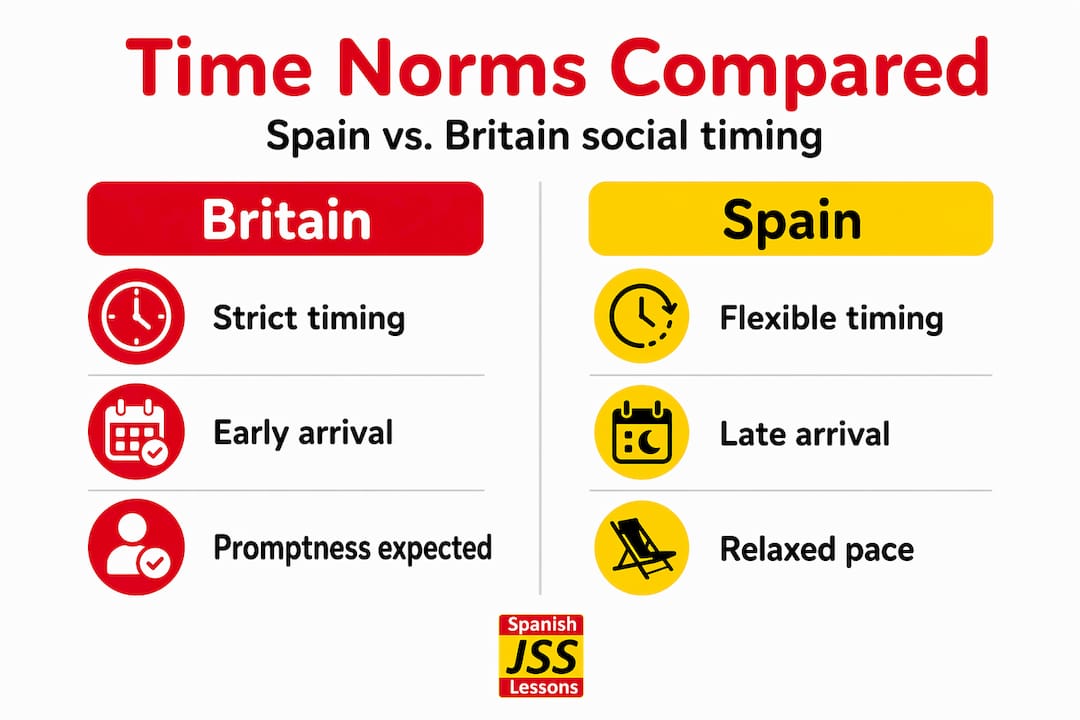
Context always matters Always consider whether an idiom fits the situation and audience before using it.

What does idiomatic Spanish mean?

There’s a question that comes up constantly among English-speaking expats settling into life in Spain. They’ve done the vocabulary work, they’ve tackled the verb conjugations, and yet conversations still feel like they’re happening slightly out of reach. The missing piece is nearly always the same thing: idiomatic language.

So what does “idiomatic” actually mean? As the Cambridge Dictionary defines it, an idiomatic expression is one “whose meaning can’t be fully understood from the literal meanings of the individual words.” In other words, it’s a phrase where the whole means something entirely different from the sum of its parts.

“Idiomatic Spanish is language in its most natural, culturally embedded form. It’s how Spanish people actually speak to each other — not the version found in textbooks.”

Think about how English works. If someone says they’re “feeling under the weather,” you don’t picture them standing in the rain. You immediately know they’re unwell. Spanish works in exactly the same way, except the cultural references, the humour, and the imagery are distinctly Spanish.

Here are a few classic examples that illustrate this perfectly:

  • “Estar en las nubes” — Literally “to be in the clouds.” Real meaning: to be daydreaming or not paying attention.
  • “No hay mal que por bien no venga” — Literally “there is no bad from which good doesn’t come.” Real meaning: every cloud has a silver lining.
  • “Costar un ojo de la cara” — Literally “to cost an eye of the face.” Real meaning: to cost an arm and a leg.

Understanding the role of context in Spanish is essential here. Without context, even a solid vocabulary can leave you stranded when someone drops an idiom into casual conversation. Real-world communication in Spain runs on these phrases. Miss them and you miss the warmth, the wit, and the connection that Spanish culture thrives on.

Spotting idioms: key features of Spanish expressions

Having a definition is one thing — actually noticing idiomatic Spanish in conversation is the next challenge. The good news is that idioms follow patterns, and once you know what to look for, they start jumping out at you.

The most reliable signal is simple: if a phrase sounds odd or nonsensical when you translate it word for word, it’s almost certainly an idiom. Your brain flags the mismatch between the words and the situation, and that flag is your cue to look deeper.

Spanish idioms tend to cluster around a handful of familiar themes:

  • Animals: “Llevarse el gato al agua” (to win against the odds — literally “to carry the cat to the water”)
  • Food: “No hay mal que por bien no venga” or “ser pan comido” (to be a piece of cake — literally “to be eaten bread”)
  • Body parts: “Meter la pata” (to put your foot in it — literally “to put the paw in”)
  • Weather and nature: references to clouds, rain, and storms carrying emotional or situational meanings
  • Cultural references: phrases rooted in Spanish history, religion, or regional traditions

The idiomatic nature of these expressions means they often carry an emotional punch that plain vocabulary simply cannot deliver. They signal familiarity, shared culture, and trust.

A simple comparison helps to make this concrete:

Spanish phrase Literal translation Real meaning
Estar chupado To be licked To be very easy
Tomar el pelo To take the hair To pull someone’s leg
No tener pelos en la lengua To have no hairs on tongue To speak bluntly
Ponerse las pilas To put in the batteries To get your act together
Ser uña y carne To be nail and flesh To be inseparable friends

Pro Tip: Start listening specifically for set phrases that crop up repeatedly in your neighbourhood, at the market, or in the bar. Repetition is a powerful signal. If you hear the same expression from three different people in a week, write it down immediately. Exploring Spanish slang and idioms alongside standard expressions builds your ear far more rapidly than grammar drills alone. Bookmarking real-life phrase lists organised by situation also gives you a ready reference for the moments that matter most.

Common idiomatic Spanish phrases you’ll hear in Spain

Once you start to notice idioms, the next step is actually using them — and knowing which ones matter most in everyday Spanish life.

The following phrases are high-frequency. You will hear them from your neighbours, at the pharmacy, at the town hall, from tradesmen, and over coffee. Knowing them means you’re no longer nodding politely while missing the point.

Phrase Literal translation Real meaning When you’ll hear it
¡Está chupado! It’s licked! It’s very easy When someone brushes off a task
¡Venga! Come! Alright / Let’s go / Come on Constantly, in almost every situation
¡Qué fuerte! How strong! That’s outrageous / shocking Reacting to surprising news
Quedarse con alguien To stay with someone To wind someone up / joke Teasing a friend
Dar en el clavo To hit the nail To hit the nail on the head When someone gets something exactly right
Ponerse morado To turn purple To gorge yourself on food After a big Sunday lunch
No pegar ojo Not to hit an eye Not to sleep a wink After a noisy night

¡Venga! deserves special attention because it is arguably the single most useful word you will encounter in Spain. It functions as agreement, encouragement, a farewell, and a gentle push to get moving — all depending on tone. Master this one and you immediately sound far more natural.

How to safely try out an idiom with a local:

  1. Listen first. Hear the phrase used in context at least two or three times before attempting it yourself.
  2. Confirm the meaning. A quick search or a question to a trusted Spanish friend will prevent embarrassing mistakes.
  3. Use it in a low-stakes setting. Try it with a shopkeeper or a neighbour before deploying it at a formal occasion.
  4. Watch the reaction. Spanish people are usually delighted when an expat uses an idiom correctly and will often encourage you warmly.
  5. Don’t force it. One well-placed idiom per conversation is far more effective than cramming in three awkward ones.

Diving deeper into popular Spanish slang alongside these idioms sharpens your ear considerably. For fluency tips rooted in real Spanish life rather than academic exercises, the approach makes all the difference. Reviewing practical phrase examples by situation means you always have the right expression ready when you need it most.

Pro Tip: Always check the intent behind an idiom before using it in a new context. “Quedarse con alguien” is affectionate teasing among friends but can land badly with someone you’ve just met. Context determines everything in idiomatic language.

Friends practice Spanish idioms at café

How to practise and remember idiomatic Spanish

Putting theory into action is how idioms become part of your everyday Spanish, not just something you recognise on the page.

The biggest mistake adult learners make is treating idioms like vocabulary lists to memorise in isolation. Research consistently shows that language retention is dramatically higher when new material is encountered in context, used actively, and revisited at spaced intervals. Idioms are no different.

Here are the most effective strategies for making idiomatic Spanish stick:

  • Learn in context, not in lists. Instead of memorising “ponerse las pilas” in isolation, picture the specific situation where you’d hear it — a friend telling you to stop procrastinating and get on with the job.
  • Use spaced repetition. Tools that bring phrases back to you at increasing intervals match how long-term memory actually works. The WordAmigo system at James Spanish School uses exactly this principle, cycling through vocabulary and phrases until they become automatic.
  • Role-play real scenarios. Mentally rehearsing conversations at the bank, the doctor’s surgery, or the builders’ merchant means you’re priming yourself for the actual moment. Include idioms you’ve recently learnt.
  • Watch Spanish television with subtitles. Spanish news programmes, soap operas, and chat shows are dense with idiomatic language. Even ten minutes a day trains your ear to the natural rhythm and phrasing of the language.
  • Keep a dedicated idiom notebook. Write each new phrase with its real meaning, the situation where you heard it, and a personal example sentence. Handwriting reinforces memory far more effectively than typing.
  • Talk to your neighbours. This sounds obvious, but many expats spend years living beside Spanish families without ever stepping into genuine conversation. Locals are almost universally patient and pleased when you make the effort.

Pro Tip: Record yourself using three or four idioms in a short spoken paragraph about your day, then play it back. You will quickly hear whether the phrases sound natural or whether they feel forced and out of place. This simple exercise accelerates your ear-tuning faster than almost anything else. Structured Spanish practice lessons built around real-life scenarios give you the framework to practise this kind of active immersion systematically.

Why learning idiomatic Spanish is the real key to integration

Grammar and vocabulary are the door. Idioms are the key that actually opens it.

Infographic showing idioms as key to integration

Here is the uncomfortable truth that most language courses quietly avoid: you can achieve a perfectly respectable level of grammatically correct Spanish and still be treated as a polite outsider by the people around you. Spanish culture is warm, expressive, and deeply communal. It operates on a shared code of humour, reference, and subtle meaning that no amount of grammar drilling will unlock on its own.

When a Spaniard uses an idiom with you and you respond with the right expression at the right moment, something shifts. The dynamic changes from “foreigner making a good effort” to “this person gets us.” That shift is felt rather than analysed. It happens in a fraction of a second and it builds trust in a way that technically correct sentences simply cannot replicate.

Consider the builder who quotes you for a job and says “¡Está tirado!” (it’s a doddle). If you reply “Ojalá, porque el presupuesto está justo” (hopefully, because the budget’s tight), you’ve just had a real Spanish exchange. He’ll smile, lower his guard slightly, and almost certainly give you a fairer price. That’s not an exaggeration. That’s forty years of watching these interactions play out in Spain.

The truth about contextual Spanish mastery is that most language learners stop just short of this layer. They get competent and then plateau, never quite cracking the cultural warmth they came to Spain to find. Idiomatic Spanish is not an advanced bonus for those who’ve finished the “real” learning. It is the real learning — the thing that makes daily life in Spain genuinely enjoyable rather than merely manageable.

Start with five idioms. Use them repeatedly until they feel natural. Then add five more. Within a few months, the conversations around you will feel entirely different.

Take your Spanish further with expert-led tools

Idiomatic Spanish comes alive when you have the right structure supporting your learning. Knowing which phrases matter, how to pronounce them so locals actually understand you, and when to use them confidently — that’s exactly what James Spanish School is built to deliver.

https://jamesspanishschool.com

James Bretherton’s 100-lesson course combines sentence-building with ear-tuning, giving you the tools to follow fast spoken Spanish and respond with phrases that feel genuinely natural. The WordAmigo system reinforces idiomatic vocabulary through strategic repetition, locking expressions into long-term memory rather than letting them fade after a week. Whether you’re just starting out or looking to sharpen what you already know, the all starters shop has everything you need in one place. You can also explore individual online Spanish lessons at your own pace, on any device, with no countdown clock and no pressure.

Frequently asked questions

How is idiomatic Spanish different from slang?

Idiomatic expressions are fixed phrases with figurative meanings that are widely understood across generations, while slang is informal language that tends to shift with age groups, regions, and trends.

Can you use idiomatic Spanish in formal situations?

Many everyday idioms work perfectly well in relaxed professional settings, but some are too casual for formal occasions such as official appointments or written correspondence, so reading your audience is always wise.

What’s the best way to memorise idiomatic Spanish?

Hearing and using idioms in real conversational context, rather than memorising them as isolated lists, is consistently the most effective approach, particularly when combined with spaced repetition tools like WordAmigo.

Are idioms the same in every Spanish-speaking country?

No. Many idioms are specific to Spain, and expressions that are perfectly normal in Madrid may be completely unknown or carry very different meanings in Mexico, Argentina, or Colombia, so always learn the regional variety that matters to your daily life.

Categories
Insights

Intermediate Spanish: Unlock conversational skills for real life


Intermediate Spanish conversational skills

TL;DR:

  • Intermediate Spanish is about transforming from memorised phrases to constructing sentences, asking questions, and understanding native speech at a moderate pace. Reaching this level requires consistent study, real-life practice, and structured lessons that develop skills such as spontaneous conversation and cultural understanding. Steady progress often surprises learners, leading to genuine immersion and participation in their local community.

You already know “hola,” “gracias,” and how to order a coffee. But the moment a Spanish neighbour replies at full speed, your mind goes blank. That gap between memorising useful phrases and holding a real conversation is where most learners get stuck. Moving through it is not about cramming more vocabulary. It is about reaching the intermediate stage, where Spanish stops being a collection of isolated words and starts becoming an actual tool for communicating. This article defines what intermediate Spanish truly means, outlines the skills it builds, and gives you a clear path to get there.

Table of Contents

Key Takeaways

Point Details
Intermediate unlocks real communication At intermediate Spanish level, you can confidently handle everyday conversations and cultural interactions.
Progress relies on structured practice Completing lesson modules and consistent speaking practice are essential for moving beyond beginner Spanish.
Use daily real-life scenarios Applying Spanish in shops, transport, and healthcare builds practical fluency faster.
Resources shape your journey Effective tools and lesson plans help turn intermediate Spanish skills into meaningful conversation.

Defining intermediate Spanish: What it really means

Building on our introduction, let us pinpoint what sets intermediate Spanish apart from other proficiency levels.

Most people think of language learning as a single upward slope. In reality, there are three clearly distinct stages, and each one demands something different from you. Understanding where you are on that map is the first step to moving forward confidently.

The three stages at a glance:

  • Beginner: You recognise common words, follow very slow speech, and handle scripted exchanges such as greetings and numbers. Context almost always needs to be obvious.
  • Intermediate: As the Spanish Core Lessons 21 to 50 outline, intermediate Spanish typically involves handling everyday conversations, expressing opinions, and understanding native speech at a moderate pace. You are no longer dependent on pre-memorised scripts.
  • Advanced: You handle abstract topics, regional accents, rapid idiomatic speech, and nuanced cultural references without effort.

The confusion around the “intermediate” label is understandable. Many learners assume that simply knowing more words automatically bumps them up a level. It does not. Vocabulary is raw material, but intermediate Spanish is about what you do with it. It is the stage where you build sentences from scratch, ask genuine questions, and adjust your language when a conversation takes an unexpected turn.

Comparison table: Beginner vs intermediate vs advanced

Skill area Beginner Intermediate Advanced
Sentence building Fixed phrases only Constructs original sentences Handles complex, nuanced structures
Listening Very slow speech only Moderate speed, most topics Fast speech, accents, idioms
Opinion expression Almost none Clearly states preferences and views Argues, debates, persuades
Everyday situations Scripted only (café, shop) Navigates most daily interactions Effortless in any social context
Cultural understanding Surface level Growing awareness Deep cultural fluency

One of the most important things to recognise is that intermediate learners are not “almost fluent.” They have crossed the engine room of sentence construction, moving from passenger to driver, but they still need regular, structured practice to consolidate what they know. If you are looking for context on the earlier stage before all this, the beginner Spanish guide sets out exactly what you should have in place before pushing forward.

Infographic showing Spanish skill progression steps

Key skills and goals at the intermediate level

Now that we know what intermediate Spanish means, let us break down the specific skills and communicative goals you will develop at this stage.

Man practicing Spanish skills at kitchen table

The shift from beginner to intermediate is not dramatic on the outside, but internally it represents a genuine transformation in how your brain processes Spanish. You stop translating word by word and start recognising patterns. Sentences begin to flow rather than stall. As Spanish Core Lessons 11 to 20 confirm, intermediate learners move from basic phrases to constructing sentences, asking questions, expressing preferences, and handling most social interactions. That is a significant leap in practical capability.

Here are the core skills you develop at the intermediate stage:

  1. Constructing original sentences. You can put together a sentence you have never practised before. Instead of reaching for a memorised phrase, you assemble the words yourself using the structural logic you have absorbed.
  2. Asking genuine questions. Not just “¿Dónde está…?” but open questions about someone’s opinion, their daily routine, or what they would recommend. This skill alone unlocks entire conversations.
  3. Expressing opinions and preferences. You can say what you think, what you like, and what you would prefer. This is what turns a functional exchange into an actual conversation.
  4. Following native speakers at moderate speed. You no longer need every speaker to slow down dramatically. You catch the gist and often the detail too, even when vocabulary is slightly unfamiliar.
  5. Handling everyday situations with confidence. Visits to the doctor, conversations with tradesmen, buying a train ticket, or asking a shop assistant about a product: these no longer feel like tests. They feel like communication.

The jump from Spanish lessons 11 to 20 through to Spanish lessons 21 to 30 maps precisely onto this progression. Early intermediate work focuses on sentence construction and question formation. Later intermediate work builds fluency, introduces more nuanced vocabulary, and sharpens your listening ear.

Pro Tip: One of the fastest ways to consolidate intermediate skills is to use real conversations as your practice arena, not just structured lessons. After each lesson, pick one new structure and deliberately use it in a real interaction that day, whether with a shopkeeper, a neighbour, or a local tradesman. The slightly uncomfortable feeling of using new language in public is actually the signal that genuine learning is happening.

How to progress from beginner to intermediate Spanish

Understanding what intermediate level brings, you will need practical steps to reach this milestone.

Progress rarely happens by accident. Learners who move steadily from beginner to intermediate share a few common habits: they study consistently rather than in occasional bursts, they expose themselves to real Spanish regularly, and they follow a curriculum that builds skills in a logical sequence rather than jumping between random topics.

Steps to make the move from beginner to intermediate:

  1. Commit to a consistent study schedule. Even 20 to 30 minutes daily beats three-hour weekend sessions. Memory consolidation happens between practice sessions, not just during them. Regular, shorter exposure keeps Spanish active in your mind.
  2. Follow a structured lesson sequence. Random vocabulary apps fill your head with isolated words but leave the structural logic untouched. A sequenced curriculum builds sentence construction skills methodically, so each lesson supports the next.
  3. Practise speaking from early on. Many learners delay speaking until they “feel ready.” Waiting too long hardens the habit of silent study. Aim to say something in Spanish every single day, even if it is just narrating what you are doing at home.
  4. Target real-life scenarios. Practise the Spanish you actually need: conversations with neighbours, visits to the pharmacy, dealing with utility companies. Abstract grammar exercises have their place, but real-life scenarios keep motivation high and skills sharp.
  5. Use spoken practice tasks alongside core lessons. Research confirms that completing core lesson sequences and regular practice tasks accelerates movement from beginner to intermediate. The combination of sentence-building lessons and spoken output practice is what turns passive recognition into active fluency.

Common intermediate challenges and how to overcome them:

  • The plateau feeling. Progress feels fast at first, then slows. This is normal. Keep going. The gains at this stage are deeper, not smaller.
  • Understanding fast speech. Native speakers do not slow down for you. Dedicated “ear-tuning” practice using real spoken Spanish at natural speed is essential.
  • Forgetting vocabulary under pressure. A spaced-repetition system, rather than one-off word lists, builds lasting recall. The WordAmigo system within JSS is specifically designed for this.
  • Losing confidence when conversations go off-script. Embrace the unexpected. An off-script moment is not a failure; it is the best practice you will ever get.

Supplementing core study with spoken Spanish practice tasks gives you the repetition needed to make new structures automatic rather than effortful.

Practical tips and resources for intermediate learners

To ensure steady progress, let us review tips and resource suggestions for intermediate learners.

Reaching intermediate level is one achievement. Staying engaged, building on it, and converting it into genuine cultural fluency is another. The right mix of resources keeps momentum high and prevents the dreaded plateau from settling in.

As Spanish Core Lessons 31 to 40 demonstrate, resource-rich environments and structured lessons can turn intermediate Spanish into genuine conversation and cultural understanding. Access to varied, well-sequenced content is not a luxury at this stage; it is a necessity.

Top practice tips for intermediate learners:

  • Listen to Spanish radio or podcasts for ten minutes each morning, even as background sound. Your brain begins filtering and recognising patterns even when you are not actively concentrating.
  • Watch Spanish television with Spanish subtitles, not English ones. This forces your ear and eye to work together in Spanish rather than defaulting to translation.
  • Keep a short vocabulary journal for new words encountered during real interactions. Reviewing it weekly reinforces retention.
  • Find a conversation partner, ideally a native speaker in your local community. Regular informal chats build the spontaneous fluency that no app can replicate.
  • Revisit completed lessons. There is no rule that says you must always push forward. Returning to earlier material with fresh eyes reveals details you missed the first time.

Pro Tip: Focus on listening and speaking every single day, even for just a few minutes. Reading and writing are valuable, but for expats in Spain the most urgent skill is understanding fast spoken Spanish and responding naturally. Prioritise your ears and your mouth above all else.

Resource types and their learning impact:

Resource type Primary benefit Best used for
Structured lesson series Builds grammar and sentence logic Foundation and progression
Spoken practice tasks Converts knowledge into active speech Fluency and confidence
Conversation partners Builds spontaneous, real-world fluency Social integration
Listening resources (radio, TV) Sharpens ear-tuning for natural speech Comprehension and accent familiarity
Vocabulary retention systems Locks words into long-term memory Consistent recall under pressure

The most effective learners do not rely on a single resource. They combine structured lessons with spoken practice, add real-life immersion, and use a system like WordAmigo to ensure that vocabulary genuinely sticks rather than fading within days.

Why the journey to intermediate Spanish can surprise you

After focusing on the methods and resources, it is valuable to consider what reaching intermediate level truly feels like, because it rarely matches what learners expect.

There is a widespread myth that language learning follows a smooth curve. Many adults expect a point of “sudden fluency,” a moment when Spanish simply clicks and everything flows. In reality, many adults expect rapid progress but steady improvement is always rooted in consistent exposure and actual usage. The click does not arrive all at once. It arrives in small, accumulating moments.

You will notice you understood an entire exchange at the post office without translating a word. A neighbour will laugh at something you said, and you will realise you made a genuine joke in Spanish. A builder will give you a lengthy explanation about the work needed, and you will follow almost all of it. These moments do not announce themselves in advance. They appear quietly, and only afterwards do you realise how far you have come.

The unexpected rewards of reaching intermediate level go well beyond communication. They include cultural immersion in the truest sense. When you understand a shopkeeper’s running commentary about the weather, or follow the chatter at a local bar, you are no longer a foreigner navigating a foreign place. You are a participant in the community around you. That shift in identity is something no textbook prepares you for.

Patience matters enormously here. Learners who measure their progress in weeks often feel frustrated. Learners who measure it in months feel genuinely surprised by how much ground they have covered. The reason why adults struggle with Spanish is rarely a lack of ability. It is usually a lack of the right structure, combined with unrealistic expectations about the timeline. Give yourself the structure, set realistic milestones, and the progress will come.

Next steps: Practical support for your Spanish journey

Having considered the real shape of the journey, here is how you can directly further your Spanish skills with the right support structure behind you.

James Spanish School exists precisely for English-speaking adults in Spain who want to move beyond the beginner plateau and into genuine, confident conversation. The 100-lesson course is built around the real interactions you face every day, from the pharmacy to the town hall, using plain English to explain Spanish structure rather than grammar terms that mean nothing to most adult learners.

https://jamesspanishschool.com

Whether you are just starting to build your intermediate skills or consolidating the ones you already have, the range of online Spanish lessons gives you a structured, flexible path forward. Everything is on demand, available 24 hours a day, seven days a week, with no expiry date and no countdown pressure. The module-based learning approach ensures that each lesson connects logically to the next, so your progress builds steadily rather than scattering in every direction. WordAmigo keeps your vocabulary locked in for the long term.

Frequently asked questions

How long does it take to reach intermediate Spanish?

With consistent daily study and regular spoken practice, most adult learners reach intermediate level within 6 to 12 months, and regular practice tasks accelerate that progression noticeably. The timeline shortens significantly when study is paired with real-life Spanish use in everyday situations.

What skills should I focus on at the intermediate level?

Prioritise conversation, listening comprehension, sentence construction, and expressing opinions clearly, since intermediate learners move from fixed phrases to handling a full range of social interactions. Listening is particularly important for expats in Spain, where fast spoken Spanish is the norm rather than the exception.

Do I need to live in Spain to become an intermediate speaker?

No, living in Spain is not a requirement, but immersion and frequent real-life practice speed up progress substantially. Resource-rich environments and structured lesson programmes can replicate much of that immersion effect even without constant daily exposure to native speakers.

What resources best support intermediate Spanish learners?

Structured lesson series combined with regular conversation practice are consistently the most effective tools for intermediate learners. Lesson sequences and regular practice enable rapid progress by building both sentence logic and spoken fluency together rather than treating them as separate skills.

Categories
Insights

Speak Spanish with confidence: simple steps for real-life fluency


TL;DR:

  • Confidence in speaking Spanish depends on practical communication skills, not perfect grammar. Learning common phrases, cognates, and real-life scenarios builds fluency and reduces anxiety in daily interactions. Emphasizing willingness over perfection accelerates progress and fosters genuine connection with native speakers.

Standing at a Spanish shop counter, mouth dry, mind blank, watching the shopkeeper’s expectant face — that moment of freezing is something almost every adult learner knows. The gap between studying Spanish and actually speaking it in Spain feels enormous, and the anxiety that follows can be paralysing. But self-confidence and low anxiety directly shape how well you speak, which means the very fear of speaking is the biggest obstacle you face. The good news is that practical, research-backed steps can close that gap faster than you might think.

Table of Contents

Key Takeaways

Point Details
Context beats grammar Using Spanish in real situations builds much faster confidence than focusing only on rules.
Daily practice matters Short, practical conversations every day increase fluency and self-assurance steadily.
Mistakes are progress Embracing errors lowers anxiety and speeds up communication skills.
Confidence over perfection Aim for being understood, not flawless speech, to connect effectively in Spain.

What you actually need to speak Spanish confidently

Grammar is not the engine room of real conversation. Many learners spend months memorising verb tables and conjugation rules, only to find they still cannot order a coffee without going red in the face. The truth is that daily communication in Spain relies on a much smaller, more practical toolkit.

What you genuinely need for everyday Spanish life comes down to a handful of core areas:

  • Greetings and social phrases: Hola, buenos días, ¿cómo estás? These open every door and signal respect.
  • Directions and location: Knowing how to ask where the pharmacy is, or confirm you are on the right road, keeps you safe and independent.
  • Shopping and money: Prices, quantities, and polite requests cover the vast majority of market and shop interactions.
  • Food and drink: Menu vocabulary, allergens, and ordering phrases make eating out relaxed rather than stressful.
  • Polite requests and apologies: Por favor, gracias, perdona — short phrases with enormous social power.

Research supports this approach clearly. Communicative learning from day one, focused on real-life Spain interactions like greetings, directions, and food, consistently outperforms grammar drills for building speaking confidence. You are learning a living language, not sitting an exam.

One of the most powerful and underused shortcuts is cognates. These are words that look or sound similar in English and Spanish, and there are thousands of them. Words like hospital, hotel, animal, natural, oficina (office), información, and restaurante are immediately recognisable. The moment you realise how many Spanish words you already know, anxiety drops and confidence rises. This is why real-life Spanish conversation feels far more achievable than textbook study suggests.

Approach Focus Real-life result
Grammar-first learning Rules, tables, conjugations Paralysis under pressure
Communicative learning Phrases, context, scenarios Faster, more natural speech
Cognate awareness Familiar word shapes Immediate vocabulary boost
Cultural context learning Spain-specific situations Smoother, more relevant interactions

Pro Tip: Before your next outing in Spain, write down five phrases you expect to need. Practise saying them aloud three times. This tiny preparation step dramatically reduces in-the-moment freezing.

Rather than starting with grammar rules, explore context vs. vocabulary lists to see why situational learning sticks far more effectively for adult learners.

Simple steps to practise and progress each day

With your essential toolkit in mind, let us build a practical daily path to spoken confidence. The key word here is daily. Short, regular practice beats the occasional long study session every time.

Here is a straightforward daily routine you can follow, even on busy days:

  1. Choose one scenario for the day. It might be the bakery, the chemist, or the town hall. Pick something real and relevant to your actual life in Spain.
  2. Learn three to five target phrases for that scenario. Not twenty words. Not a grammar chapter. Just three to five phrases that you will genuinely use.
  3. Practise those phrases aloud. Say them out loud, at normal speed, at least five times. Whispering in your head does not build the muscle memory your mouth needs.
  4. Use at least one phrase in a real interaction that day. Even a simple buenos días to the café owner counts. Real usage cements learning faster than any amount of desk study.
  5. Reflect for two minutes in the evening. What did you say? How did the local respond? What would you say differently next time?

Contextual learning beats isolated words for building the kind of fluency that holds up under pressure. When you learn a phrase in its natural setting, your brain stores it with context, emotion, and meaning attached — all of which make recall far quicker when you need it.

Shop customer ordering bread in Spanish

There are many ways to practise Spanish conversation that fit into a normal day without requiring a classroom or a study partner. The key is consistency over intensity.

Day Scenario Target phrases Real usage moment
Monday Bakery Ordering bread, asking price Morning visit to the panadería
Tuesday Café Ordering coffee, asking for bill Mid-morning break
Wednesday Chemist Describing a symptom, buying medicine Afternoon errand
Thursday Supermarket Asking where something is, quantities Weekly shop
Friday Neighbour chat Greetings, weather, simple questions Chance encounter

Following a Spanish conversation workflow like this transforms Spanish from something you study into something you live. That shift in mindset is where real confidence is born.

Pro Tip: Keep a small notebook or phone note labelled “phrases used today.” Writing down even one phrase you successfully used in a real conversation builds a visible record of progress that keeps motivation alive.


Overcoming anxiety and mistakes: what actually works

Once you are practising daily, the next hurdle is managing the anxiety that spikes every time a native speaker replies at machine-gun speed and you have absolutely no idea what they said. This is normal. Every learner faces it. What matters is how you respond to it.

The science here is clear and encouraging. Self-confidence and low anxiety directly impact speaking performance, and positive feedback measurably reduces foreign language anxiety scores. In other words, how you talk to yourself about your Spanish learning genuinely affects how well you speak.

Practical techniques that actually work include:

  • Supportive self-talk. When you make a mistake, replace “I’m terrible at this” with “That was new information.” One phrase reframes failure as progress.
  • Practise with a sympathetic partner. A friend, spouse, or fellow learner who encourages rather than corrects aggressively creates the low-anxiety environment where real learning happens.
  • Celebrate communication wins, not linguistic perfection. Did the shopkeeper understand you? Did you get what you needed? That is a success, regardless of your grammar.
  • Reflect on achievements, not gaps. At the end of the week, note what you could do that you could not do a month ago. Progress often feels invisible until you look back.
  • Embrace the correction. When a native speaker gently corrects you, thank them. They are giving you a free lesson. Most Spaniards are enormously patient with learners who are genuinely trying.

“The goal of speaking Spanish in Spain is to be understood and to connect with people. It is not to perform flawlessly for an imaginary examiner.”

Understanding conversational confidence means accepting that mistakes are not evidence of failure. They are evidence of effort, and effort is exactly what gets you to fluency.

Learning how to handle Spanish small talk is one of the fastest ways to reduce anxiety in everyday settings. Small talk is low stakes, high reward, and most Spaniards genuinely enjoy a friendly exchange with someone making the effort to speak their language.

Pro Tip: If a native speaker replies too fast, it is perfectly acceptable to say ¿Puede hablar más despacio, por favor? (Can you speak more slowly, please?). Most people will smile and slow down without any awkwardness at all.

How to know you’re making real progress

Once you start reducing anxiety and focusing on growth, you are ready to measure tangible progress. Milestones matter. They remind you that the effort is working, and they keep motivation alive when the learning curve feels steep.

Here are some concrete milestones to watch for:

  1. You ordered a coffee, pastry, and asked for the bill entirely in Spanish without reverting to English.
  2. You understood directions given by a local, even if you needed them repeated once.
  3. You survived a full small-talk exchange with a neighbour, including their questions back to you.
  4. You handled a basic health appointment, describing your symptoms clearly enough to be understood.
  5. You negotiated a price or queried a bill at a market stall, in Spanish, and resolved it.

Each of these is a genuine real-world achievement. Supportive feedback reinforces positive speaking behaviour and reduces anxiety further, creating an upward spiral of growing confidence.

Use this simple self-check at the end of each week:

  • Did I use at least one new phrase in a real interaction?
  • Did I communicate a need and have it understood?
  • Did a native speaker respond to me positively or helpfully?
  • Did I handle an unexpected question or situation in Spanish?

If you can answer yes to even two of these, your Spanish is growing. For broader practical Spanish tips for real-life fluency in Spain, reviewing your progress through these lenses keeps you honest and motivated.

Experience Typical beginner Confident speaker
Entering a shop Panic, points, uses English Greets, asks, thanks in Spanish
Getting directions Smiles and nods blankly Follows key words, confirms understanding
Ordering food Points at menu, gestures Orders clearly, handles questions
Health appointment Uses translator or struggles Describes basics, understands responses
Neighbour chat Avoids or escapes quickly Engages briefly, enjoys the exchange

The jump from beginner to confident speaker is not about knowing more grammar. It is about logging real interactions and watching that table slowly fill with right-hand column experiences.

Why confidence always beats perfection: lessons from real learners

Here is something worth saying plainly: perfectionism is not a virtue in language learning. It is a trap. The learner who waits until they feel ready before speaking in Spain may wait for ever.

We have seen this pattern repeatedly at James Spanish School. Adult learners who arrive with impressive grammar knowledge but zero speaking confidence often struggle far more in real-life settings than learners with half the vocabulary but twice the willingness to try. One learner with a solid grasp of subjunctive tenses stood silent at a hardware shop for five minutes rather than risk making a mistake. Another learner with far simpler Spanish walked in, pointed at the shelf, said Necesito uno así, ¿lo tiene? (I need one like this, do you have it?) and walked out with exactly what she needed.

Fluency is not the absence of mistakes. It is the presence of willingness. Every Spanish speaker you admire made thousands of errors on the way to sounding natural. The difference is they kept going.

Spanish people, particularly in smaller towns and villages, respond warmly to the effort. They are not grading your subjunctive usage. They are deciding whether to help you. And a genuine, imperfect attempt in their language almost always wins their goodwill immediately. That is the real-life conversation experience that no grammar book can replicate.

The uncomfortable truth is that many language courses, whether apps, textbooks, or evening classes, accidentally reinforce perfectionism by grading every answer. Real life does not grade you. Real life just asks: did you communicate? If yes, you passed.

Prioritise being understood. Prioritise connecting with the people around you. Everything else, including your grammar, tidies itself up over time through repeated exposure and the small corrections that generous native speakers offer freely.

Take your Spanish speaking confidence even further

Building confidence in spoken Spanish is a journey, and having the right structure behind you makes every step more manageable and rewarding.

https://jamesspanishschool.com

At James Spanish School, every lesson is built around the real life you are living in Spain, not abstract grammar exercises or academic exam preparation. James Bretherton’s 100-lesson course really focuses on covers both sentence-building and ear-tuning, so you can understand the replies you get, not just produce the questions. With tips for speaking with locals woven throughout, and cultural insights that go far beyond language, the course equips you for the situations that actually matter. Explore conversational Spanish confidence resources and see how a structured, Radical Simplification approach can turn daily anxiety into daily achievement.

Frequently asked questions

What are the most common mistakes when speaking Spanish in Spain?

Over-focusing on grammar rules and fearing errors are the two biggest obstacles; communicative learning focused on real interactions consistently beats grammar drills for building usable fluency.

How quickly can I gain confidence speaking Spanish?

Short daily practice of real interactions builds noticeable confidence within weeks, especially when positive feedback reduces anxiety and reinforces progress with each successful exchange.

What’s more effective: studying vocabulary or real conversations?

Practising phrases in realistic contexts leads to faster, more reliable real-life usage because contextual learning outperforms isolated word memorisation when it comes to under-pressure recall.

Can making mistakes in Spanish help me learn faster?

Yes, every mistake is genuinely useful learning data, and focusing on communication rather than perfection reduces foreign language anxiety over time, making you both more relaxed and more effective as a speaker.

Please ask questions
from Lesson pages