

Why audio Spanish lessons?
Most adults who try to learn Spanish hit the same wall. They sit through grammar-heavy lessons, memorise conjugation tables, and still freeze the moment a local speaks at full speed. The frustrating truth is that traditional classroom methods were built for academic results, not real conversations. Yet listening methods achieve 30-40% faster comprehension than textbook-only approaches. Audio lessons change the game entirely. This guide walks you through the evidence, the practical benefits, and the expert strategies that make audio-based Spanish learning the smartest route to genuine fluency for English-speaking adults.
Table of Contents
- How audio Spanish lessons change the way adults learn
- The evidence: Faster comprehension and lasting recall
- Real-life benefits: Practical skills and cultural immersion
- Expert insight: How to get the most out of audio Spanish learning
- Why most traditional Spanish lessons miss the mark—and what actually works
- Your next steps: Learn Spanish the practical way
- Frequently asked questions
Key Takeaways
| Point | Details |
|---|---|
| Faster fluency | Audio lessons speed up your spoken comprehension and real-life fluency far more than grammar-heavy courses. |
| Practical confidence | Frequent listening and speaking practice prepares you for real conversations, not just passing exams. |
| Flexible learning | You can integrate audio lessons into daily life—even while busy—so you keep progressing naturally. |
| Cultural immersion | Audio trains your ear for European Spanish accents and everyday expressions essential for life in Spain. |
How audio Spanish lessons change the way adults learn
For most adults, the memory of school-style language lessons is not a fond one. Verb tables, gender rules, subjunctive clauses. It is a lot of theory with very little payoff when you actually need to ask someone for directions in Seville. Grammar-heavy methods are slower for building the kind of conversational confidence that matters in real life. You did not learn your first language this way.
Audio lessons work differently. Instead of asking you to analyse the language, they ask you to hear it. You absorb rhythm, tone, and natural phrasing the same way a child picks up their first language. Not by studying rules, but by repeated, meaningful exposure.
Here is what audio-based learning actually trains:
- Ear recognition: Your brain learns to distinguish European Spanish sounds, not just read them on a page.
- Natural phrasing: You pick up how sentences flow, so you respond faster without mentally translating.
- Accent familiarity: You get used to the speed and cadence of native speakers, which is a very different skill from reading a textbook.
- Confidence under pressure: Hearing real speech repeatedly reduces the panic when a conversation moves quickly.
“The shift from grammar-first to listening-first is not just a method change. It is a mindset change. Adults who embrace audio learning stop trying to be perfect and start trying to be understood.”
The beauty of on-demand Spanish learning is that you can revisit the same lesson ten times without embarrassment. Each listen reveals something new.
Pro Tip: Try listening to a lesson before reading any transcript or notes. Your brain will work harder to find meaning, and that effort builds stronger recall.
The evidence: Faster comprehension and lasting recall
It is one thing to say audio lessons feel more natural. It is another to show you the numbers. The research is clear and worth taking seriously.
Studies show that audio-first learners achieve 30-40% faster comprehension than those relying on classroom instruction alone. Receptive skills, meaning your ability to understand spoken Spanish, develop significantly faster when listening is the primary method.
| Method | Comprehension speed | Vocabulary retention | Spoken confidence |
|---|---|---|---|
| Grammar-first classroom | Slower | Moderate | Low |
| Textbook self-study | Slowest | Low | Very low |
| Audio-based learning | 30-40% faster | High | High |
| Audio plus reading | Fastest overall | Highest | High |
What does faster comprehension actually mean for daily life in Spain?
- You follow conversations at the market without asking people to repeat themselves constantly.
- You catch the key words when a doctor explains something important.
- You understand announcements at train stations and airports.
- You pick up on cultural nuance, humour, and tone, not just the literal meaning of words.
For tips on speaking with locals, the foundation is always listening first. Speaking well is almost impossible if your ear has not been trained to recognise how the language actually sounds in the wild.
If you are still weighing up your options, exploring the best way to learn Spanish will show you why audio sits at the heart of every effective method for adult learners.
Real-life benefits: Practical skills and cultural immersion
With the evidence made clear, the next step is understanding what these results look like in everyday life. Audio lessons do not just improve test scores. They prepare you for the moments that actually matter.
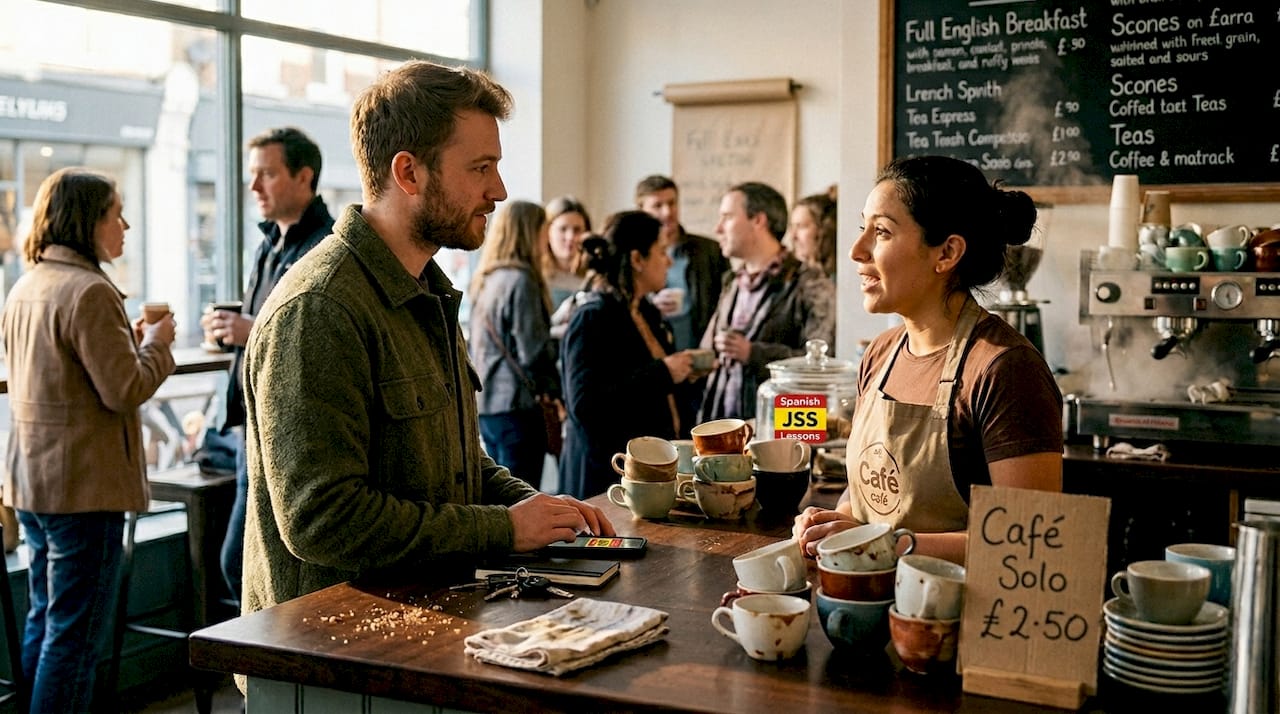
Consider the difference between learning to order a coffee from a textbook dialogue versus hearing how a local actually does it, complete with the informal shorthand, the regional accent, and the cultural warmth. Audio captures all of that. Grammar drills capture none of it.
| Situation | Audio-based learner | Grammar-first learner |
|---|---|---|
| Ordering at a bar | Confident, natural | Hesitant, over-formal |
| Asking for directions | Understands the reply | Misses key words |
| Chatting with neighbours | Relaxed and engaged | Anxious, relies on phrases |
| Visiting a health centre | Follows the conversation | Struggles with speed |
Here is how to use audio lessons as your core learning tool:
- Start with listening only. Resist the urge to read along. Let your ear do the work first.
- Repeat short segments. Play a sentence, pause, and say it aloud. This is called shadowing, and it is remarkably effective.
- Focus on situations you will actually face. Prioritise lessons about shopping, health, travel, and socialising.
- Build a daily habit. Even fifteen minutes a day compounds quickly over weeks.
- Review regularly. Spaced repetition means returning to earlier lessons to lock in what you have learned.
For beginner steps for conversations, starting with audio gives you a practical foundation that grammar drills simply cannot replicate.
Pro Tip: Combine short daily audio sessions with shadowing. Repeat what you hear immediately after listening. This trains both your ear and your mouth at the same time.
One important caution: audio builds speaking confidence quickly but works best when you supplement it with some reading and real interaction. Audio is the engine. Reading and conversation are the fuel that keeps it running.
Expert insight: How to get the most out of audio Spanish learning
Now that you see the direct benefits, let us refine your approach with expert guidance that maximises what you get from audio learning.
The most effective learners do not just press play and hope for the best. They use a layered approach that combines listening, repetition, and active speaking. Spaced audio repetition and comprehensible input reduce overwhelm and keep motivation high over the long term.
Here is how to layer your practice for the best results:
- Listen actively. Do not multitask on your first listen. Give the audio your full attention to catch meaning and tone.
- Repeat with purpose. On your second or third listen, pause and repeat phrases aloud. Focus on matching the rhythm, not just the words.
- Space your reviews. Return to completed lessons after a few days. You will notice things you missed the first time.
- Use downtime wisely. Commuting, walking, or doing household tasks are ideal moments for passive listening. Your brain continues processing even when you are not consciously focused.
- Track what you understand. Note when you grasp a full sentence without replaying it. That is your real measure of progress.
“Adults who integrate audio learning into their daily routines, rather than treating it as a separate study session, report significantly higher motivation and faster progress.”
The James Spanish School course is built around exactly this philosophy. Lessons are designed for real-life situations, and when combined with WordAmigo, the pronunciation assessment module with its strong passive audio listen element and memory aids it really builds spoken and comprehension confidence.
Pro Tip: Track comprehension gains, not passive hours. Ask yourself after each session: did I understand more than last time? That question keeps you honest and motivated.
Why most traditional Spanish lessons miss the mark—and what actually works
Here is an uncomfortable truth that most language schools will not tell you. The grammar-first model was designed for written exams, not spoken communication. It teaches you to analyse Spanish rather than use it. And for adults who want to live, work, or retire in Spain, that distinction is enormous.
The fastest progress comes from grappling with real spoken Spanish, mistakes and all. Every time you mishear something and work out the meaning from context, your brain builds a stronger connection than any conjugation table could create. That is not a flaw in the process. It is the process.
Audio learning is also genuinely enjoyable in a way that grammar drills are not. You hear real voices, real places, real situations. That emotional connection matters more than most people realise, because motivation is what keeps you learning when life gets busy.
The best approach, and the one that the evidence consistently supports, is a hybrid: audio as your primary tool for building spoken understanding, with reading and interaction as support. Not the other way round. Lead with listening, and the rest follows far more naturally.
Your next steps: Learn Spanish the practical way
If you have been putting off learning Spanish because traditional methods felt too slow or too academic, audio-based learning is the practical alternative you have been looking for.
James Spanish School offers flexible, audio-rich courses built entirely around real-life conversation in European Spanish. Whether you are preparing for life in Spain or simply want to connect more confidently with the people around you, the 100 lesson course gives you structured lessons you can fit around your life. Not sure where to begin? There is only one place, because learning the structure of the language ensures you can build sentences from lesson 1. The Core course matches you with the right starting point. You can also explore how learning Spanish unlocks confidence in Spain through practical, everyday situations.
Frequently asked questions
How much faster can I learn Spanish using audio lessons compared to textbooks?
Audio-based learning can deliver 30-40% faster comprehension than traditional textbook methods, particularly for everyday spoken understanding and real-life conversations.
Should I only use audio or combine it with reading and writing?
Audio is the fastest route to speaking and understanding Spanish naturally, but supplementing with reading and interaction rounds out your skills and builds complete fluency over time.
Are audio lessons suitable for people with little free time?
Absolutely. Audio lessons are ideal for busy adults because you can integrate them into daily routines such as commuting, walking, or cooking, without needing dedicated study time.
Will I develop a good Spanish accent through audio methods?
Regular exposure to native European Spanish audio trains your ear and your mouth simultaneously, giving you a far more authentic accent than reading-based methods ever could.