

Essential Spanish vocabulary for expats
TL;DR:
- Most English-speaking expats in Spain struggle due to limited local English, especially outside tourist zones.
- Focusing on practical phrases for greetings, directions, shopping, and emergencies helps build confidence in daily interactions.
- Using contextual, culturally polite expressions and practicing real-life conversations enables smoother integration into Spanish life.
Imagine standing at a pharmacy counter, a worried look on your face, trying to explain what you need to a pharmacist who speaks no English. Or picture yourself on a rural bus, unsure whether you have missed your stop because you could not understand the driver’s rapid announcement. For most English-speaking expats in Spain, only about 25% of Spaniards speak any English at all, and that figure drops sharply once you step away from coastal tourist zones. The good news is that a well-chosen set of Spanish words and phrases, practised properly, transforms those moments of anxiety into confident everyday exchanges.
Table of Contents
- How to choose which words matter most
- Everyday essentials: greetings, politeness, and daily life
- Getting around: directions and transport phrases
- Shopping, food, and emergencies: vocabulary for life’s key moments
- Why vocabulary lists alone aren’t enough for expats
- Master Spanish for real life with James Spanish School
- Frequently asked questions
Key Takeaways
| Point | Details |
|---|---|
| Prioritise survival vocabulary | Focus on greetings, requests, directions, shopping, and emergency phrases for a smooth start. |
| Phrase context matters | Using words in full sentences ensures you are understood and helps with cultural integration. |
| Practice over memorisation | Engage in real conversations to build confidence rather than relying only on vocabulary lists. |
| Politeness is powerful | Key phrases like ‘por favor’ improve interactions and open doors with locals. |
How to choose which words matter most
Now that you understand why vocabulary matters, let us clarify which words to focus on first. Not all vocabulary is created equal. A beginner learner who spends weeks memorising the names of exotic vegetables will struggle far more than someone who has mastered a core set of practical phrases used in real daily life.
The most effective approach is to build your vocabulary around what specialists call “survival scenarios.” These are the predictable situations every expat faces, regardless of where they live in Spain. Think of them as the recurring scenes in the film of your daily life. Essential vocabulary for expats clusters naturally into these six categories:
- Greetings and farewells (buenos días, hola, adiós, buenas tardes)
- Polite expressions (por favor, gracias, perdón, de nada)
- Directions and locations (¿Dónde está…?, a la derecha, a la izquierda)
- Shopping and money (¿Cuánto cuesta?, la cuenta, efectivo, tarjeta)
- Transport (el autobús, la parada, el tren, el taxi)
- Medical and emergency (médico, farmacia, ayuda, necesito ayuda)
Working through these categories in order gives you maximum practical return for the time you invest. Covering practical spoken Spanish in each of these areas means you are ready for the situations that come up most often, not just the ones that appear in textbooks.
“Learning single words is like buying individual bricks without a plan. What you need are ready-built phrases you can use immediately.” — James Bretherton, James Spanish School
One important cultural point: Spaniards place real value on polite, formulaic language. Mastering requests with ¿Podría… por favor? (“Could you… please?”) signals respect and dramatically increases the likelihood that people will slow down, repeat themselves, or go out of their way to help you. It is not just politeness for its own sake; it is a practical tool.
Pro Tip: Always learn phrases in context rather than isolated words. “Water” alone tells you nothing, but “Un vaso de agua, por favor” (A glass of water, please) gets you a drink. Check the Spanish situations list for a full set of real-life contexts to build around.
Everyday essentials: greetings, politeness, and daily life
Once you know which types of words matter most, start with essential everyday interactions. These are the phrases that open doors, literally and figuratively. Spanish people genuinely warm to foreigners who make the effort, and a well-timed “buenos días” can change the entire tone of a conversation before it has even properly begun.
Core greetings to learn immediately:
- Hola — Hello (informal, universally used)
- Buenos días — Good morning (use until around lunchtime)
- Buenas tardes — Good afternoon/evening (from around 2pm onwards)
- Buenas noches — Good night (evening farewell or late greeting)
- ¿Cómo está usted? — How are you? (formal, respectful)
- ¿Cómo estás? — How are you? (informal, with people you know)
- Adiós / Hasta luego — Goodbye / See you later
Polite phrases that make a real difference:
- Por favor — Please
- Gracias — Thank you
- De nada — You’re welcome
- Perdón / Disculpe — Excuse me / Sorry
- ¿Podría ayudarme, por favor? — Could you help me, please?
- No entiendo — I don’t understand
- ¿Puede repetir más despacio? — Can you repeat more slowly?
Here is a quick reference table for building polite everyday exchanges:
| English phrase | Spanish equivalent | Context note |
|---|---|---|
| Good morning | Buenos días | Use until approximately 2pm |
| Please | Por favor | Always add to requests |
| Thank you very much | Muchas gracias | Warmer than gracias alone |
| Excuse me (to get attention) | Disculpe | Polite, formal register |
| I don’t understand | No entiendo | Opens the door to slower repetition |
| Could you help me? | ¿Podría ayudarme? | Very polite; adds por favor at end |
| See you later | Hasta luego | Casual but widely used farewell |
Polite formulaic expressions like ¿Podría… por favor? are essential for cultural integration; they signal that you respect local norms rather than expecting people to adapt to you. This matters more than many expats realise when they first arrive.
Pro Tip: In Spain, tips for Spanish fluency always emphasise tone as much as vocabulary. A warm, unhurried delivery of even a simple phrase lands far better than a technically correct sentence delivered with stress or impatience. Slow down, smile, and let the words do their work.
Building comfort with these basic Spanish conversations is the first real milestone for any expat. Once daily greetings feel natural, everything else becomes easier to layer on top.
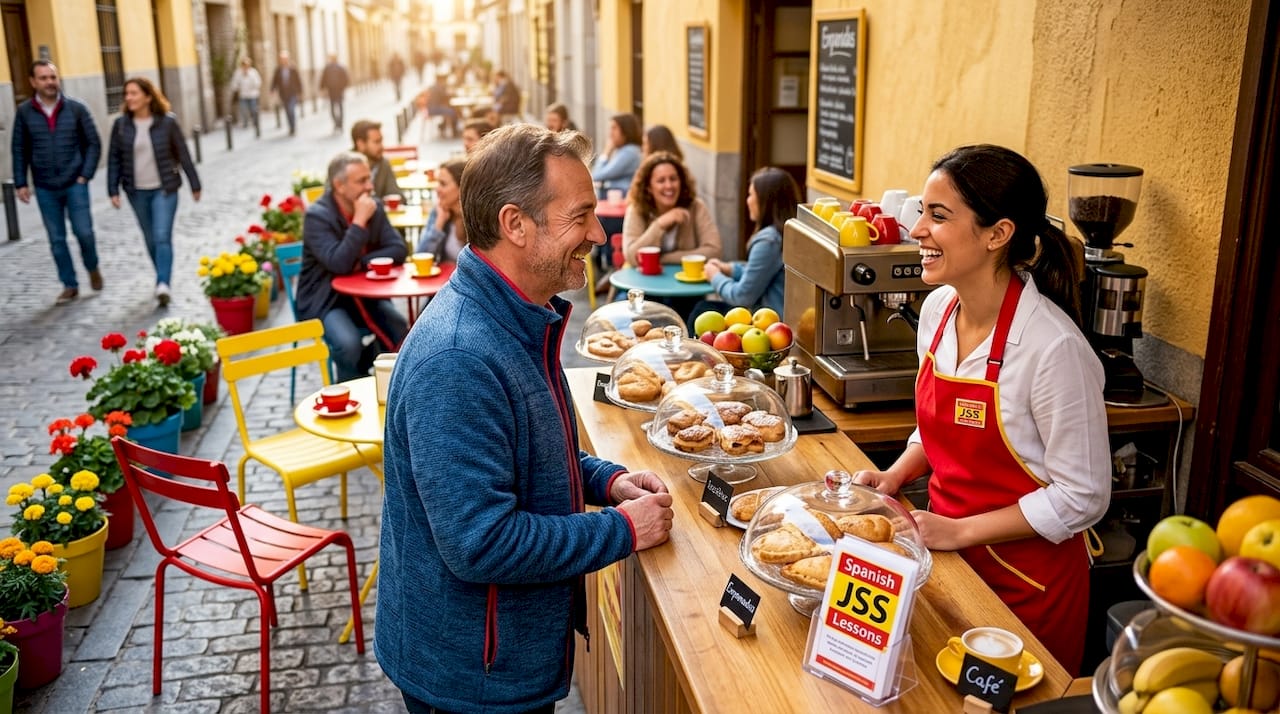
Getting around: directions and transport phrases
Having established polite basics, let us address travel and finding your way. Getting lost is frustrating in your own language. In a foreign country, it can feel genuinely alarming, particularly in rural towns where English signage is essentially non-existent.
Step-by-step guide to asking for directions:
- Start with a polite opener: Disculpe, perdone… (Excuse me…)
- Ask where something is: ¿Dónde está…? (Where is…?)
- Confirm you are looking for the right thing: ¿Es por aquí? (Is it this way?)
- Listen for key direction words: a la derecha (to the right), a la izquierda (to the left), recto or todo recto (straight ahead)
- Ask for repetition if needed: ¿Puede repetir más despacio, por favor?
- Thank them warmly: Muchas gracias, muy amable (Thank you very much, very kind)
This six-step framework keeps you in control even when the reply comes at the machine-gun speed of a native speaker.
Only 1 in 4 Spaniards speak English, and that proportion falls sharply outside tourist zones. Knowing your direction phrases in Spanish is not optional — it is one of the most practical investments you can make.
Here is a comparison table for common transport and location terms:
| English | Spanish | Usage context |
|---|---|---|
| Bus stop | La parada de autobús | Ask “¿Dónde está la parada?” |
| Train station | La estación de tren | Ticketing and platform queries |
| Airport | El aeropuerto | Arrivals, departures, transfers |
| Town hall | El ayuntamiento | Official paperwork and queries |
| Chemist / Pharmacy | La farmacia | Medicine and basic health needs |
| Hospital | El hospital | Urgent medical attention |
| Taxi rank | La parada de taxis | Locating taxis in town centres |
| Return ticket | Un billete de ida y vuelta | Booking train or bus travel |
For navigating common transport scenarios like boarding a local bus or negotiating a taxi fare, having these terms ready dramatically reduces the chance of a costly or stressful misunderstanding. Knowing how to ask for the next stop (“¿Es la próxima parada?”) or confirm a departure time (“¿A qué hora sale?”) turns an intimidating experience into a routine one.
Shopping, food, and emergencies: vocabulary for life’s key moments
With navigation sorted, expats need to master everyday shopping and respond to emergencies quickly. These two areas cover opposite ends of the emotional spectrum — the pleasant routine of buying food and the urgent pressure of a crisis — yet both demand clear, confident Spanish.
Key shopping and food vocabulary:
- ¿Cuánto cuesta? — How much does it cost?
- La cuenta, por favor — The bill, please
- Efectivo — Cash
- Tarjeta — Card (payment)
- ¿Tiene…? — Do you have…?
- El menú del día — The set daily menu (a genuine Spanish institution)
- Pan — Bread
- Agua — Water (ask for “agua del grifo” for tap water)
- Sin gluten / sin lactosa — Gluten-free / lactose-free
- La tienda — The shop
- El mercado — The market
Emergency and medical phrases to know before you need them:
- ¡Ayúdame! — Help me!
- Llame a una ambulancia — Call an ambulance
- Necesito un médico — I need a doctor
- ¿Dónde está la farmacia más cercana? — Where is the nearest chemist?
- Me duele… — …hurts (e.g., “Me duele la cabeza” — I have a headache)
- Soy alérgico/a a… — I am allergic to…
Key stat: Spanish is essential in most everyday interactions outside major tourist centres. For shopping, medical appointments, and financial transactions, fluency in even a basic set of phrases is the difference between independence and relying on someone else to speak for you.
Pro Tip: Practise money amounts out loud before you go shopping. Saying “son veinte y tres euros” (that’s twenty-three euros) and counting change in Spanish might feel awkward at first, but it builds the automatic recognition you need when a shopkeeper calls out your total quickly at a busy market. Explore practical spoken Spanish resources to sharpen these real-world skills, and use tools designed to reinforce Spanish skills between lessons so the vocabulary actually sticks.
Using full sentences in emergencies also matters. “¡Ayúdame!” alone works in a crisis, but “Necesito ayuda, soy británico/a y no hablo bien español” (I need help, I’m British and I don’t speak Spanish well) gives people the context to respond usefully and sympathetically.
Why vocabulary lists alone aren’t enough for expats
Here is the perspective many language guides quietly avoid: a list of words, no matter how well chosen, will not make you comfortable in Spanish conversation. And that gap between knowing words and actually using them fluently is exactly where most expats stall.
Consider what happens when you try to use a memorised word in a real exchange. A shopkeeper responds quickly, uses slang, changes the subject, or asks a follow-up question you did not anticipate. Suddenly your neatly memorised list is useless because language does not arrive in neat, predictable order. Real communication is messy, fast, and full of cultural shortcuts.
This is why context beats lists every single time. Words that you have only read on a flashcard live in isolation in your memory. Words that you have heard in a conversation, used in a sentence, and associated with a real moment of connection live somewhere far deeper and more accessible.
There is also the cultural layer that no vocabulary list captures. Tone, timing, and body language carry enormous weight in Spanish communication. A flat, mechanical delivery of “gracias” lands very differently from a warm, natural one. Spaniards read social cues fluently, and an expat who responds with appropriate warmth and good humour will always be met with more patience and generosity than one who appears tense or dismissive.
The lesson from decades of working with expats in Spain is this: knowing words is power; using them naturally is freedom. The path from one to the other runs directly through practising phrases in real scenarios, with real people, in the actual rhythm of Spanish life. Memorisation is the starting point, not the destination. The expats who integrate most successfully are not necessarily the most academically gifted; they are the ones who use what they know, make mistakes cheerfully, and keep showing up for the conversation.
Master Spanish for real life with James Spanish School
For expats wanting more than just words, actionable next steps make all the difference.
James Spanish School was built specifically for English-speaking adults living in Spain or planning to move there. It is not about passing exams or studying grammar charts. It is about gaining the confidence to talk to your neighbours, negotiate with tradesmen, handle medical appointments, and feel genuinely at home in Spain.
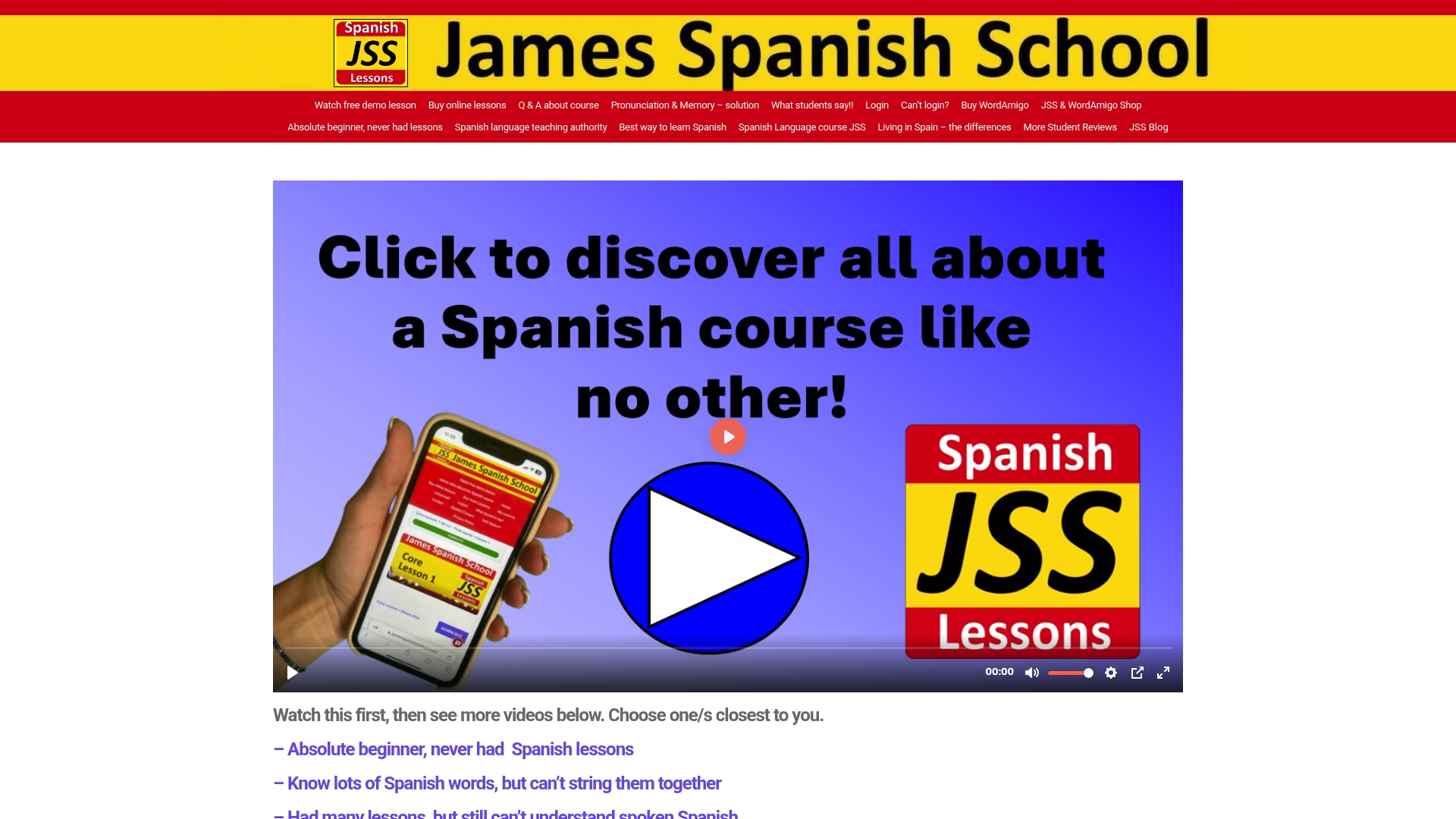
The 100-lesson online course covers both sentence-building and “ear-tuning,” so you can follow fast spoken Spanish, not just produce it. The WordAmigo system uses AI-powered strategic repetition to permanently embed vocabulary and pronunciation, solving the two frustrations that defeat most adult learners. You can learn Spanish online at your own pace, on any device, with no expiry date. Browse the full range of resources in the JSS shop, or start with the WordAmigo to begin embedding the essential words covered in this guide right away.
Frequently asked questions
Is it possible to live in Spain only speaking English as an expat?
No, Spanish is essential in most regions; only about 25% of Spaniards speak English, and that is mostly concentrated in tourist areas rather than everyday communities.
Which Spanish phrases should I learn first as an expat?
Start with greetings, polite expressions, asking directions, shopping phrases, and emergency terms; these core categories cover the vast majority of everyday expat needs immediately.
How do I politely ask for help in Spanish?
Use ¿Podría ayudarme, por favor? for respectful requests; adding “por favor” is essential and signals genuine respect for local customs.
What should I do if I forget a Spanish word during a conversation?
Politely admit you are still learning and ask them to repeat or explain more slowly; most Spaniards will respond with warmth and patience when they see you are genuinely trying.
Are vocabulary apps a good substitute for real-world practice?
Apps help memorise words but cannot replace practising phrases naturally with locals; real context, tone, and social cues are only learned through actual conversation in everyday situations.