

TL;DR:
- Adapting to Spanish culture involves adjusting your daily routines, social behaviors, and communication styles.
- Understanding local schedules, greetings, and customs helps foreigners integrate smoothly into Spanish life.
Cultural adaptation in Spain is the process of reshaping your daily habits, social expectations, and communication style to match the rhythms of Spanish life. For English speakers living in Spain, this means more than learning the language. It means understanding when to eat, how to greet people, when to linger, and when to leave. The gap between knowing Spain exists and actually fitting into it is bridged by specific, learnable behaviours. This guide covers exactly how to adapt to Spanish culture, from meal timing and greetings to tipping and regional identity, so you can move through daily life with confidence rather than confusion.
How to adapt to spanish culture through daily rhythms
The single biggest adjustment for English speakers in Spain is the clock. Spanish daily schedules run significantly later than in the UK or the US. Lunch falls between 14:00 and 15:30, a light afternoon snack called merienda happens between 17:30 and 19:00, and dinner rarely starts before 21:00. Arriving at a restaurant at 19:00 expecting dinner will often earn you a near-empty room and a puzzled look from the waiter.
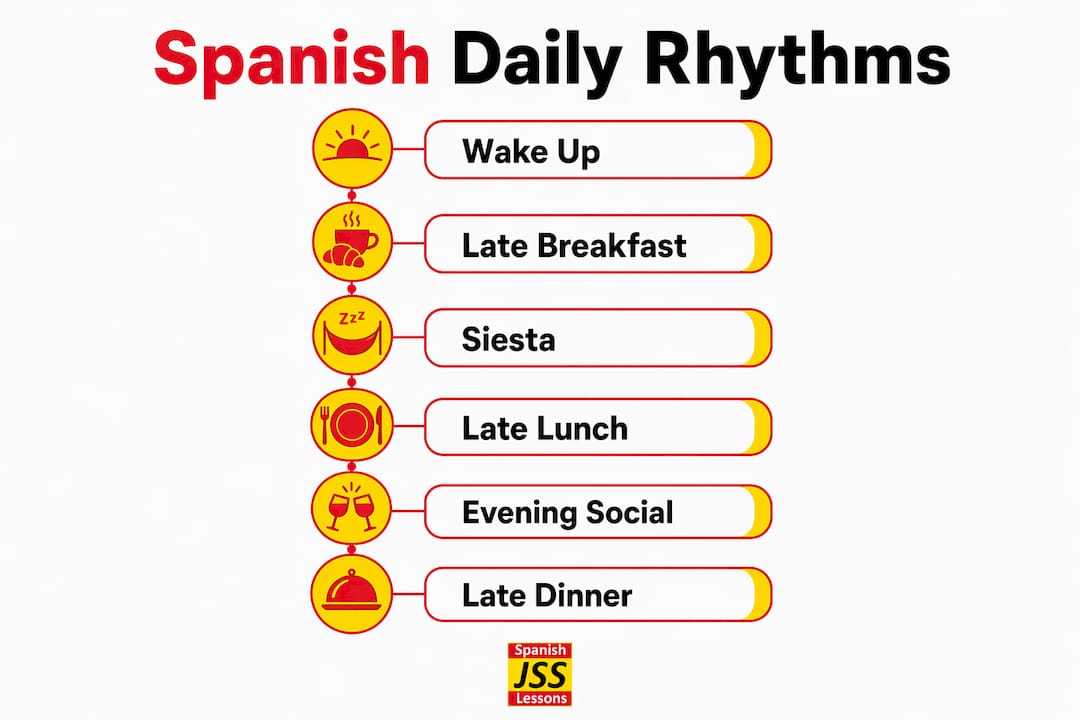
Adjusting your internal clock is not optional if you want to feel part of daily life. Shops close for a midday break in many towns, social plans are made for times that feel late by British standards, and the streets genuinely come alive after 20:00. Fighting this schedule creates constant friction. Accepting it removes most of it.
The concept of sobremesa sits at the heart of Spanish social timing. Sobremesa is the tradition of staying at the table after a meal, talking, laughing, and simply being present together. It can last twenty minutes or two hours. Leaving immediately after eating is considered abrupt and a little rude. Staying at the table is not wasting time in Spain. It is the point of the meal.
One more nuance worth knowing: punctuality in Spain operates on two tracks. Professional and institutional settings expect you on time. A doctor’s appointment, a bank meeting, or a work call runs to schedule. Social occasions are far more relaxed. Turning up thirty minutes after the agreed time for a dinner party is entirely normal.
Pro Tip: Keep two mental clocks. One for work and official appointments, where punctuality matters. One for social life, where flexibility is the norm and arriving early can actually catch your host off guard.
Here is a quick reference for the Spanish daily schedule:
- 08:00–09:00: Breakfast, usually light (coffee and toast)
- 11:00–12:00: Mid-morning coffee break, common in workplaces
- 14:00–15:30: Main meal of the day, often with family
- 17:30–19:00: Merienda, a light snack or coffee
- 21:00 onwards: Dinner, often the social highlight of the evening
How do spanish greetings actually work?
Spanish greetings follow clear rules once you know them, but they can feel confusing at first. Among friends and family, the standard greeting is two cheek kisses, starting with the right cheek. This applies between women and between men and women. Two men typically shake hands, though close male friends may embrace. In professional settings, a firm handshake is the norm for both genders.
Physical proximity in Spanish social interaction is closer than most British people expect. Standing at arm’s length can read as cold or disinterested. Expressive gesturing is common and is not a sign of argument or aggression. It is simply how conversation flows. Reading this correctly takes a few weeks, but it becomes natural quickly.
Here are the key points for getting greetings right:
- Follow the local lead. If someone leans in for two kisses, reciprocate. Do not pull back or offer a hand instead unless you are in a clearly formal context.
- Say hello to everyone in a room. Entering a bar, a small shop, or a gathering without greeting the people present is considered impolite. A simple buenos días or buenas tardes covers it.
- Do not overthink the cheek kiss. It is a social ritual, not an intimate gesture. Hesitating awkwardly causes more discomfort than just doing it.
- Adapt to regional norms. In some parts of Spain, particularly in Catalonia, a single kiss or a handshake is more common. Observe what locals do and mirror it.
Understanding Spanish customs around personal space and physical expressiveness is one of the fastest ways to signal that you are making a genuine effort to fit in. Locals notice, and they appreciate it.
What are the rules for dining and tipping in spain?
Spanish dining culture is built around time and connection, not efficiency. The main meal of the day is lunch, not dinner, and it is treated seriously. A proper lunch can run to two hours with multiple courses. Dinner is lighter and later. Trying to rush either meal will make you stand out immediately.
Sobremesa applies at lunch just as much as at dinner. Post-meal conversation is integral to daily Spanish social life, not a bonus. Scholars and cultural commentators have described sobremesa as a deliberate resistance to industrial-pace living, a way of prioritising human connection over productivity. That framing helps explain why Spaniards genuinely do not understand the British habit of eating quickly and leaving.
Here is how to handle the practical side of dining:
- Order at the pace of the table. Do not rush to order or signal for the bill while others are still eating or talking.
- Ask for the bill when you are ready. Waiters in Spain do not bring the bill unsolicited. This is a courtesy, not inattention.
- Tip modestly and in cash. Tipping in Spain is optional. Staff receive a proper wage, so tips are a gesture of appreciation rather than a financial necessity. A tip of €1–€5 is common for a good meal.
- Do not tip for basic service. Many locals do not tip for a coffee, a glass of wine, or a taxi ride. Doing so is not wrong, but it marks you as a tourist.
- Stay and enjoy the moment. Leaving immediately after paying is the one behaviour most likely to make a Spanish host feel you did not enjoy yourself.
Pro Tip: If you are dining with Spanish friends, let them set the pace entirely. Watch when they signal for the bill and follow their lead on tipping. You will learn the local standard faster than any written guide can teach you.
| Situation | Tipping Expectation |
|---|---|
| Coffee or quick drink | No tip expected |
| Casual lunch or dinner | Round up or leave €1–€2 |
| Good restaurant meal | €2–€5 in cash |
| Exceptional service | More at your discretion |
| Taxi ride | No tip expected |
Practical behavioural tips for fitting into everyday life
Language is the most direct route into Spanish culture, but behaviour matters just as much. A few specific habits will mark you as someone who respects local norms rather than someone who is simply passing through.
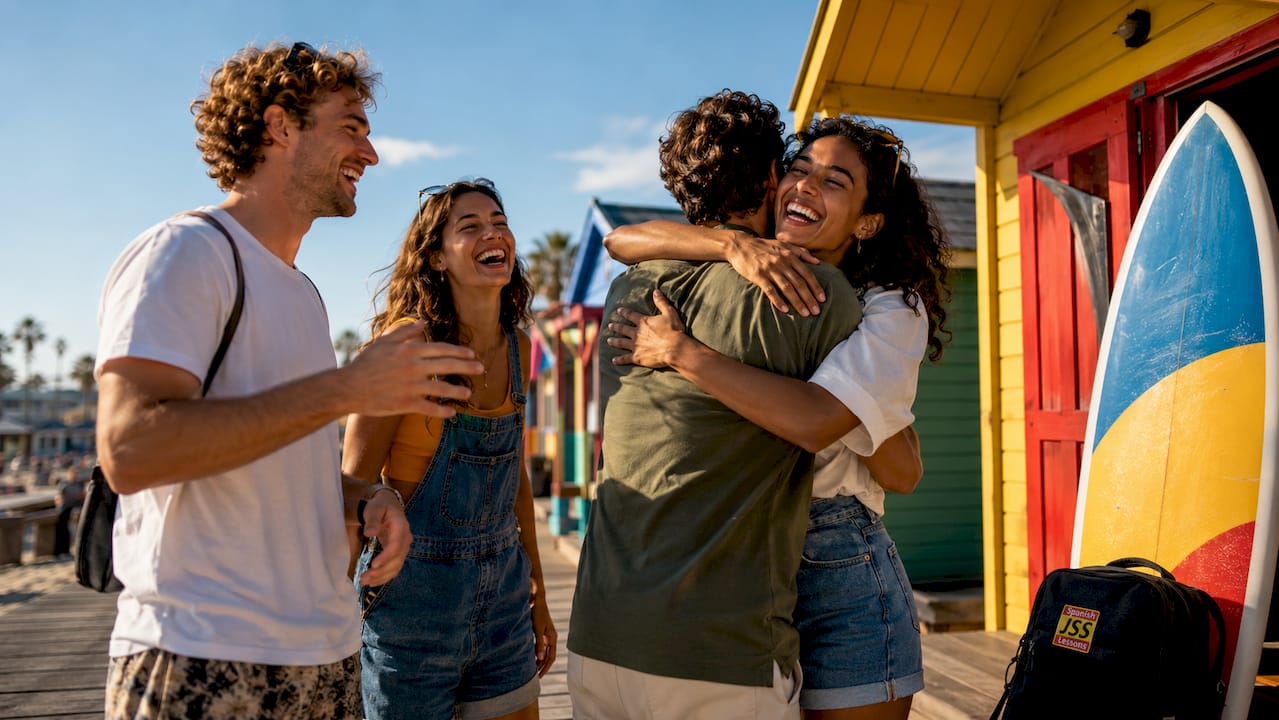
Queuing in Spain deserves its own mention. Queues in informal settings like bakeries, delis, and market stalls can look chaotic. The phrase ¿Quién es el último? (“Who is last?”) is the standard way to establish your place in line without confusion or confrontation. Ask it when you arrive, and the person who answers becomes your reference point. It is a small phrase with a big social function.
Regional identity in Spain is not a minor detail. Catalonia, the Basque Country, and Galicia each have their own languages and strong cultural identities. Referring to Catalan or Basque people simply as “Spanish” can cause genuine offence. Showing awareness of these distinctions, even just by acknowledging them, earns real respect. If you are living in Barcelona, learning a few words of Catalan alongside Spanish signals serious commitment to local life.
Dress codes in Spain are more formal than many British expats expect. Spaniards generally dress well for social occasions, even casual ones. Turning up to a Sunday lunch or a local fiesta in shorts and a T-shirt when everyone else is smartly dressed is an easy mistake to avoid.
| Setting | Expected Dress Code |
|---|---|
| Everyday errands | Smart casual |
| Restaurant lunch or dinner | Neat and presentable |
| Church or formal event | Formal attire |
| Beach or pool | Beachwear stays at the beach |
| Local fiesta | Smart casual to formal |
Building genuine rapport with Spanish neighbours, shopkeepers, and colleagues comes down to cultural respect and curiosity. Ask about local traditions. Comment on the food. Show that you are interested in Spain as it actually is, not as a backdrop to your expat life. That curiosity is the single most effective social tool you have.
Key takeaways
Adapting to Spanish culture requires adjusting your daily schedule, social behaviour, and communication style to match local norms rather than importing your home habits.
| Point | Details |
|---|---|
| Reset your daily clock | Lunch runs 14:00–15:30 and dinner starts at 21:00 or later. |
| Embrace sobremesa | Staying at the table after meals builds trust and social bonds. |
| Master the greeting | Two cheek kisses for friends, handshakes in professional settings. |
| Tip modestly and in cash | Tips of €1–€5 are a gesture, not an obligation. |
| Learn key social phrases | ¿Quién es el último? and a basic greeting go a long way in daily life. |
Forty years in: what I have actually learnt
The dual timing system is the thing most newcomers get wrong for the longest. They learn that social life runs late, but they do not internalise that professional Spain is completely different. Miss a medical appointment by twenty minutes and you will feel the difference sharply.
What genuinely accelerated my integration was learning Spanish properly, not tourist phrases but real conversational Spanish. The moment you can hold a proper exchange with a neighbour or a shopkeeper, the relationship changes. You stop being the foreigner who lives nearby and start being a person they know. That shift is worth every hour of study.
The cultural nuances in Spanish go deeper than most guides suggest. Spain is not one culture. It is a collection of strong regional identities held together by shared habits. Respect that complexity and people will respect you back.
My honest advice: stop trying to maintain your home routines inside a Spanish life. Eat when Spain eats. Stay when Spain stays. Greet people the way they greet each other. The adaptation is not a loss of who you are. It is an addition.
— James
Learn spanish the way it is actually spoken in spain
If you are living in Spain and want to move beyond basic phrases, James Spanish School offers a 100-lesson online course built specifically for English-speaking adults. James Bretherton, a dual-native speaker with four decades of life in Spain, designed the course around real conversations: with neighbours, tradespeople, health workers, and local officials.
The WordAmigo system handles vocabulary and pronunciation through a five-step retention loop, so words actually stay in memory rather than fading after a week. Everything is on demand, with no expiry date and no pressure. You can explore the full course options here or check out the current special offers for new starters. Real fluency starts with real Spanish, not classroom grammar.
FAQ
What is the biggest cultural difference for english speakers in spain?
The daily schedule is the most disorienting adjustment. Lunch at 14:00–15:30 and dinner after 21:00 are standard, which conflicts sharply with British eating habits.
Is tipping expected in spanish restaurants?
Tipping in Spain is optional. Staff receive a proper wage, so a small cash tip of €1–€5 is a gesture of appreciation rather than a social obligation.
What does sobremesa mean and why does it matter?
Sobremesa is the Spanish tradition of lingering at the table after a meal for conversation. Leaving immediately after eating is considered abrupt, and staying builds social trust.
How should i greet people in spain?
Two cheek kisses are standard among friends and mixed-gender social groups. A handshake is appropriate in professional settings. Always greet everyone present when entering a room.
Do I need to learn spanish to adapt to life in spain?
Language is not strictly required for survival, but it transforms your experience. Speaking even basic Spanish shifts how locals relate to you and opens doors that polite gestures alone cannot.