

TL;DR:
- The goal is functional communication, not perfection, to build confidence and practical skills.
- Daily habits like listening, speaking, and immersion accelerate real-life Spanish proficiency.
- Practice real scenarios, embrace mistakes, and prioritize conversation over passive study.
Practical Spanish tips.
School Spanish and real-life Spanish are two very different things. You can conjugate a verb perfectly in a classroom and still freeze when the woman at the bread counter rattles off a question at machine-gun speed. For English-speaking adults living in or moving to Spain, the gap between textbook knowledge and genuine conversational ease is the single biggest frustration. This article addresses that gap directly. You will find evidence-backed, practical strategies for the situations that actually matter: shops, cafés, neighbours, tradespeople, and local officials. No grammar lectures. No academic theory. Just what works.
Table of Contents
- Set the right goals for conversational Spanish
- Core habits for rapid real-life Spanish improvement
- Using immersive techniques (even from home)
- Quick-win strategies for common Spanish scenarios
- What most Spanish learning advice misses
- Next steps: unlock fluency with resources that fit you
- Frequently asked questions
Key Takeaways
| Point | Details |
|---|---|
| Focus on conversation | Fluency grows when you practise speaking and listening daily, not just by studying grammar. |
| Set achievable goals | Small, everyday language wins—like ordering in shops—build confidence and skill quickly. |
| Use immersive strategies | Surround yourself with authentic Spanish, even at home, for faster progress. |
| Embrace imperfect practice | Mistakes are a sign of real progress—speak early and often for practical fluency. |
Set the right goals for conversational Spanish
The first thing to accept is that perfection is not the goal. It never was. The goal is functional communication: making yourself understood, understanding the reply, and keeping the exchange moving. That shift in thinking alone removes an enormous amount of pressure.
Many adult learners waste months drilling grammar rules they will never consciously use in conversation. Native speakers do not think about rules. They think about meaning. Spanish for English speakers is actually more accessible than most people realise, because the two languages share thousands of words and a broadly similar sentence rhythm. Starting from that position of strength matters.
Setting SMART goals makes progress visible and motivating. Instead of “I want to speak Spanish,” try goals like these:
- Ask for directions and understand the answer
- Order food and drink confidently at a café
- Greet your neighbours and exchange small talk
- Explain a basic health symptom to a pharmacist
- Understand a tradesperson’s estimate or question
These are real, achievable targets. Each one builds confidence and gives you a measurable win. Research shows that immersion boosts fluency and confidence most, though gains depend on your starting level and how many hours you spend actually using Spanish. That last part is key: using it, not just studying it.
High-frequency phrases are your best investment. Learning the 200 or 300 words and expressions that appear most often in daily Spanish conversation will carry you through the vast majority of real encounters. Reviewing basic Spanish steps gives you a solid foundation to build from.
Pro Tip: Embrace mistakes. Every stumble is a signal that you are pushing into new territory. Locals in Spain are almost universally patient and appreciative when a foreigner makes the effort. A wrong verb ending will not offend anyone. Silence will.
Core habits for rapid real-life Spanish improvement
Once your goals are clear, developing effective daily habits gives you the framework for progress. Consistency beats intensity every time. Ten to fifteen minutes of focused Spanish practice every day produces better results than a two-hour session once a week.
Here is a practical daily routine that works:
- Listen first thing. Play a short Spanish audio clip, from an on phone audio list such as ones from WordAmigo while you have breakfast. Your brain absorbs patterns even when you are not actively concentrating.
- Shadow a native speaker. Pick a short clip and repeat what you hear, mimicking the rhythm and intonation exactly. This trains your mouth and your ear simultaneously.
- Recycle your phrases. Take five expressions you already know and use them in new combinations. Repetition cements retention, and repeating Spanish lessons is one of the most underrated tools for long-term memory.
- Speak out loud every day. Even talking to yourself counts. Narrate what you are doing around the house in Spanish. It feels odd at first. It works.
- Review before bed. A quick five-minute recap of the day’s new words or phrases dramatically improves overnight retention.
Prioritise listening and speaking over reading and writing if your goal is conversational fluency. Reading has its place, but it will not train your ear to follow fast native speech. Audio Spanish lessons are particularly effective for this, because they replicate the rhythm and pace of real conversation.
“Students who spent a semester in Spain saw measurable gains in linguistic complexity, though fluency and accuracy varied considerably between individuals.”
The takeaway is clear: contact with real Spanish, at real speed, is what drives genuine progress.
Using immersive techniques (even from home)
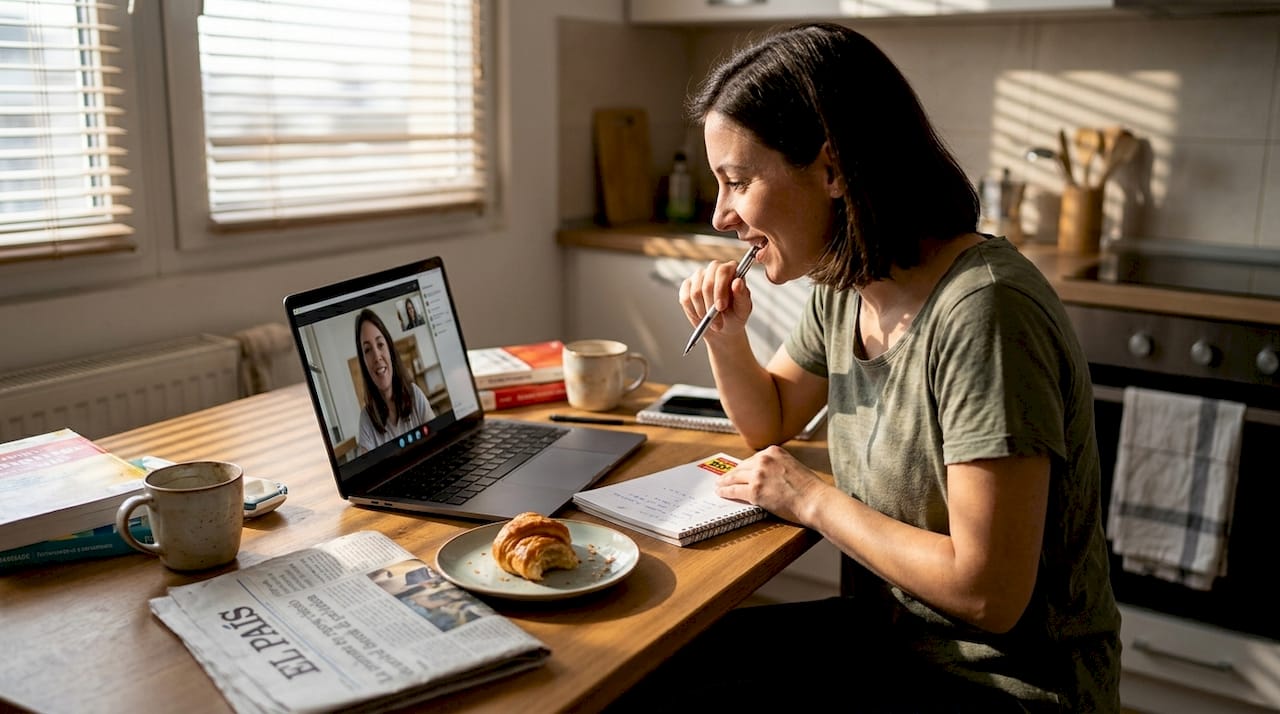
With daily routines in place, replicating an immersive environment accelerates your conversational ease considerably. The good news is that you do not need to live in Spain to create meaningful immersion. You need regular, active contact with the language.
Immersion-related gains are strongest in linguistic complexity, but even remote contact hours matter when you interact regularly and purposefully. The table below compares the two main approaches:
| Method | Effectiveness | Cost | Social element |
|---|---|---|---|
| Living in Spain | Very high | High (relocation) | Daily, unavoidable |
| Language exchange apps | Moderate to high | Free to low | Structured, on demand |
| Spanish TV and radio | Moderate | Free | Passive |
| Virtual tutors | High | Medium | One to one, focused |
| Conversation groups | High | Low to free | Group, varied levels |
| Spanish podcasts | Moderate | Free | Passive |
Building a mix of these options gives you comprehensive exposure without the cost or disruption of relocation. Practical at-home immersion tools include:
- Language exchange apps such as Tandem or HelloTalk for real conversation practice
- Spanish Netflix series with Spanish subtitles (not English)
- Spanish radio stations streamed online for background listening
- Weekly video calls with a virtual tutor focused on your specific scenarios
For those already in Spain or planning a move, speaking Spanish with locals every day, even briefly, multiplies your progress faster than any app. And if you want to accelerate online Spanish fluency, structured online learning combined with live practice is the most reliable path.
Pro Tip: Switch your phone, tablet, and social media accounts to Spanish. You will encounter hundreds of familiar words in a new language context every single day. Passive exposure adds up faster than you expect.
Quick-win strategies for common Spanish scenarios
Armed with immersive habits, you can now apply quick-win strategies to make your daily encounters smoother. The secret is preparation. Most real-life interactions follow predictable patterns, which means you can script and rehearse them in advance.
Here is how to build your own scenario scripts:
- Identify your top five daily situations. Think about where you use language most: the market, the pharmacy, the town hall, the café, the hardware shop.
- Write out the exchange. Draft what you will say and the most likely responses. Keep it short and functional.
- Practise out loud. Repeat the script until it feels automatic, not translated.
- Add one or two polite phrases. A simple “perdone” (excuse me) or “muchas gracias” (thank you very much) changes the tone of any interaction.
- Adapt for your region. Andalucía, Catalonia, and Valencia each have local flavours. Ask a local contact or tutor to check your script for regional fit.
The table below shows the most useful phrases for three common scenarios:
| Scenario | Key phrase | What it covers |
|---|---|---|
| Café or bar | “Pónme un café con leche, por favor” | Ordering coffee politely |
| Market or shop | “¿Cuánto cuesta esto?” | Asking the price |
| Pharmacy | “Me duele aquí” | Indicating where it hurts |
| Asking directions | “¿Dónde está la calle…?” | Finding a street |
| Meeting a neighbour | “Buenos días, ¿cómo estas?” | Formal greeting |
Research confirms that high-frequency language gets used and mastered fastest, so investing time in these core phrases pays off quickly. For a structured approach to building these skills, revisiting basic conversation steps will sharpen your foundation.
What most Spanish learning advice misses
Here is the uncomfortable truth that most courses and apps will not tell you: passive study does not produce conversational fluency. Reading workbooks, watching grammar videos, and completing exercises are all comfortable activities. They feel productive. But they do not prepare you for the moment a Spanish speaker replies at full speed and expects an answer.
Evidence shows that complexity and fluency come more from real contact than from study alone. The adults who make the fastest progress are not the ones who studied hardest in private. They are the ones who started speaking early, made mistakes publicly, and kept going. Understanding why adults struggle with Spanish often comes down to this single pattern: too much preparation, not enough conversation. The shift from perfectionism to communicative experimentation is where real fluency begins.
Next steps: unlock fluency with resources that fit you
If the strategies in this article have resonated, the next step is finding resources built specifically for your situation as an English-speaking adult learner.
James Spanish School offers core Spanish resources including audio lessons, phrase collections, and scenario-based tools designed for real life in Spain, not academic exams. The 100-lesson course uses Radical Simplification to remove confusing grammar jargon, replacing it with plain English explanations that actually make sense. You will also find practical tips for fluent conversation with locals and a clear guide to the Spanish learning advantages that English speakers already have. Everything is available on demand, with no expiry date and no pressure.
Frequently asked questions
What’s the fastest way to speak Spanish for daily life?
Start speaking Spanish every day, even imperfectly, and focus on the phrases you will use most in your routine. Regular contact with real Spanish boosts fluency faster than any amount of private study.
How much Spanish do I need to live in Spain?
Basic conversational ability covering shopping, health, and directions will handle the vast majority of daily situations and builds confidence quickly. Initial proficiency shapes how quickly you progress, so starting sooner is always better.
Can I really get fluent from home without moving to Spain?
Yes. Remote immersion using apps, virtual tutors, and Spanish media can produce strong conversational skills when practised consistently. Regular L2 contact drives complexity gains even without living abroad.
What’s the most common mistake adult learners make?
Focusing too much on grammar rules rather than practising out loud and engaging in real conversations. Speaking early and often is consistently linked with meaningful functional fluency gains.