

TL;DR:
- Spanish politeness rules are culturally embedded and include greetings, address forms, and meal customs that signal respect. Mastering these conventions, like the two-kiss greeting and appropriate use of usted or tú, helps expats avoid awkwardness and show genuine respect in Spain. Understanding customs like sobremesa and relaxed timing for social events enhances cultural connection and social harmony.
Spanish politeness rules are culturally embedded social norms and linguistic practices that govern how respect, warmth, and familiarity are expressed in everyday interactions across Spain. This list of Spanish politeness rules covers the customs that matter most to English speakers living in Spain: from the dos besos greeting and the formal address form usted, to the sobremesa tradition and the unwritten rules around meal times. Getting these right signals genuine respect. Getting them wrong can create awkward silences or unintended offence, even when your intentions are good. James Spanish School has built its entire teaching method around exactly this kind of real-life, practical knowledge.
1. The list of Spanish politeness rules every expat must know first
Spanish social etiquette is not a single rule but a layered system of greetings, language choices, timing, and dining customs. Each layer carries social weight. Miss one, and locals may read you as cold, overly formal, or simply foreign in a way that closes doors. Master them, and you signal that you belong. The sections below break each rule down clearly, with the context you need to apply it confidently.
2. Dos besos: the two-kiss greeting
The dos besos greeting is the standard informal hello across Spain. Women greet both men and women with two kisses, starting on the right cheek. Men typically shake hands with other men unless they are close friends or family, in which case an abrazo (a hug) is appropriate.
The technique matters as much as the gesture itself. Proper dos besos involves cheek-to-cheek contact with a kissing sound made in the air. No actual lip contact touches the skin. Leading with the left cheek is the most common mistake English speakers make, and it causes an immediate, awkward collision.
Key points to remember:
- Always start on the right cheek, leaning your right cheek towards the other person’s right cheek.
- The sound is the gesture. No lip contact is expected or appropriate.
- Follow the other person’s lead in unfamiliar situations.
- Handshakes are correct for formal business settings and first meetings between men.
- Abrazos are reserved for close friends and family.
Pro Tip: If you are unsure whether to go for dos besos or a handshake, watch what the Spanish person initiates. They will signal the appropriate greeting before you need to decide.
3. Formal vs informal address: usted and tú
Usted conveys respect and social distance; tú denotes familiarity. This distinction is non-negotiable in Spanish social communication, and misuse affects the tone of an entire conversation. Use usted with elderly people, strangers, doctors, officials, and anyone in a professional context where you have not been invited to use tú.
Tú is correct with friends, colleagues of similar age, and children. The shift from usted to tú usually happens when the other person invites it, either explicitly (“Tutéame,” meaning “call me tú”) or by using tú themselves. Do not rush this transition.
Politeness in Spanish also depends heavily on grammatical structures like conditional verbs and indirect questions rather than direct commands. Asking “¿Podría usted ayudarme?” (Could you help me?) is far more polite than a blunt imperative. This is the engine room of Spanish politeness: grammar does the work that English speakers often try to do with extra words.
Practical guidance for address forms:
- Default to usted with anyone over 60 or in a professional role.
- Switch to tú only when the other person signals it.
- Use conditional verb forms (podría, querría) to soften requests in formal contexts.
- Avoid using first names with older Spanish people until invited to do so.
- In shops and bars, tú is generally acceptable with staff of similar age.
4. Spanish meal etiquette and dining customs
Spanish meal times are a social institution, not just a schedule. Lunch falls between 2PM and 4PM and is the main meal of the day. Dinner is typically after 9PM and is lighter. Arriving at a restaurant at 6PM expecting a full meal will often mean a closed kitchen and a confused waiter.
Dining customs follow a clear order of politeness:
- Wait for the host to indicate where to sit before taking a place at the table.
- Do not begin eating until the host starts or invites everyone to begin.
- Share tapas freely. Keeping a shared dish to yourself reads as antisocial.
- Do not rush. Meals are social events, not fuel stops.
- Tipping is not mandatory. 5-10% for exceptional service is a gracious gesture. Small coins are sufficient for a coffee or minor purchase.
The custom that surprises most English speakers is sobremesa. Rushing away immediately after eating is considered impolite. Sobremesa is the time spent lingering at the table after the meal, talking, laughing, and enjoying each other’s company. It can last an hour or more.
“Sobremesa is not wasted time. It is the point of the meal. The food brings people to the table; the conversation is why they stay.”
Understanding sobremesa reframes the entire Spanish approach to dining. It is not inefficiency. It is a deliberate cultural choice that places human connection above productivity. For expats who understand this, Spanish dining customs become one of the most enjoyable parts of life in Spain.
5. Everyday polite expressions and communication styles
Polite expressions in Spanish work differently from their English equivalents. Overusing “por favor” and “gracias” in routine transactions can mark you as a tourist. Tone and context carry more weight than the frequency of polite words. A warm, direct tone with a shopkeeper is more natural than a string of formal phrases.
Core expressions and how to use them:
- Por favor (please): use it when making requests of strangers or in formal settings, but not after every single word in a casual exchange.
- Gracias (thank you): always appropriate, but a simple nod or smile also works in very brief transactions.
- De nada (you’re welcome): the standard reply to gracias.
- Perdón: use this to excuse yourself physically, such as when passing someone or bumping into them.
- Lo siento: use this for genuine apologies involving hurt or inconvenience.
- Vale: the all-purpose “OK” that signals agreement and understanding.
- Venga: a versatile expression meaning “come on,” “let’s go,” or “see you later” depending on context.
Greeting shopkeepers when you enter and saying goodbye when you leave is standard Spanish speaking etiquette. Walking into a small shop without a “buenos días” is noticeably abrupt. The same applies to lifts, waiting rooms, and small offices.
Pro Tip: Learn to use “venga” and “vale” naturally. They are cultural markers that signal you are comfortable in Spanish social settings, not just reciting phrases from a textbook. James Spanish School’s everyday polite expressions resource covers exactly these kinds of practical phrases.
6. Timing, punctuality, and personal space
Punctuality in Spain is context-dependent. Arriving 15–20 minutes late for social gatherings is polite and expected. Arriving exactly on time can cause discomfort to a host who is not yet ready. This is the opposite of British social norms, and it catches many expats off guard.
Formal appointments are different. Doctors, government offices, and business meetings require punctuality. The relaxed arrival window applies only to social events: dinner parties, birthday gatherings, and informal get-togethers.
Physical proximity in conversation also differs from Anglophone norms:
- Spanish speakers stand closer during conversation than most British people expect.
- Touching an arm or standing close is a positive social signal, not an intrusion.
- Stepping back to create distance can read as coldness or discomfort.
- Expressive gestures are a normal part of communication, not exaggeration.
- Queue behaviour differs from the UK. The polite convention is to ask “¿Quién es el último?” (Who is last?) when joining a queue, then simply remember your place without a formal line.
Understanding these norms prevents the common expat mistake of misreading warmth as pushiness. Spanish social customs for expats are built on physical expressiveness and a relaxed relationship with time, both of which reflect genuine warmth rather than a lack of organisation.
Key takeaways
Mastering Spanish politeness rules requires understanding that respect is communicated through grammar, timing, physical warmth, and cultural customs rather than through formal vocabulary alone.
| Point | Details |
|---|---|
| Dos besos technique | Start on the right cheek; use air kisses, not lip contact, to avoid awkwardness. |
| Usted vs tú | Default to usted with strangers and elders; switch to tú only when invited. |
| Sobremesa is expected | Lingering at the table after a meal is polite; leaving immediately is considered rude. |
| Timing at social events | Arrive 15–20 minutes late for social gatherings; punctuality is for formal appointments only. |
| Tone over vocabulary | Overusing “por favor” marks you as a tourist; a warm, direct tone signals genuine integration. |
Putting Spanish politeness into practice with James Spanish School
Learning the rules is one thing. Feeling confident enough to use them in real conversations is another. James Spanish School was built specifically for English-speaking adults living in Spain, with a focus on the everyday language and cultural knowledge that actually matters.
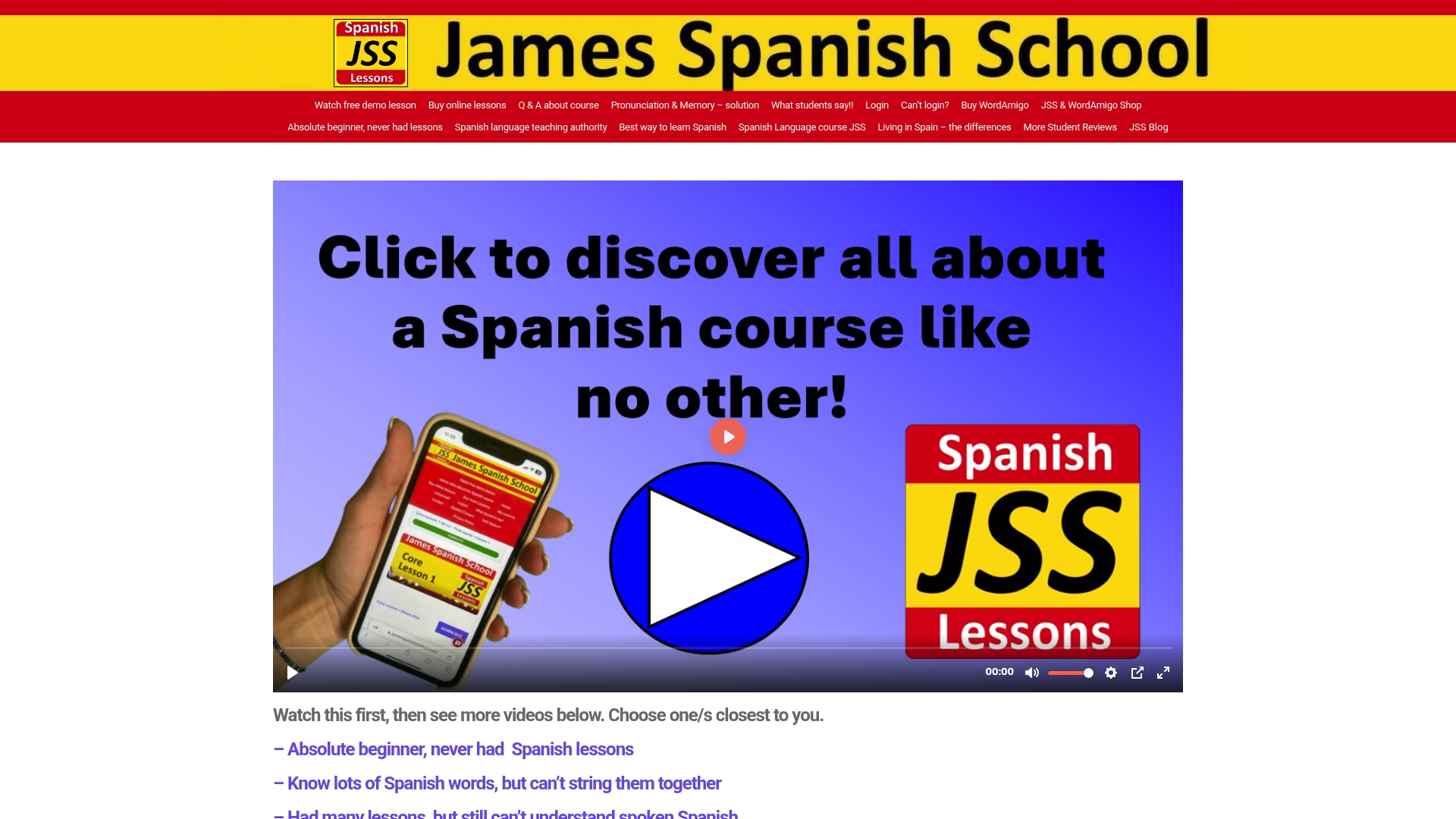
The 100-lesson course covers sentence-building and ear-tuning so you can follow fast spoken Spanish as well as produce it. The WordAmigo System uses strategic repetition to permanently embed vocabulary and pronunciation, including the polite expressions and address forms covered in this article. James Bretherton, a dual-native speaker with 40 years of life in Spain, brings genuine insider knowledge to every lesson. Explore the full course range at James Spanish School and start communicating with the confidence that comes from understanding the culture, not just the words.
FAQ
What is the dos besos greeting in Spain?
Dos besos is the standard informal greeting in Spain, involving two cheek-to-cheek air kisses starting on the right cheek. No actual lip contact is made; the kissing sound is the gesture.
When should I use usted instead of tú?
Use usted with elderly people, strangers, doctors, and anyone in a formal or professional context. Switch to tú only when the other person invites it, either explicitly or by using tú themselves.
Is tipping expected in Spanish restaurants?
Tipping is not mandatory in Spain. A gesture of 5–10% is appropriate for exceptional service, and small coins suffice for coffee or minor purchases, as workers do not rely on tips.
What is sobremesa and why does it matter?
Sobremesa is the Spanish custom of lingering at the table after a meal to talk and enjoy company. Leaving immediately after eating is considered impolite; the conversation after the meal is a valued part of the social experience.
How late is acceptable for a social event in Spain?
Arriving 15–20 minutes after the stated time is normal and expected for social gatherings in Spain. Arriving exactly on time can catch the host unprepared and cause mild discomfort.