

TL;DR:
- Politeness in Spain relies on specific words, verb forms, and social context to show respect.
- Mastering respectful phrases like por favor, disculpe, and using formal address enhances social interactions.
Living in Spain as an English speaker, you quickly discover that knowing a few polite Spanish phrases is not a nicety — it is a necessity. The examples of polite Spanish language covered in this article are the ones that actually come up in daily life: ordering coffee, asking for directions, apologising to a neighbour, or navigating a government office. Get these right and people treat you warmly. Get them wrong and you can come across as rude without ever meaning to. Here is exactly what you need to know, phrase by phrase.
Table of Contents
- Basic polite expressions everyone should know
- Polite ways to get attention and apologise
- Softening requests with conditional phrases and modal verbs
- Everyday polite phrases for transactions and social interactions
- Comparing polite phrases: when and how to use each appropriately
- What most learners miss about politeness in Spanish
- How James Spanish School can help you master polite Spanish
- Frequently asked questions
Key Takeaways
| Point | Details |
|---|---|
| Core polite words | Por favor, gracias, and de nada form the foundation of politeness in Spanish. |
| Attention phrases | Use disculpe for formal and perdón for casual situations when getting someone’s attention. |
| Softened requests | Conditional forms like ¿Podría…? and phrases like quisiera sound more polite than direct commands. |
| Context matters | Politeness depends on tone, verb form, social relationship, and situation, not just words. |
| Cultural reassurance | No pasa nada is the common way to say ‘no problem’ and calm social tension in Spain. |
Basic polite expressions everyone should know
The first examples of polite Spanish language most learners encounter are the short, high-frequency words that appear in virtually every conversation. Think of them as the basic polite expressions in Spanish that underpin everything else you will say.
Core polite vocabulary in everyday European Spanish includes por favor (“please”), gracias (“thank you”), and de nada (“you’re welcome”), and you will use them in almost every social interaction in Spain. Simple as they appear, their impact is enormous.
Here is what each one covers and how to use it:
- Por favor (“please”): Place it at the end of a request to soften the tone immediately. Un café, por favor is perfectly natural in any café or bar.
- Gracias (“thank you”): Used constantly. You can intensify it with muchas gracias (many thanks) or muchísimas gracias (thank you so very much) when genuine appreciation is needed.
- De nada (“you’re welcome”): The standard polite reply to thanks. In some regions of Spain you may also hear no hay de qué, which carries a similar meaning.
- Buenos días / buenas tardes / buenas noches: These greetings signal respect before any request. Walking into a shop without one can feel abrupt to Spanish ears.
- Con mucho gusto: Less common in Spain than in Latin America, but still understood as a warm, formal acknowledgement.
Pro Tip: When you enter a small shop in Spain and greet the assistant with buenos días before anything else, you signal social awareness. That five-second investment can change the entire tone of the interaction.
Polite ways to get attention and apologise
Once you have the core vocabulary in place, the next challenge is catching someone’s attention or stepping back with a polite apology. This is where English speakers often stumble, reaching for a plain “excuse me” and not knowing which Spanish word fits.
Perdón versus disculpe tells you a lot about Spanish social register: perdón is a bit more casual, while disculpe is more formal and works particularly well when addressing someone with usted.
The practical breakdown looks like this:
- Disculpe: Use this in shops, offices, banks, or with strangers you address formally. It signals respect before you even state your request.
- Perdón: Reach for this when you nudge someone in a queue, interrupt a friend mid-sentence, or step around someone on the pavement. It is polite but relaxed.
- Disculpe, ¿podría ayudarme?: A complete, respectful phrase meaning “Excuse me, could you help me?” It is the kind of politeness and context in Spanish that James Bretherton stresses for real-world use.
- Perdona (informal singular) vs perdone (formal singular): In spoken Spain, perdona is common among friends; perdone shows deference to strangers or older adults.
The distinction matters more than most learners realise. Using perdón with a senior bank official when you meant to use disculpe does not cause offence, but it does reduce your register. Over time, getting it right makes you sound genuinely polished rather than merely functional.
Pro Tip: When entering a busy pharmacy or government office, lead with disculpe rather than just stating your need. It frames you as someone who respects the social protocol, which often speeds up the service you receive.
Softening requests with conditional phrases and modal verbs
This is the area where learners make the biggest gains in perceived politeness. Most beginners default to the present tense: Quiero un vaso de agua (“I want a glass of water”). It is grammatically correct but sounds blunt. The fix is elegant and not as difficult as it first appears.
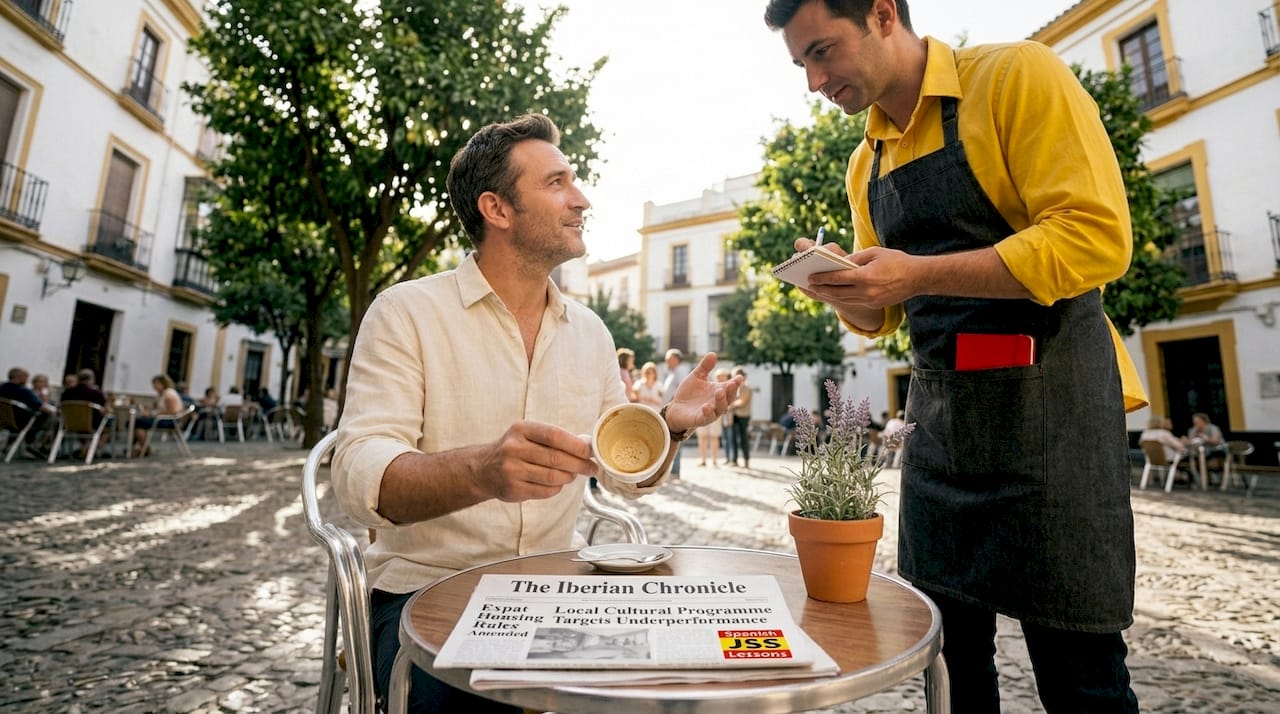
To make requests more polite in Spain, use softened forms such as ¿Podría…? or ¿Podrías…? and choose quisiera or me gustaría instead of the direct quiero. These conditional polite requests are the engine room of courteous conversation.
Here is how to build polite requests step by step:
- ¿Podría ayudarme? (“Could you help me?”): The conditional of poder softens the request without making it sound uncertain or weak.
- Quisiera reservar una mesa (“I would like to book a table”): Quisiera is the imperfect subjunctive of querer, but you do not need to know the grammar label. Just learn that it sounds softer and more respectful than quiero.
- Me gustaría hablar con el director (“I would like to speak to the manager”): Ideal for formal or professional settings.
- ¿Le importaría…? (“Would you mind…?”): A very polite construction for asking someone to do something, especially with usted.
Combine these polite request phrases for shopping with por favor at the close and you have a phrase that any Spanish speaker will respond to warmly. Quisiera una barra de pan, por favor is a small sentence with a large amount of social intelligence built into it.
Pro Tip: Think of the conditional as a politeness dial you can turn up when needed. You do not always need it with close friends, but in shops, restaurants, offices, and formal conversations, it is the difference between acceptable and impressive.
Everyday polite phrases for transactions and social interactions
Beyond single words, everyday life in Spain calls for short, culturally loaded phrases that show you understand how social exchange works here. These are the common polite expressions that Spanish people use without thinking and that instantly mark you as someone who has made the effort.
Daily transaction phrases include asking for things in restaurants and shops with por favor plus the request, such as Un café, por favor or ¿Podría traernos la cuenta?, and asking for permission with Con permiso when passing or entering a space.
Here are the phrases worth learning for everyday situations:
- Con permiso: Used when you need to pass someone in a narrow aisle, enter a room, or squeeze past at a market stall. It is not optional in Spain; skipping it can feel rude.
- No pasa nada: Literally “nothing is happening” but used to mean “no problem” or “don’t worry.” When someone apologises to you, this is the culturally common response in Spain that puts people at ease.
- ¿Me pone un café, por favor?: A natural and polite way to order in a bar. ¿Me pone…? is specific to Spain and sounds far more local than simply saying quiero.
- ¿Puede repetir más despacio, por favor?: “Could you repeat that more slowly, please?” Invaluable when native speakers talk at machine-gun speed.
| Phrase | Meaning | Best used when |
|---|---|---|
| Con permiso | Excuse me / may I pass | Moving past someone |
| No pasa nada | No problem / don’t worry | Responding to an apology |
| ¿Me pone…? | Could you give me… | Ordering in bars or cafés |
| ¿Podría traernos la cuenta? | Could you bring us the bill? | At a restaurant |
| Muchas gracias | Many thanks | After any service |
These polite Spanish for shops and restaurants situations are exactly where confidence grows fastest.
Comparing polite phrases: when and how to use each appropriately
Understanding that politeness in Spanish depends on combining the right words with the right verb forms and social context brings everything together. Choosing between disculpe and perdón, or between gracias and le agradezco mucho, is not guesswork — it follows clear logic.
Here is a practical comparison to help you choose polite phrases in Spain with confidence:
| Phrase | Register | Typical setting |
|---|---|---|
| Perdón | Informal, casual | Friends, acquaintances, light interruptions |
| Disculpe | Formal, respectful | Shops, offices, strangers, elderly people |
| Gracias | Neutral | Any setting |
| Le agradezco mucho | Very formal | Professional, official interactions |
| No pasa nada | Informal, warm | Everyday reassurance after apologies |
| Con permiso | Neutral to formal | Passing someone, entering a space |
Follow this numbered approach to match phrases to situations:
- Identify your relationship with the person: stranger, colleague, friend, or authority figure.
- Assess the setting: shop, office, bar, neighbour’s doorstep, or health centre.
- Choose your verb form: usted for formal situations, tú for familiar ones.
- Select the opening: disculpe for formal attention, perdón for casual.
- Build your request: add ¿podría…? or quisiera rather than a direct command.
- Close with por favor and gracias: always end politely, regardless of register.
This six-step thought process becomes automatic quickly. Within weeks of practising in real situations in Spain, you will find it feels natural rather than calculated.
What most learners miss about politeness in Spanish
After years of observing English speakers in Spain, one pattern stands out above all others. People learn the polite phrases but miss the system behind them. They memorise por favor and gracias but then fire off requests like commands, wondering why interactions feel cold. The truth is that politeness in Spanish is not a list of words — it is a layered architecture of word choice, verb form, social context, and tone working together.
The most effective habit you can develop is the two-step politeness pattern: attention or permission first, then the request. Disculpe, ¿podría ayudarme? lands far better than jumping straight to the request. It mirrors exactly how Spanish speakers navigate social interactions and it signals that you understand the importance of context in Spanish politeness.
Small differences in formality carry real social weight here. Calling a shop assistant tú when usted is expected is not catastrophic, but it does alter how you are perceived. Using usted consistently with strangers and older adults, on the other hand, signals cultural intelligence. Spanish people do not expect perfection from learners. What they do notice and appreciate is the effort to engage on their terms.
Genuine warmth matters too. A well-pronounced buenos días with eye contact will open more doors in Spain than a grammatically flawless sentence delivered while staring at your phone. Politeness in any language is ultimately about attention and respect. Spanish just has specific tools for expressing it, and learning those tools changes how you experience life here.
How James Spanish School can help you master polite Spanish
Ready to move from isolated phrases to genuinely confident, contextually correct Spanish? James Spanish School is built specifically for English-speaking adults living in Spain, with learning designed around real interactions rather than academic exercises.
The shop polite Spanish learning resources at James Spanish School include structured modules covering the social situations you actually face: cafés, pharmacies, government offices, and conversations with neighbours. James Bretherton draws on 40 years living in Spain to explain not just what to say but why it works. The context-based Spanish learning approach means you understand tone and register, not just vocabulary. You can also practise polite phrases in shops with on-demand lessons available 24/7, at your own pace, with no expiry date and no pressure.
Frequently asked questions
What is the most common way to say please politely in Spanish?
Por favor is the standard term for “please” in Spanish and works in virtually any situation, from formal offices to casual café orders.
How do I politely get someone’s attention in Spanish?
Use disculpe for formal settings and perdón for more casual situations; both are polite, but disculpe carries more deference, especially when using usted.
How can I make requests sound softer and more polite in Spanish?
Replace the direct quiero with quisiera or me gustaría, or frame your request using ¿Podría…? to add courtesy without complexity.
What phrase do Spanish speakers use to say ‘no problem’ or ‘it’s okay’ politely?
No pasa nada is the natural, culturally warm response to an apology in Spain and means “no problem” or “don’t worry about it.”
How important is using usted versus tú for politeness in Spanish?
Usted is essential in professional, official, or first-contact situations with business transactions, while tú is reserved for friends and familiar relationships.