

Reporting problems to landlord Spanish
Two lines will get you through most emergencies. On the phone or at the door, say: “Hola, buenos días. Hay una fuga de agua en la cocina, es urgente.” (“Hello, good morning. There’s a water leak in the kitchen, it’s urgent.”) Stress falls on fuga and urgente.
If you need to write instead, send this: “Buenos días. Soy [nombre], del piso [número]. Hay un problema con [la calefacción / el agua / la luz] en [habitación]. ¿Podría alguien venir esta semana? Estoy disponible por las tardes. Gracias.” Say it slowly the first time, letting the double consonants (calefacción, disponible) land clearly rather than rushing them.
- Spoken emergency line: leads with the problem, then “es urgente”
- Written message: name, flat number, problem, availability, a closing “gracias”
- Both work for landlords, agencies, or a portero you catch in the hallway
Key Takeaways
Reporting a problem to a landlord in Spanish works best with short, exact phrases for urgency, location and follow‑up, backed by repeated spoken practice rather than memorised vocabulary lists.
| Point | Details |
|---|---|
| Lead with the problem | State what’s wrong and where before anything else; Spanish sentence order favours this. |
| Match urgency to language | Use “es urgente” for emergencies and “cuando pueda” for anything that can wait. |
| Photos speed up repairs | A short photo or video caption gets a faster response than a long written description. |
| Close politely | End messages with “gracias” or “un saludo” to keep landlords cooperative. |
| Practise out loud | Repeat key verbs and lines daily using a short drill, not passive reading. |
Where to keep practising these phrases
- Practice sentences for rehearsing the exact lines in this guide
- Spanish DIY vocabulary for extra home‑repair terms
Table of Contents
- Spanish phrases for reporting maintenance problems by phone or in person
- Written templates for messaging or emailing your landlord
- Essential Spanish vocabulary for home repairs
- How to pronounce these phrases so you’re understood the first time
- What will my landlord say back, and how should I reply?
- Frequently asked questions
- Sources
Spanish phrases for reporting maintenance problems by phone or in person
Reporting apartment problems in Spanish starts with how you open the conversation, because Spanish landlords respond to tone as much as content. A formal opener signals respect without sounding stiff: “Buenos días, le llamo por un problema en el piso.” (“Good morning, I’m calling about a problem in the flat.”) Among neighbours, friends, or a landlord you know well, informal works better: “Hola, soy Kate, del segundo piso.”
Once you’re through the greeting, name the problem and its location together, since Spanish sentence order usually puts the issue first:
- “Hay una fuga en la cocina.” — “There’s a leak in the kitchen.”
- “Se ha estropeado la calefacción en el salón.” — “The heating has broken in the living room.”
- “No funciona la luz del baño.” — “The bathroom light isn’t working.”
- “La puerta no cierra bien.” — “The door doesn’t close properly.”
Urgency needs its own vocabulary. “Es urgente” flags a genuine emergency, water and electricity faults especially. For anything that can wait, soften the request: “Cuando pueda” (“whenever you can”) or “Si puede, por favor” (“if you could, please”) both keep things civil without sounding indifferent.
Once the landlord agrees to send someone, lock in the logistics: “¿Cuándo pueden venir?” (“When can they come?”) and “Yo estaré en casa a partir de las cuatro” (“I’ll be home from four onwards”) both move the conversation from complaint to solution.
Pro Tip: Record yourself saying the urgency line and the appointment line back to back. Landlords in Spain often answer the phone mid‑task, so the ability to state the problem and the availability in one breath saves a second call.
Written templates for messaging or emailing your landlord
A WhatsApp message works best short. Try: “Hola, soy [nombre], del piso [número/letra]. Hay un problema con [grifo/calefacción/enchufe] en [habitación]. ¿Podría venir alguien esta semana? Estoy en casa por las tardes.” That covers who, where, what, and when in four sentences, which is about as much as a landlord will read on a phone screen between jobs.
Email suits a fuller report, particularly for something that isn’t urgent but needs a paper trail:
- Subject line: “Problema en el piso [número] — [tipo de avería]” (e.g. “Problema en el piso 3B — fuga de agua”)
- Body: describe the fault plainly, mention when it started, and note that photos are attached: “Adjunto unas fotos para que se vea mejor.”
- Request: ask directly for a visit: “¿Sería posible concertar una visita esta semana?”
- Closing: a polite sign‑off matters more in Spain than in English business email; end with “Un saludo” or “Gracias de antemano” rather than a bare name.
If nothing arrives after two or three days, a gentle follow‑up avoids sounding impatient: “Buenos días, escribo de nuevo por si no le llegó mi mensaje sobre [problema]. ¿Hay alguna novedad?” (“Good morning, writing again in case my message about [problem] didn’t reach you. Any news?”) That single line usually gets a faster reply than repeating the whole report.
Essential Spanish vocabulary for home repairs
Learning a handful of nouns per category beats memorising a long list, because each word pairs naturally with the verbs you’ll already be using to explain what’s wrong. Grouping by repair type, as this vocabulary list for home repairs and projects shows, makes recall far quicker under pressure.
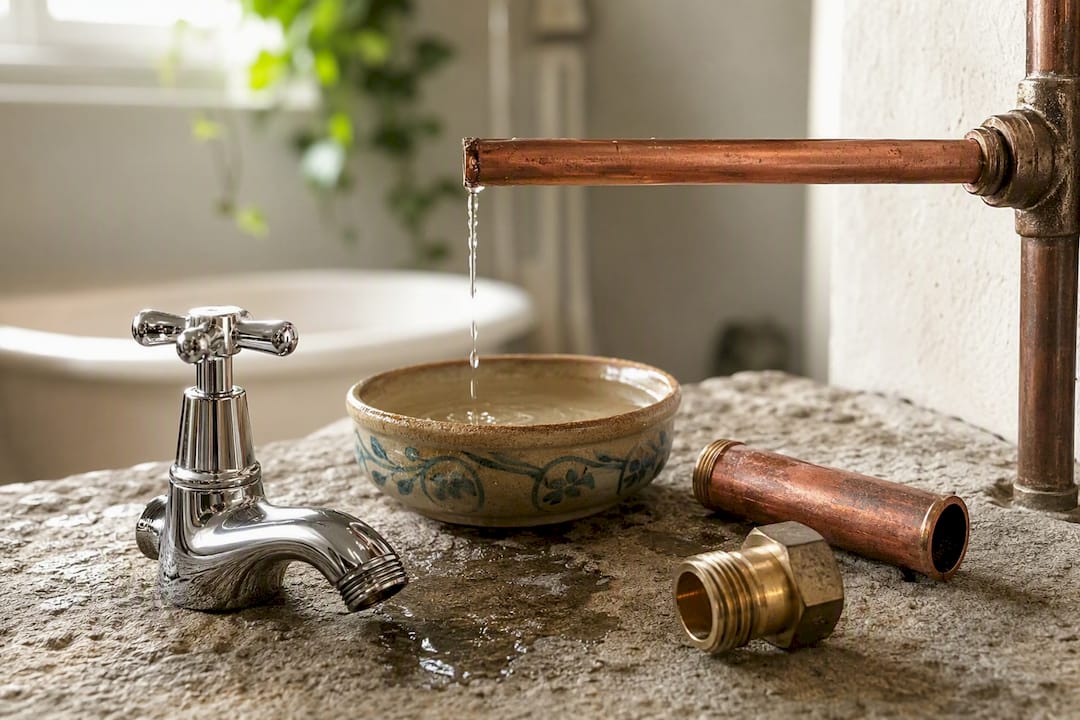
Plumbing: fuga (leak), grifo (tap), tubería (pipe). Example: “Hay una fuga en la tubería del baño.”
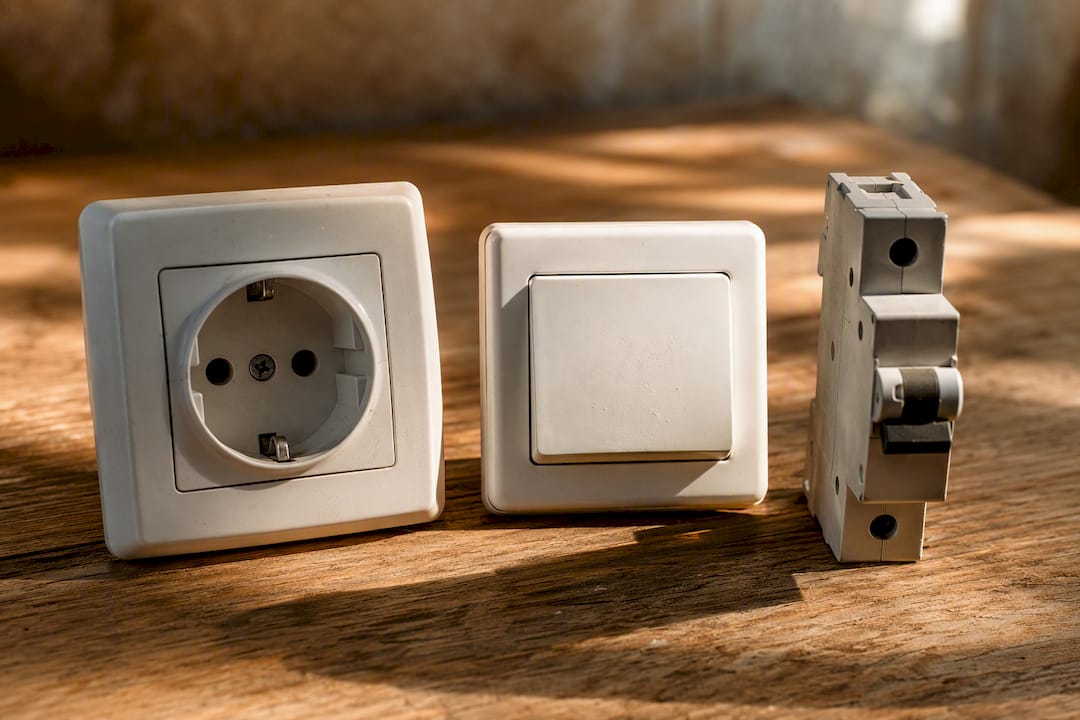
Electrics: enchufe (socket), interruptor (switch), corte (power cut). Example: “El interruptor del pasillo no funciona.”
Doors, windows, locks: cerradura (lock), llave (key), ventana (window). Example: “La cerradura no cierra bien.”
Heating and appliances: calefacción (heating), calentador (water heater), horno (oven). Example: “La calefacción no enciende.”
- Arreglar and reparar both mean “to fix”, roughly interchangeable, though arreglar sounds slightly more casual.
- Cambiar means “to replace” — useful when a part, not the whole appliance, needs swapping.
- Register matters less here than clarity: a landlord would rather understand a slightly informal report than decode a stiff, over‑correct one.
How to pronounce these phrases so you’re understood the first time
Spanish vowels stay short and pure, unlike English, which tends to soften them into diphthongs. Say fuga with a clean “oo” sound in the middle, not “foo‑ah” trailing off. The rolled r in interruptor trips up most English speakers; if you can’t roll it, a quick tap of the tongue against the roof of the mouth gets you close enough to be understood. The soft j sound in words like ajuste or jaleo comes from the back of the throat, closer to a light “h” than an English “j”.
Stress usually falls on the second‑to‑last syllable unless an accent says otherwise, so urgente stresses gen, and calefacción stresses ción.
Two drills make this stick. First, repeat the BLUF spoken line out loud five times, matching the rhythm of a recording rather than reading it flat. Second, run a five‑repetition loop on the verbs arreglar, reparar, and cambiar, saying each one in a full sentence rather than isolation. The Five‑Step Retention Loop behind WordAmigo works on exactly this principle: reading, listening, speaking, and writing the same phrase in short, repeated bursts embeds it faster than passive review.
Pro Tip: Say the phrase, then immediately write it from memory. That switch between speaking and writing is what turns a phrase you recognise into one you can actually produce under pressure.
What will my landlord say back, and how should I reply?
Landlord communication in Spanish often follows a small set of predictable replies, so learning to recognise them saves you from re‑explaining the whole problem. “Enseguida mando a alguien” means “I’ll send someone right away.” “¿Sigue pasando?” asks whether the problem is still happening. “¿A qué hora le viene bien?” asks what time suits you.
- To confirm a time: “Por la tarde me viene bien, a partir de las cuatro.”
- To give access details: “Le puedo dejar la llave al portero.”
- To confirm the fault persists: “Sí, sigue pasando, no se ha solucionado.”
- To request a record of the repair: “¿Me podría enviar un justificante de la reparación, por favor?”
That last line matters more than it seems. A short written confirmation, even a WhatsApp message, gives you a record if the same issue reappears later.
Cultural courtesies that smooth the repair process
- Appointment windows in Spain tend to be broad; a landlord saying “por la mañana” might mean anywhere from nine to one.
- Sending a photo or short video alongside your message speeds up diagnosis more than a paragraph of description, a habit borne out in this guide to chatting with Spanish tradesmen.
- Skip pressing for an exact arrival minute. Ask for a time range instead, and open every message with a quick “buenos días” or *“hola”” before the request.
- A closing “gracias” or “un saludo” costs nothing and tends to get faster replies, in line with these everyday polite Spanish phrases.
Fluency with a landlord dispute or a routine repair request comes down to three things: exact phrases ready to use, vocabulary grouped by problem type, and enough spoken practice that the words come out under pressure rather than only on paper. James Spanish School’s WordAmigo course builds all three through short, repeated drills rather than long grammar explanations, which is exactly the kind of practice that turns a phrase you’ve read once into one you can say confidently at your own front door. Fifty years of teaching English speakers to sound natural in Spanish sits behind that approach, not a textbook shortcut.
Frequently asked questions
How do I say “urgent” without sounding rude in Spanish?
“Es urgente, por favor” reads as direct but polite. Pairing the urgency word with “por favor” keeps the request firm without sounding demanding.
What’s the fastest way to report a leak to my landlord in Spanish?
Say or write “Hay una fuga en [location], es urgente” and follow with your availability. That single sentence covers the essentials a landlord needs to act.
Should I call or message first when reporting apartment problems in Spanish?
For anything urgent, water or electricity, call. For routine issues, a written message with a photo usually gets a quicker, clearer reply.
How do I ask a Spanish landlord for a repair receipt?
“¿Me podría enviar un justificante de la reparación, por favor?” is a simple, polite way to request written confirmation once the work is done.
What if my landlord doesn’t reply to my message?
Wait two to three days, then send a short follow‑up: “Escribo de nuevo por si no le llegó mi mensaje sobre [problema].” This nudges without sounding impatient.
Sources
- Spanish DIY Vocabulary – 40 words for home repairs and projects