

Tipos de cafe en España : Types of coffee in Spain
Walk into any Spanish bar and you need eight words: café solo, cortado, café con leche, americano, café con hielo, bombón, carajillo, descafeinado. That covers almost every order you will ever make. Say “Ponme un cortado, por favor” (pon meh oon kor-TAH-doh) and you will get a small espresso cut with warm milk, no fuss, no confusion.
That single phrase, with the noun swapped out, works for nearly every drink on this list:
- Café solo — a straight espresso, no milk
- Cortado — espresso with a splash of hot milk
- Café con leche — espresso topped up with milk, breakfast staple
- Americano — espresso lengthened with hot water
- Café con hielo — hot espresso served alongside a glass of ice
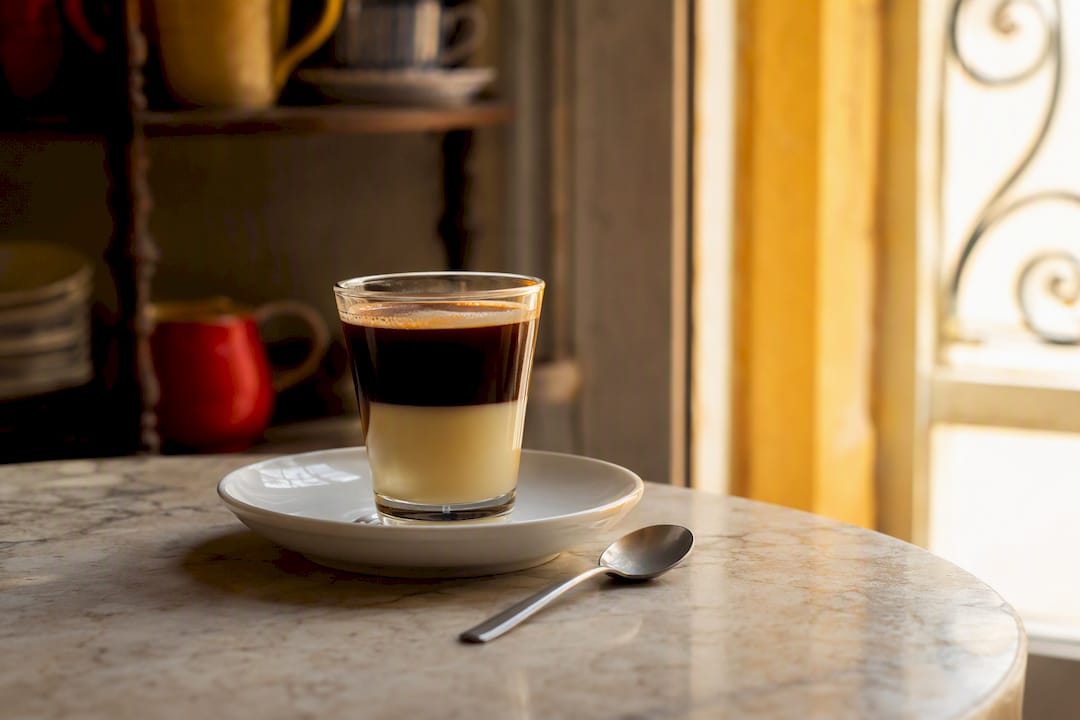
- Bombón — espresso layered over sweetened condensed milk
- Carajillo — espresso with a shot of brandy or liqueur
- Descafeinado — decaf, ideally “de máquina” rather than instant
Regional variants exist, so a “tallat” in Catalonia, a “sombra” in Málaga, or a “barraquito” in Tenerife might catch you off guard. More on those below.
Key Takeaways
Ordering coffee confidently in Spain comes down to knowing eight core drink names, using “poner” instead of “querer”, and following two simple bar rules: order standing, pay when you leave.
| Point | Details |
|---|---|
| Learn the core names | Café solo, cortado, café con leche, americano, and bombón cover most orders nationwide. |
| Use “poner”, not “querer” | “Ponme un…” or “Me pones un…?” sounds far more natural than “Quiero un…” |
| Iced coffee is two-part | Café con hielo arrives as hot espresso plus a glass of ice to pour yourself. |
| Watch for regional names | Tallat, sombra, nube, and barraquito all describe familiar drinks under local terms. |
| Practise pronunciation with structure | James Spanish School’s WordAmigo system drills exactly this kind of everyday phrase and stress pattern. |
Table of Contents
- Tipos de café en España: what each drink actually looks like
- How to sound like a local when you order
- Regional names that can catch you off guard
- Bar etiquette that saves you money and confusion
- Your coffee phrase cheat sheet
- Practise these exact phrases before your next trip
- Sources
Tipos de café en España: what each drink actually looks like
Spain’s café menu is short, but the details matter, because ordering the wrong one changes your whole morning. A café solo is a single shot of espresso, served in a small cup, usually taken standing at the bar in under two minutes. It is bitter, strong, and the default order for anyone who has just eaten lunch and wants to stay awake through the afternoon.
The cortado sits one step up in gentleness: espresso “cut” with a small amount of hot milk, roughly equal parts, served in a small glass or cup. It is not the same as a flat white or a macchiato, despite what some English menus abroad suggest. A café con leche goes further still, mixing espresso with a generous pour of hot milk, closer to what you might expect from a milky breakfast coffee elsewhere. This is the standard morning order across the country, often taken with a tostada or croissant.
Americano is espresso lengthened with hot water rather than milk, weaker and less bitter than a solo but still black. A café doble is simply two shots of espresso in a larger cup, useful when one solo will not cut it. A café largo is pulled longer at the machine itself, giving a bigger, slightly weaker shot without adding water.
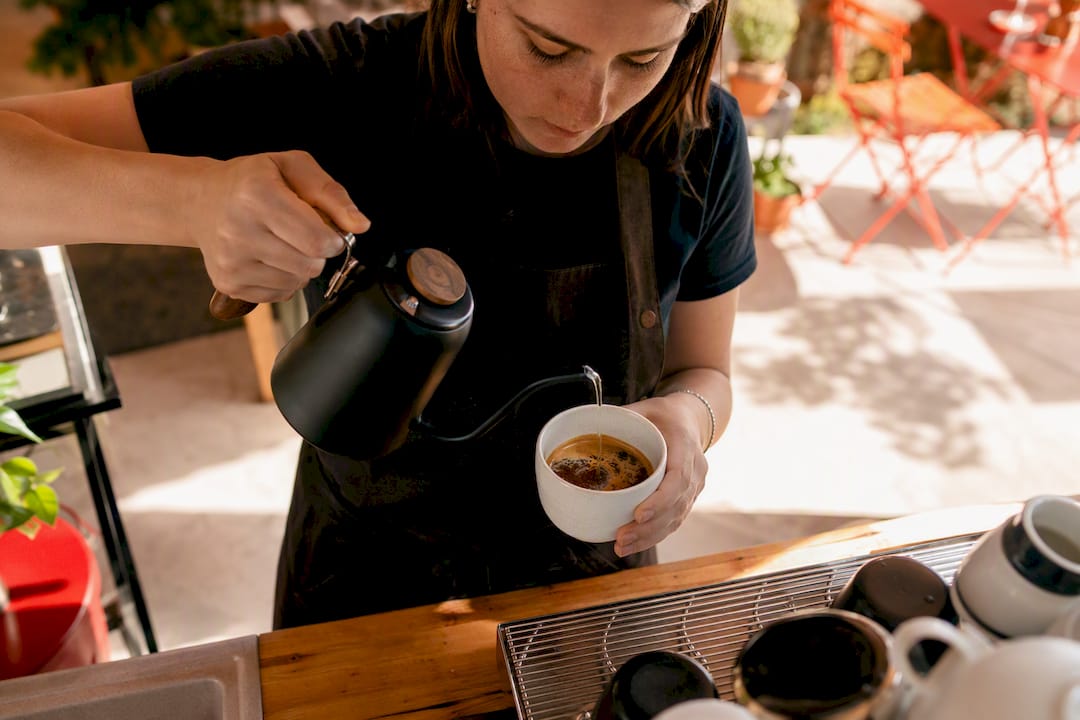
For something sweeter, the bombón layers espresso over condensed milk in a glass, unmixed until you stir it, and it looks almost like a dessert. A leche manchada flips the usual ratio, mostly warm milk “stained” with a small amount of coffee, popular with people who want the ritual without the caffeine hit. In parts of Andalusia you will hear sombra or nube, both describing a coffee that is mostly milk with the faintest trace of espresso.
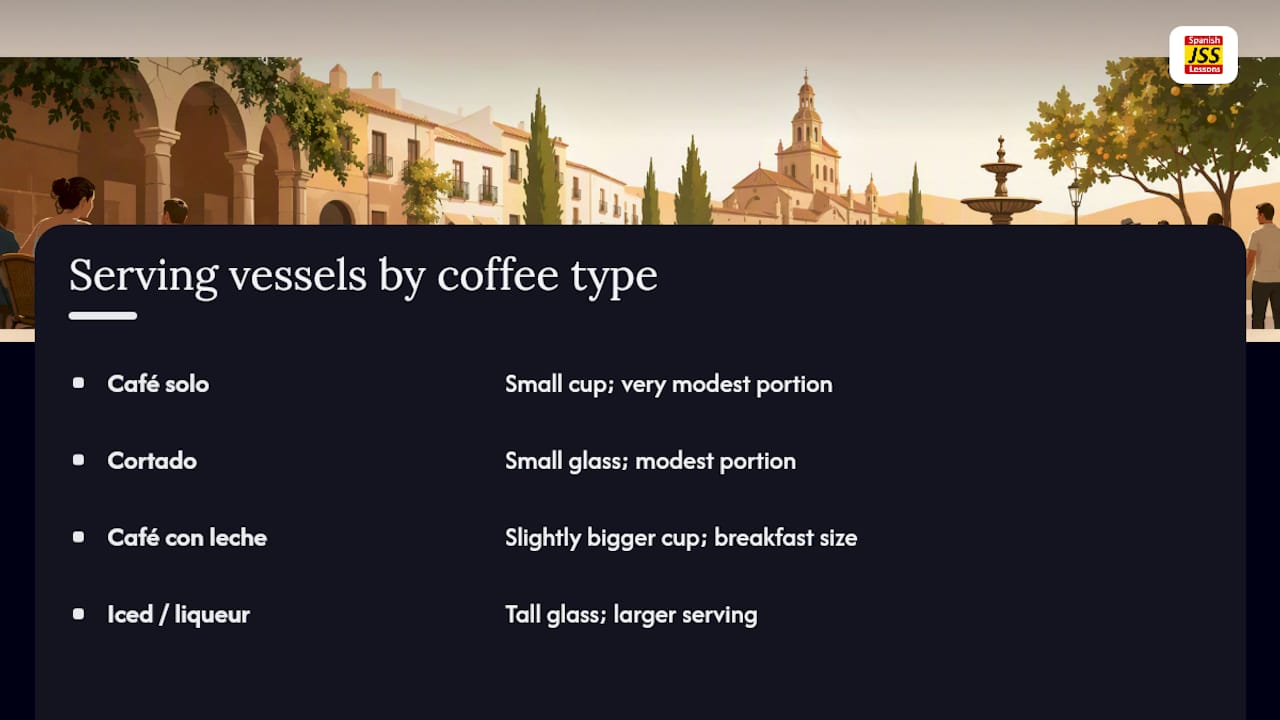
Serving vessels follow their own logic: solos and cortados usually arrive in small glass cups, con leches in slightly bigger ones, and anything with ice or liqueur in a taller glass. Portions are modest by design. Common Spanish coffee types rarely exceed a few mouthfuls, because the point is a quick break, not a large drink to nurse for an hour.
How to sound like a local when you order
The single biggest giveaway that someone learned Spanish from a textbook is starting every order with “Quiero un…” (“I want a…”). It is not wrong, but it is blunt. Spaniards at the bar use “Ponme un…” (literally “put me a…”) or “Me pones un…?”, both far more natural and warmer in tone. Add “por favor” at the end, not because it is compulsory, but because it softens the request and marks you as someone who has bothered to learn the rhythm of the language, not just the words.
- Start with the drink, not “quiero”. “Ponme un café con leche, por favor” beats “Quiero un café con leche” every time.
- Stack your modifiers in order. Drink first, then milk or temperature preference, then “para llevar” if you are taking it away: “Ponme un cortado con leche de avena, para llevar.”
- Ask, don’t demand, for decaf. “¿Me pones un descafeinado de máquina?” signals you know the difference between machine-brewed and sachet decaf.
- Keep it short. Bar staff in Spain move fast, especially during the morning rush, and a long sentence slows the whole exchange down.
The verb “poner” does a lot of work in Spanish bars. It carries a friendly, almost transactional warmth that “querer” lacks, similar to how “could I get a…” sounds friendlier in English than a flat “give me a…”
Pro Tip: Practise the stress pattern on “cortado” (kor-TAH-doh) and “descafeinado” (des-kah-fay-NAH-doh) out loud before you travel. Spanish stress falls in predictable places, and getting it right on these two words alone will make bar staff switch from “tourist mode” to treating you like a regular.
Regional names that can catch you off guard
Spain’s coffee vocabulary shifts as you cross regional lines, and a name that means one thing in Madrid can mean something else entirely two hours down the coast.
- Catalonia and the Balearics: order a “tallat” and you will get exactly what the rest of Spain calls a cortado.
- Málaga and much of Andalusia: baristas use a sliding scale from “solo” to “sombra” to “nube”, each with progressively more milk and less visible coffee.
- Valencia and the Levante: alongside the standard bombón, you might find “cremaet”, a sweetened coffee laced with rum or brandy, similar in spirit to a carajillo.
- Tenerife and the wider Canary Islands: look out for “barraquito”, a layered drink with condensed milk, a hint of liqueur, cinnamon, and lemon zest, and “leche y leche”, literally “milk and milk”, pairing condensed and steamed milk with espresso.
When a menu or a barista uses a term you do not recognise, one clarifying question solves it: “¿Qué lleva?” (what’s in it?). It is short, polite, and gets you a straight answer rather than an awkward guess. Regional naming conventions vary so much from town to town that even Spaniards ask this question when they travel.
Bar etiquette that saves you money and confusion
Ordering at the bar itself, rather than sitting at a table, is faster and usually cheaper, since many bars add a service surcharge for terrace or table seating. Sit down only if you actually want a waiter to come to you.
- Get the barista’s attention with a simple “¡Hola!” or “Buenos días”, then state your order directly.
- For iced coffee, ask for “café con hielo” and expect hot espresso plus a separate glass of ice. You pour it yourself at the table, which keeps the coffee from watering down too fast, a detail that trips up plenty of newcomers expecting a ready-mixed iced drink.
- For decaf, specify “de máquina” rather than “de sobre” (instant sachet) if you care about flavour, and ask “¿Tienen leche de avena?” if you want oat milk, since smaller-town bars do not always stock it.
- Pay only when you are ready to leave, with “La cuenta, por favor”. Leaving coins on the bar before you have finished can come across as rushing the staff.
Pro Tip: Ordering coffee this way at the bar, rather than gesturing from a table, is the single fastest way to blend in during the morning rush.
Your coffee phrase cheat sheet
Screenshot this before you leave the house. These cover ordering, modifying, and paying, with nothing extra to memorise:
- “Un café solo, por favor”
- “Ponme un cortado, por favor”
- “Un café con leche, por favor”
- “¿Me pones un descafeinado de máquina?”
- “Con hielo, por favor”
- “Con azúcar” / “sin azúcar”
- “¿Tienen leche de avena?”
- “Para llevar”
- “¿Qué lleva?” (when you are unsure what a local name means)
- “La cuenta, por favor”
Expect short, quick replies from staff, often just “¿Algo más?” (anything else?) or a nod towards the till.
Practise these exact phrases before your next trip
Knowing the names is one thing; having them come out of your mouth at native speed, under a bit of bar-rush pressure, is another. That gap between “I know this word” and “I said this word correctly, instantly” is exactly what James Spanish School was built to close.
The WordAmigo system drills phrases like “Ponme un cortado, por favor” using strategic repetition across reading, listening, speaking, and writing, so the sentence becomes automatic rather than something you have to translate in your head while the barista waits. James Bretherton, who has lived and ordered coffee in Spain for 40 years, built the course’s pronunciation practice around exactly this kind of everyday exchange, not textbook dialogue. If you want extra one-to-one speaking practice alongside the course, Spanish tutors online can give you live conversation reps too. Browse the full course shop and start with the lessons built around real bar, shop, and street Spanish, at your own pace, with lifetime access.
Sources
For more detail on regional terms and bar etiquette, see how to order coffee in Spain from Garçon Coffee, ordering coffee like a local from LAE Madrid, and Cómo pedir café en España from CaféGuías, which catalogues local specialities in far more depth than a single article can.