

What is builder’s mid-morning break in Spain
TL;DR:
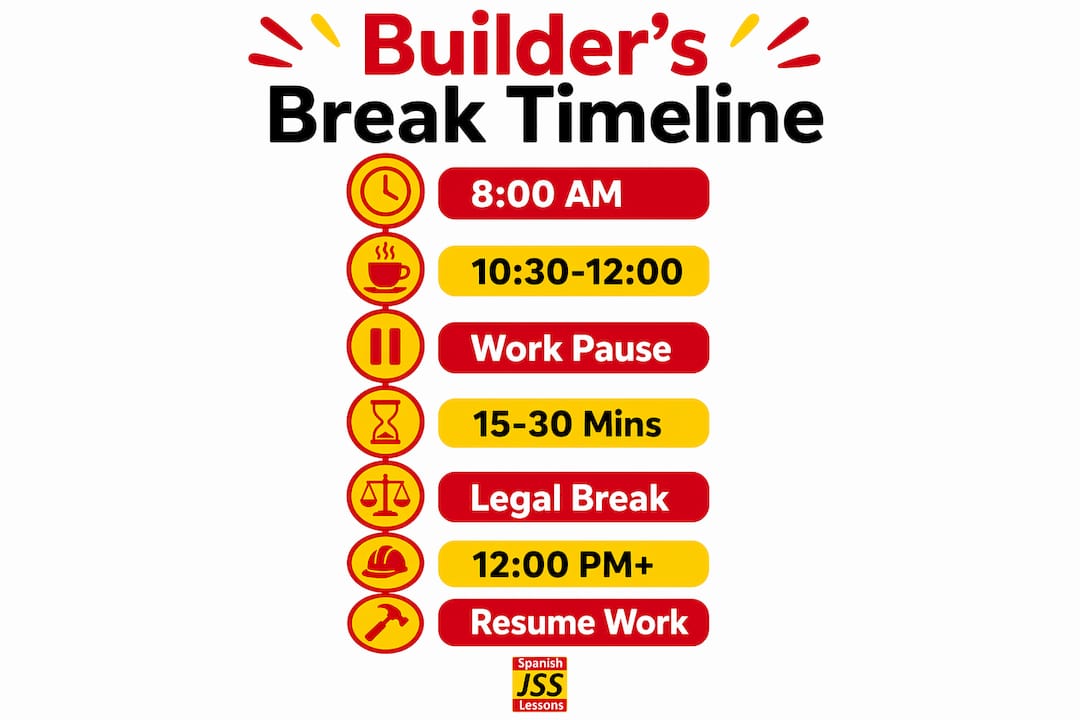
- The builder’s mid-morning break in Spain, known as the almuerzo, is legally mandated and culturally vital. It occurs between 10:30 AM and noon, lasting 15 to 30 minutes, during which workers leave the site to eat and socialize at a nearby café.
The builder’s mid-morning break in Spain is a legally protected and culturally embedded pause in the working day, known in Spanish as the almuerzo. It typically falls between 10:30 AM and noon, lasts 15–30 minutes, and involves coffee, food, and conversation at a local bar or café. For English speakers living or working in Spain, understanding this custom is not optional. It shapes construction schedules, social rhythms, and even your relationship with the tradesmen working on your home.
What is the builder’s mid-morning break in Spain?
The almuerzo is defined as a mid-morning food break taken between 10:30 AM and noon, distinct from both the light early breakfast and the main midday meal. It is not a coffee machine moment grabbed at a desk. Workers leave the site entirely, walk to the nearest bar or café, and sit down to eat and talk. The break typically lasts 15–30 minutes, though the social element often stretches that in practice.

The term “builder’s break” is the informal English phrase used by expats and property owners to describe this pause. The correct Spanish term is almuerzo, and using it correctly signals cultural awareness. If you are managing a renovation or building project in Spain, knowing this word will serve you well in conversations with your construction team.
This break sits in the middle of a long working day. Construction crews typically work from 8:00 AM to 6:00 PM, which means the almuerzo falls roughly two to three hours into the shift. Workers often start early on a light stomach, so the mid-morning break functions as a genuine second breakfast. It refuels the body and resets the mind before the heaviest work of the day.
When does the builder’s break happen, and how long does it last?
Timing and duration follow a consistent pattern across Spain, though regional habits create some variation. The key facts are:
- Start time: The break begins anywhere from 10:30 AM to 11:30 AM, depending on the crew and the employer.
- Duration: The standard window is 15–30 minutes, though informal extensions are common when workers are at a café.
- Position in the day: It falls roughly midway between the 8:00 AM start and the longer midday lunch break, which typically runs from 2:00 PM to 3:30 PM.
- Frequency: One mid-morning break per day is the norm. It is not repeated in the afternoon.
- Location: Workers leave the site. Expect the site to be empty or unstaffed during this window.
The full builder’s working day in Spain is long by Northern European standards. The 8:00 AM to 6:00 PM schedule includes the almuerzo, a substantial lunch break, and a return to work in the late afternoon. This split-shift structure, known as jornada partida, is deeply rooted in Spanish working culture and explains why the mid-morning pause carries so much weight. Without it, the gap between a 7:30 AM coffee at home and a 2:00 PM lunch would be physically demanding for manual workers.
Pro Tip: If you need to speak with your builder or check on site progress, aim for 9:00 AM to 10:15 AM or after 12:00 PM. Calling or visiting during the break window often means no answer and an empty site.
How does Spanish labour law regulate the mid-morning break?
The builder’s mid-morning break is not a courtesy. It is a legal obligation in Spain’s construction industry. Breaks are contractually mandated through collective agreements and company policies, and the consequences for ignoring them are serious.
A 2026 Spanish Supreme Court ruling confirmed that refusing to take a mandatory break can constitute grounds for lawful dismissal. The case established that the break is not a personal preference a worker can waive. It is an occupational health and safety requirement, particularly in physically demanding sectors like construction. The ruling reinforced what labour lawyers had long argued: mandatory breaks protect workers from fatigue-related accidents on site.
The break is typically unpaid time, but it remains obligatory. Employers cannot instruct workers to skip it in exchange for finishing earlier. Clients who pressure builders to work through the almuerzo risk damaging the working relationship and, in theory, exposing themselves to labour disputes if the employer faces a claim.
Pro Tip: Respecting the builder’s break is not just good manners. It protects you legally and professionally. A builder who feels their rights are respected is far more likely to go the extra mile on your project.
Why is the builder’s mid-morning break culturally significant in Spain?
The almuerzo is one of the clearest windows into how Spain organises its social and professional life. The break fosters social cohesion among workers and should never be read as laziness or inefficiency. It is an energy-sustaining cultural necessity, and treating it as anything less will mark you immediately as someone who does not understand Spain.
“The mid-morning break is where the real conversations happen. Workers share information, solve problems, and build the trust that holds a crew together. The café is as much a part of the worksite as the scaffolding.”
Local bars and cafés play a central role in this ritual. The same group of builders often uses the same café every morning, building a relationship with the owner and a sense of routine that anchors the working day. For expats, this is worth knowing because it means the café near your building site is a genuine social hub, not just a place to grab a coffee. Understanding Spanish cultural habits like this one changes how you read the world around you.
The almuerzo also connects directly to Spain’s broader mealtime culture. Spanish lunch does not happen until 2:00 PM or later, and dinner rarely before 9:00 PM. The mid-morning break bridges the gap between an early, light breakfast and that late lunch. Without it, the Spanish working day would be physiologically unsustainable for manual workers. It is the structural glue that holds the jornada partida together.
How does the builder’s break affect work schedules and project timelines?
For anyone managing a construction or renovation project in Spain, the mid-morning break has direct practical consequences. The table below compares what a typical Northern European client might expect against the reality of a Spanish builder’s day.
| Expectation | Spanish reality |
|---|---|
| Continuous work from 8:00 AM to 1:00 PM | Work pauses for almuerzo between 10:30 AM and noon |
| Site always staffed during working hours | Site may be empty for 15–30 minutes mid-morning |
| Noise throughout the morning | Noise restrictions (Plan de Ruidos) may limit loud work in certain areas |
| Project finishes at 5:00 PM | Workday extends to 6:00 PM due to break and lunch structure |
| Quick phone response any time | Calls during break window often go unanswered |
The Plan de Ruidos regulations add another layer of complexity. In coastal areas and upmarket residential neighbourhoods, noise restrictions limit when builders can use loud machinery. These restrictions sometimes overlap with the mid-morning break window, which means the pause is not always a loss of productive time. Builders often schedule quieter tasks around the break and noisy work earlier in the morning.
The practical advice for expats is straightforward. Plan site visits for early morning or early afternoon. Schedule calls with your project manager outside the 10:30 AM to noon window. Build the break into your timeline expectations from day one. Understanding Spanish construction customs prevents frustration and keeps the working relationship positive.
What do builders eat and drink during the mid-morning break?
The food and drink at the almuerzo follow a clear and consistent pattern across Spain. Common mid-morning foods include:
- Bocadillo: A small sandwich on crusty bread, typically filled with jamón (cured ham), cheese, or tortilla de patatas (Spanish potato omelette).
- Tortilla de patatas: A thick slice of potato omelette, served warm or at room temperature. It is filling, cheap, and found in virtually every bar in Spain.
- Toast with tomato: Bread rubbed with fresh tomato and drizzled with olive oil, sometimes topped with jamón or cheese.
- Café con leche: A strong espresso with an equal measure of hot milk. This is the standard morning coffee order across Spain and the default drink at the almuerzo.
- Zumo de naranja: Fresh orange juice, squeezed to order at most Spanish bars, often paired with the coffee.
The almuerzo is deliberately more substantial than the early breakfast, which is often just a coffee at home. It is not, however, a full meal. That distinction belongs to the midday lunch. The mid-morning break fills the energy gap without replacing the main meal, which is why the food choices lean towards filling but not heavy options. Knowing this helps expats understand Spanish meal traditions and participate naturally when invited to join a crew at the local bar.
How James Spanish School helps you understand Spanish culture
Understanding the almuerzo is one piece of a much larger cultural picture. Living well in Spain means reading the rhythms of the day, knowing what to say to your builder at the café, and feeling confident in everyday situations that textbooks never cover.

James Spanish School was built precisely for this. Founded by James Bretherton, a dual-native speaker with 40 years of life in Spain, the school teaches real Spanish for real situations. The 100-lesson course covers sentence-building and ear-tuning so you can follow fast spoken Spanish, not just read it. The WordAmigo system uses strategic repetition to lock vocabulary and pronunciation into long-term memory. Cultural insights, including workday customs like the builder’s break, are woven throughout. You can explore the full course and start learning at your own pace, on any device, with no expiry date and no pressure.
Key takeaways
The builder’s mid-morning break in Spain is a legally mandated, culturally essential pause that every expat managing a building project or living near a construction site needs to understand and respect.
| Point | Details |
|---|---|
| Standard timing | The almuerzo falls between 10:30 AM and noon, lasting 15–30 minutes. |
| Legal status | Spanish labour law and 2026 court rulings make the break a mandatory occupational safety requirement. |
| Cultural role | The break builds social cohesion and sustains energy across Spain’s long split-shift working day. |
| Practical impact | Expect an empty site mid-morning; plan calls and visits outside the break window. |
| Food and drink | Bocadillo, tortilla de patatas, and café con leche are the standard choices at local bars and cafés. |
FAQ
What is the builder’s mid-morning break in Spain?
The builder’s mid-morning break in Spain is a culturally and legally mandated pause called the almuerzo, taken between 10:30 AM and noon. Workers leave the site to eat and socialise at a local bar or café for 15–30 minutes.
Is the mid-morning break a legal requirement for builders in Spain?
Yes. Spanish labour law and collective agreements make the break a mandatory occupational health and safety requirement. A 2026 Supreme Court ruling confirmed that refusing to take the break can result in lawful dismissal.
What do Spanish builders eat during the mid-morning break?
The typical almuerzo includes a bocadillo (small crusty sandwich), a slice of tortilla de patatas, and a café con leche. Workers buy these at local bars and cafés near the site.
Will the builder’s break delay my construction project?
The break is built into the standard 8:00 AM to 6:00 PM working day and does not extend the overall schedule. Planning site visits and calls outside the 10:30 AM to noon window keeps communication smooth and avoids frustration.
How is the almuerzo different from the Spanish lunch break?
The almuerzo is a light mid-morning pause for snacks and coffee. The main lunch break, which is longer and more substantial, typically runs from 2:00 PM to 3:30 PM and is a separate event in the working day.