How to reinforce Spanish skills for real conversational fluency
TL;DR:
- Regular, active practice with cultural content enhances Spanish fluency and understanding.
- Setting clear, achievable goals and tracking progress keeps motivation and leads to better results.
- Online immersion through native media and interactive lessons can match in-country language gains.
You’ve studied Spanish for a long time, maybe multiple years. You can conjugate verbs, recall vocabulary lists, and even pass a written test. Then a Spanish neighbour speaks to you at machine-gun speed and every word evaporates. That gap between knowing Spanish and using it is one of the most frustrating experiences in language learning. The good news is it’s entirely bridgeable. This guide walks you through a practical, culture-based framework for reinforcing your Spanish skills, from honest self-assessment and smart resource choices to daily habits and progress tracking, so real conversational fluency stops feeling like a distant dream.
Table of Contents
- Assess your current Spanish proficiency and set realistic goals
- Choose the right resources for culture-based Spanish learning
- Build practical habits: daily practice strategies for real progress
- Track progress and adjust your approach for maximum impact
- Why prioritising cultural immersion—the online way—transforms your Spanish skills
- Take the next step with expert-guided online Spanish lessons
- Frequently asked questions
Key Takeaways
| Point | Details |
|---|---|
| Set clear Spanish goals | Defining what you want to achieve keeps your practice focused and rewarding. |
| Choose culture-rich resources | Using materials with real Spanish conversation and culture accelerates your progress. |
| Practise both listening and speaking | Combining these skills daily gives you confidence and prepares you for real-life situations. |
| Adapt your routine as needed | Changing strategies or resources when you plateau ensures constant improvement. |
| Active engagement matters most | The research shows that practising mindfully leads to better results than just passive exposure. |
Assess your current Spanish proficiency and set realistic goals
Before diving into techniques, you’ll need a starting point and a clear sense of direction. Without both, even the best resources become a scatter-gun approach that produces slow results.
Start with a simple self-assessment. Ask yourself three honest questions: Can you introduce yourself and your family naturally? Can you order food, ask for directions, or handle a basic transaction? Can you tell a short story about your week without freezing mid-sentence? Your answers will place you somewhere on the scale below.
| Level | What you can do | |
|---|---|---|
| Beginner | Greet people, state your name, count, name colours | |
| Elementary | Handle simple transactions, describe your home and routine | |
| Intermediate | Follow the gist of conversations, express opinions simply | |
| Upper intermediate | Sustain conversations, understand most TV dialogue | |
| Advanced | Discuss abstract topics, understand regional accents |
Once you know your level, set goals that match it. Goals generally fall into three categories:
- Conversational goals: Holding a five-minute chat with a shopkeeper or neighbour without switching to English.
- Listening goals: Following a Spanish news bulletin or radio programme without replaying it three times.
- Cultural understanding goals: Grasping idioms, social customs, and the unspoken rules of Spanish daily life.
Study abroad research shows that initial proficiency and clear objectives directly influence how much learners gain. In other words, knowing where you stand and what you want to achieve is not just motivational advice; it is a measurable factor in your success.
Understanding Spanish structure for beginners early on also helps you set goals that are grounded in how the language actually works, rather than how you imagine it should work.
Pro Tip: Write your goal on a sticky note and review it every two weeks. If you’ve met it, raise the bar slightly. If you haven’t, narrow the focus rather than abandoning it altogether. Small, rolling targets keep momentum alive far better than one enormous ambition.
Choose the right resources for culture-based Spanish learning
With your goals in mind, it’s time to find the best tools for the journey. Not all resources are created equal, and the wrong choice can waste months of effort.
Common resource types include structured lesson courses, podcasts, YouTube channels, language exchange apps, and cultural immersion websites. Each has its strengths, but they vary considerably in how well they develop listening, conversation, and cultural awareness.
| Resource type | Listening | Conversation | Cultural context |
|---|---|---|---|
| Structured online lessons | High | High | High |
| Podcasts | High | Low | Medium |
| YouTube channels | Medium | Low | Medium |
| Language exchange apps | Medium | High | Medium |
| Vocabulary drill apps | Low | Low | Very low |
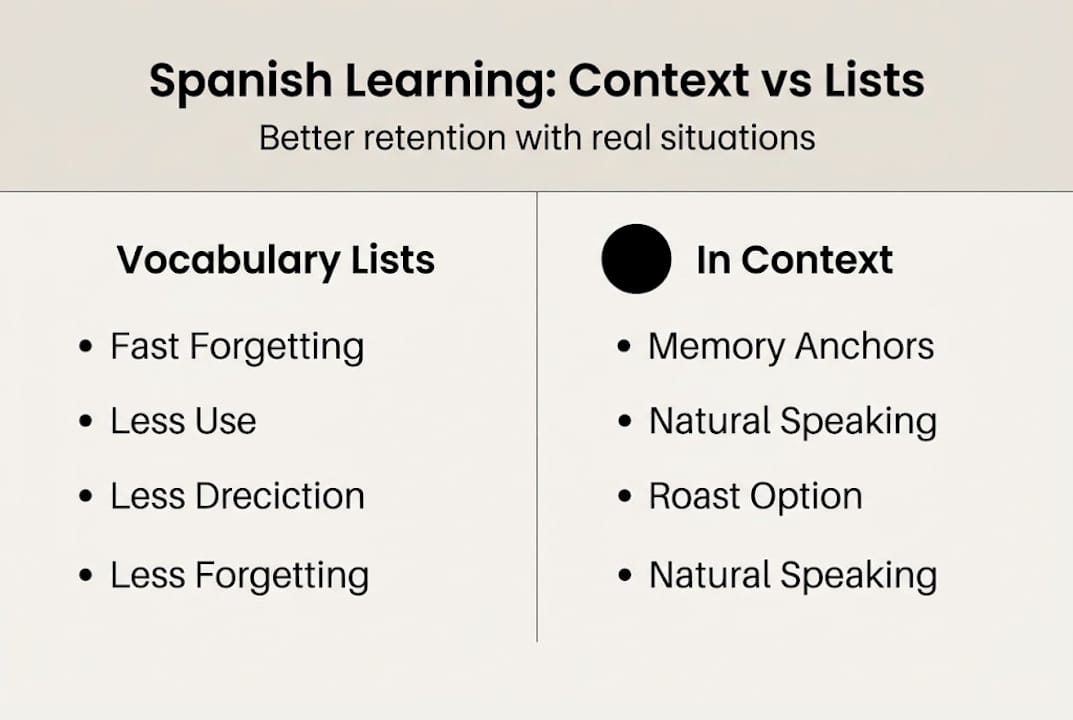
The pattern is clear. Structured online practice can approximate real immersion, particularly when it combines high contact with genuine cultural context. Vocabulary drills alone, by contrast, give you words without the framework to use them.
When choosing a resource, apply these criteria:
- European Spanish focus: Latin American Spanish is wonderful, but if you’re living in or visiting Spain, you need Castilian pronunciation, vocabulary, and idioms.
- Native content: Resources created by native speakers carry the natural rhythm, pace, and cultural colour that textbooks strip out.
- Progressive structure: You need a resource that builds logically, not one that jumps randomly between topics.
- Opportunity for interaction: Passive listening alone is not enough. Look for resources that push you to respond, repeat, or produce language.
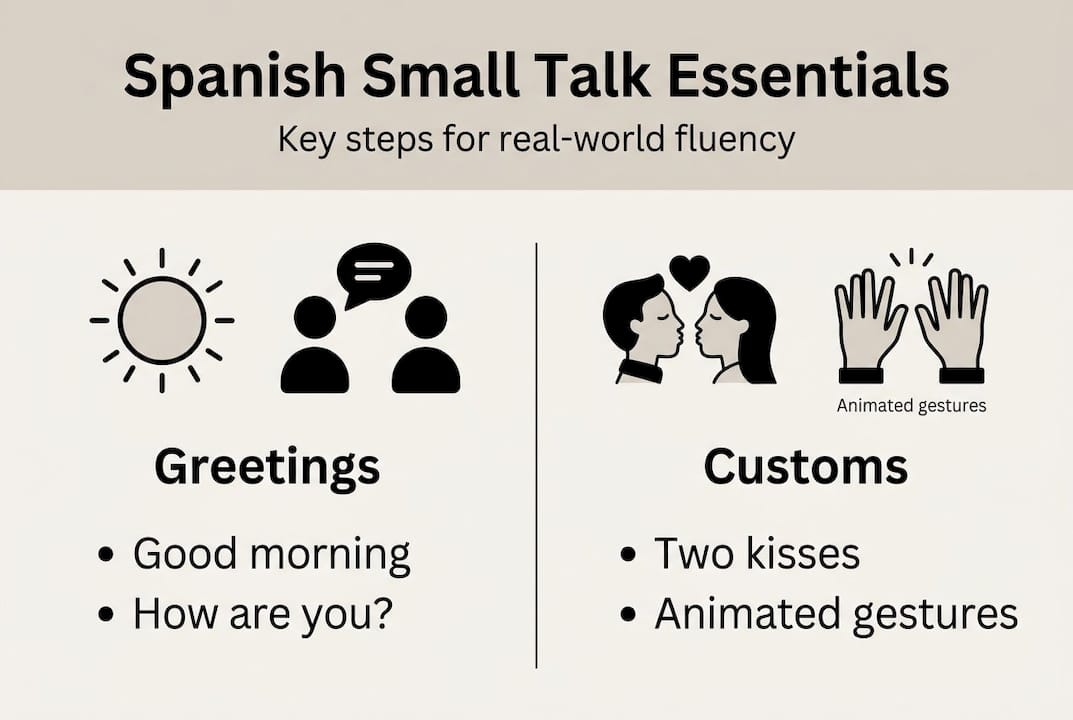
Cultural nuance matters enormously here. Knowing that Spaniards often greet with two kisses, that mañana doesn’t always mean tomorrow, or that a builder’s mid-morning break is a serious institution will help you navigate real conversations far better than an extra fifty vocabulary words. Explore practical online Spanish learning approaches that weave culture into every lesson rather than treating it as an optional extra.
For the listening side specifically, dedicated spoken Spanish practice resources train your ear to process the speed and rhythm of native speech, which is a skill entirely separate from reading or writing.
Build practical habits: daily practice strategies for real progress
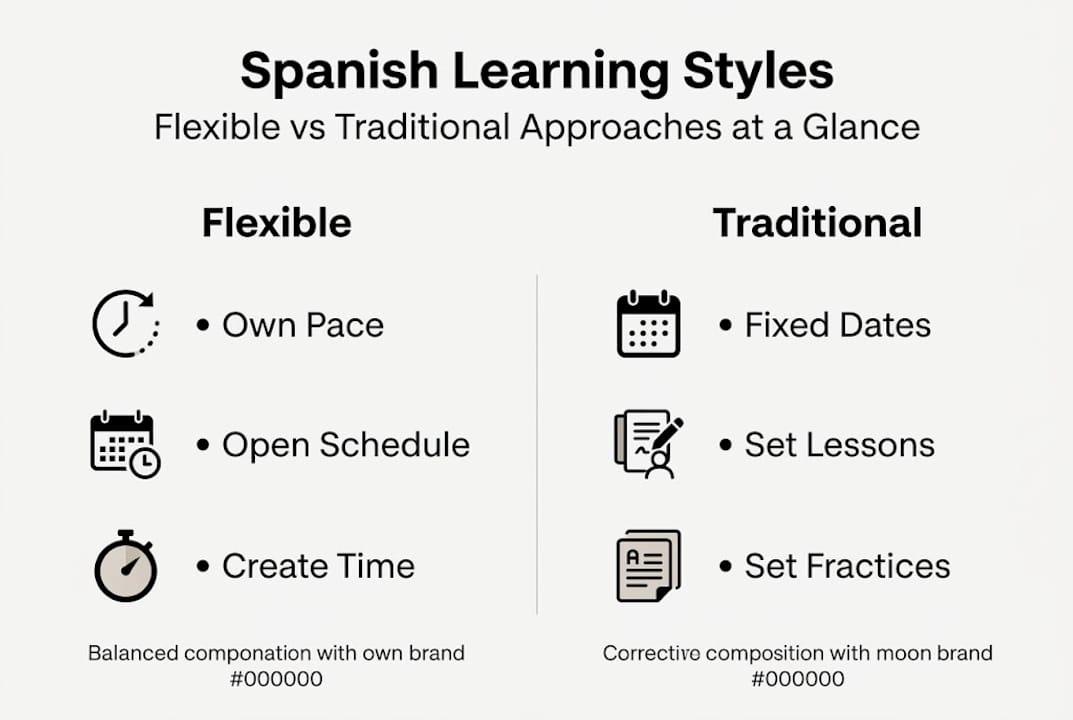
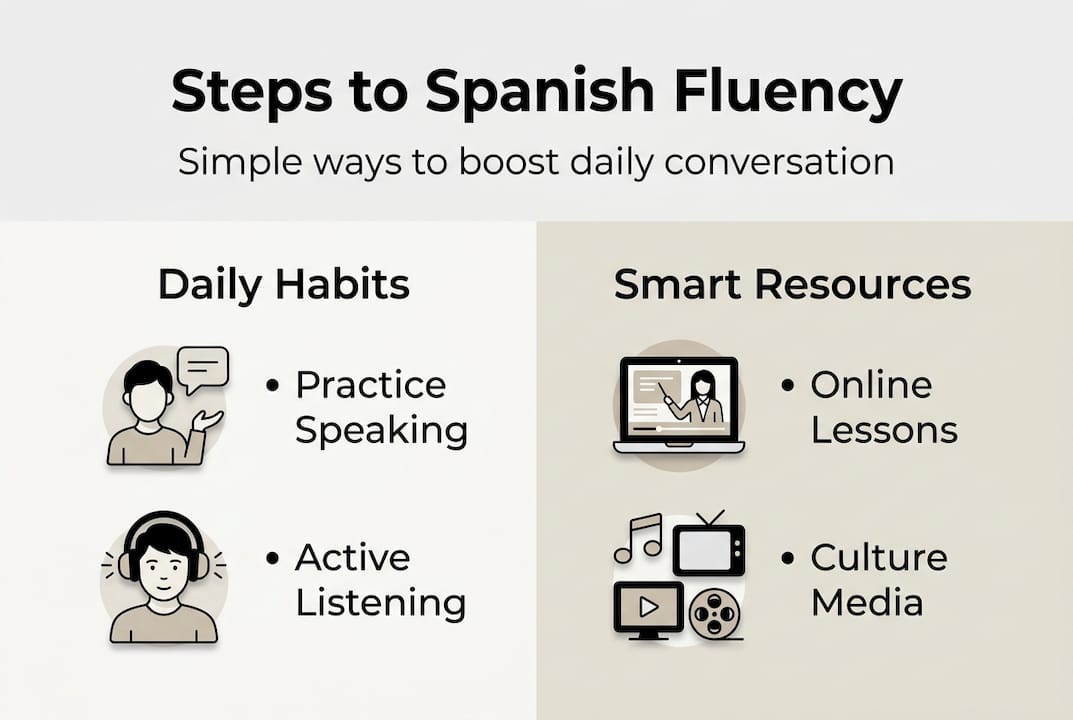
Selecting resources is only the first step; making consistent, practical use of them is where the real gains are made. A structured daily routine, even a short one, outperforms a three-hour weekend session every single time.
Here is a simple sequence that works well for adult learners at any level:
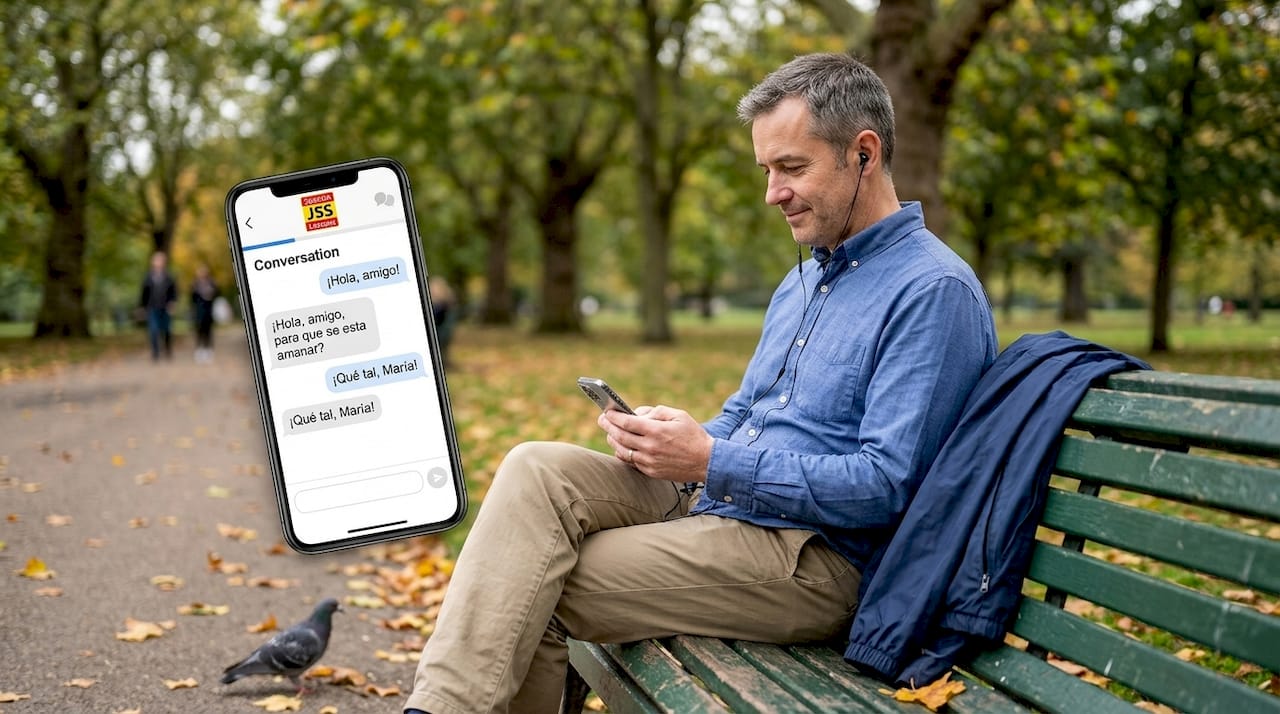
- Listen first. Start with five to ten minutes of native audio, a short news clip, a radio segment, or a scene from a Spanish TV series. Don’t worry about understanding every word. Train your ear to the rhythm.
- Repeat aloud. Pick two or three sentences from what you heard and say them out loud, mimicking the speaker’s pace and intonation as closely as you can.
- Role-play a scenario. Imagine a real-life situation, ordering at a bar, asking the pharmacist for something, chatting to a neighbour, and talk yourself through it in Spanish.
- Record yourself. Use your phone to capture thirty seconds of spontaneous Spanish. Play it back. You’ll notice exactly where you hesitate or reach for English.
Incorporating culture into this routine makes it far more effective. Spanish radio, short stories set in Spanish towns, and clips from everyday Spanish life all give your brain context clues that help lock new language in place.
Active engagement matters more than time invested. Regular, meaningful contact with the language produces far greater gains in fluency and accuracy than long, passive study sessions.
Fluency and accuracy improve most through regular, active contact rather than passive study. That research finding should reshape how you think about your practice time.
Pro Tip: Shadow native speakers by playing a short audio clip and speaking along with it simultaneously. It feels awkward at first, but it is one of the fastest ways to internalise natural Spanish rhythm. Structured Spanish practice lessons designed specifically for this purpose make the process far more manageable.
Consistency is the engine room of progress. Twenty minutes every day will take you further than two hours on a Saturday.

Track progress and adjust your approach for maximum impact
Once daily routines are in place, it’s essential to check you’re on the right track and adapt as needed. Without regular progress checks, it’s easy to practise the same things repeatedly without actually moving forward.
Three simple methods work well:
- Record yourself monthly. Compare recordings from week one and week four. You’ll often be surprised by how much your fluency and confidence have grown, even when it hasn’t felt that way day to day.
- Revisit old material. Go back to a lesson or audio clip you found difficult a month ago. If it now feels easy, that is concrete evidence of progress.
- Test yourself in real conversations. A brief chat with a Spanish speaker, whether in person or online, reveals gaps that no self-study exercise can replicate.
Plateaus are normal and expected. Learner progress varied significantly based on strategic focus and ongoing adjustment of practice methods. When you feel stuck, the answer is rarely to work harder at the same thing. It’s to change the approach.
Strategies for breaking through a plateau:
- Switch from listening-heavy practice to more speaking-focused activities for two weeks.
- Introduce a new cultural topic, Spanish food, regional festivals, local customs, and build vocabulary around it.
- Find a conversation partner, even an informal one, to introduce unpredictability into your practice.
- Set a micro-goal: master one specific type of conversation, such as visiting the doctor or discussing a news story, before moving on.
Celebrating small wins matters too. Every time you understand a fast-spoken sentence, hold a conversation without reverting to English, or grasp a cultural reference, that is a genuine milestone. Acknowledge it. Motivation is a resource, and it needs replenishing. When you feel ready to push further, continue with advanced online lessons that match your growing confidence.
Why prioritising cultural immersion—the online way—transforms your Spanish skills
Here is a perspective that challenges the most common assumption in language learning: you do not need to live in Spain to make real, lasting progress in Spanish. That belief holds back thousands of motivated learners who are waiting for the right circumstances before committing fully.
The students who make the fastest gains are not always the ones physically in Spain. They are the ones who treat online lessons, Spanish media, and cultural communities as genuine immersion environments rather than second-best alternatives. They watch Spanish TV without subtitles. They listen to Spanish radio while cooking. They engage with real-life Spanish fluency tips that connect language to lived experience.
Conventional wisdom underestimates what targeted, meaningful online contact can achieve. Real progress comes not from exposure alone but from purposeful engagement with culture, conversation, and structure. Online immersion, done well, can match and in some respects exceed the benefits of simply being in the country.
Take the next step with expert-guided online Spanish lessons
If this framework has given you a clearer picture of how to move forward, the next step is finding a structured environment that puts it all into practice for you.
At James Spanish School, online Spanish lessons are built around exactly this approach: real conversational exposure, genuine cultural context, and a method that strips away unnecessary complexity so you can focus on actually speaking. Whether you’re starting out or pushing through a plateau, you’ll find all learning products designed for adult learners who want practical results. Explore practical spoken Spanish programmes and discover what structured, culture-rich learning feels like when it’s built around real life in Spain.
Frequently asked questions
Can I become fluent in Spanish without living in Spain?
Yes, with daily practice, structured online lessons, and immersion in native content, fluency is entirely achievable from home. Structured online practice can replicate many of the benefits of in-country immersion when engagement is active and consistent.
What type of online Spanish lessons help most with conversation?
Interactive lessons that combine speaking, listening, and cultural context produce the strongest results for conversational fluency. High-contact, active practice environments consistently outperform passive study for both fluency and accuracy.
How often should I practise Spanish to see real improvement?
Daily practice, even in short focused bursts of fifteen to twenty minutes, leads to far greater gains than occasional longer sessions. Consistent daily contact with the language accelerates progress in both conversational and listening skills.
What can I do if I’m stuck at an intermediate Spanish level?
Change your routine by introducing new resources, focusing on cultural topics, or finding a conversation partner to introduce fresh challenge. Adjusting strategies in response to plateaus is one of the most reliable ways to unlock further individual improvement.
Recommended
- Mastering Spanish small talk: real-world fluency
- Practical Spanish tips for real-life fluency in Spain
- Real-life Spanish conversation: what it means and how to use it
- Practical spoken Spanish: real skills for everyday fluency
- Cartes de conversation #01 : l’icebreaker ultra-simple et efficace · Vibes 🏳️🌈