James Spanish School

Categories
Insights

7 tips for speaking Spanish fluently with locals in Spain

Tips for Speaking Spanish with locals.

You finally pluck up the courage to speak Spanish with your neighbour, and within seconds they switch to English. It is one of the most deflating experiences for any learner living in Spain. Locals mean well, of course, but their helpfulness can quietly sabotage your progress. The good news is that this pattern is entirely breakable. With the right strategies, you can signal your intent clearly, hold your ground politely, and enjoy real conversations in Spanish every single day. These practical tips are designed specifically for English-speaking adults living in Spain who want genuine immersion, not just textbook practice.

Table of Contents

Key Takeaways

Point Details
Open conversations assertively Starting in Spanish, with clear cues, helps prevent locals switching to English.
Use essential phrases Practising key responses and fillers boosts confidence in real interactions.
Listen beyond words Reading context and body language provides vital clues when vocabulary runs out.
Persist in Spanish Sticking with Spanish despite mistakes encourages locals to stay engaged and supportive.
Engage with authentic topics Discussing local culture and shared experiences makes conversations more natural and enjoyable.

Start conversations the right way

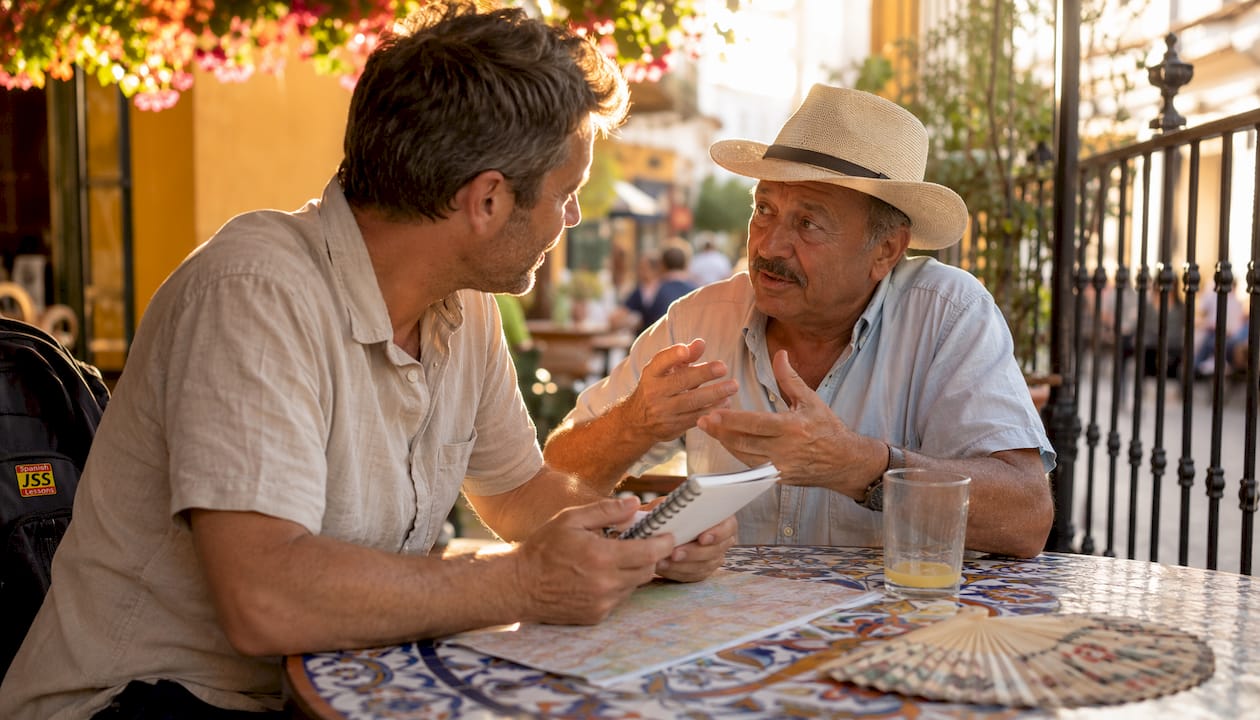
The first few seconds of any conversation set the tone for everything that follows. If you open with English, even just a quick “sorry” or “excuse me”, you are already signalling to the local that English is on the table. The moment that door opens, many Spaniards will walk straight through it, often out of genuine kindness.

The fix is straightforward. Start with ‘Hola’ and then pause. That pause is doing real work. It tells the other person you are waiting for a Spanish reply, not an English one. Follow up with your question in Spanish, spoken at a steady pace, and maintain confident eye contact. Body language matters enormously here. A hesitant posture or an apologetic smile can undermine even perfect Spanish.

Here are a few simple habits that help set the right tone from the start:

  • Always greet in Spanish, even in tourist-heavy areas
  • Avoid mixing English words into your Spanish sentences
  • Speak at a natural pace rather than rushing nervously
  • Use a warm, confident tone to signal you are comfortable in Spanish
  • Make eye contact and nod to show you are following along

“The first word out of your mouth shapes the whole conversation. Make it Spanish.”

Pro Tip: If a local looks at you blankly when you start in Spanish. Don’t panic, you caught them by surprise. Don’t think Oh I said it wrong and try another set of words. Just repeat the words. Usually, then they will follow. If they reply in English, do not switch. Simply continue in Spanish. Most people will take the hint and follow your lead. This small act of persistence, done warmly, is one of the most powerful tools for enhancing speaking skills in real-world settings.

Prepare key phrases and responses

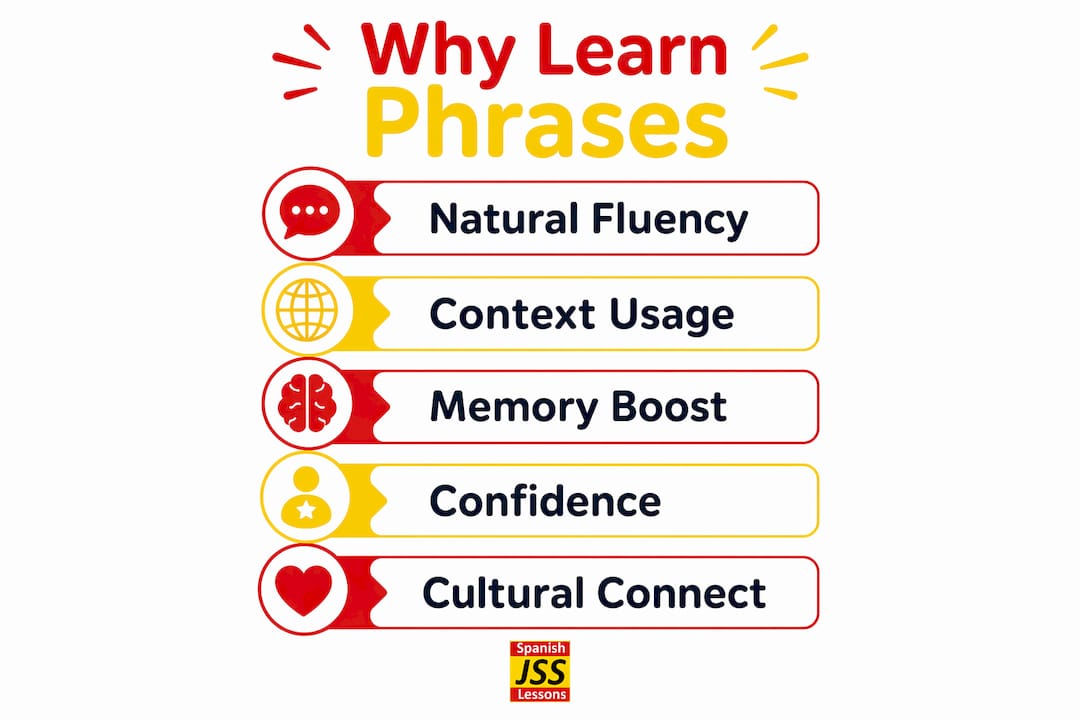
Once you begin a conversation, you will need reliable phrases to keep it flowing. Confidence in Spanish does not come from knowing thousands of words. It comes from having a small set of phrases you can reach for instantly, without thinking.

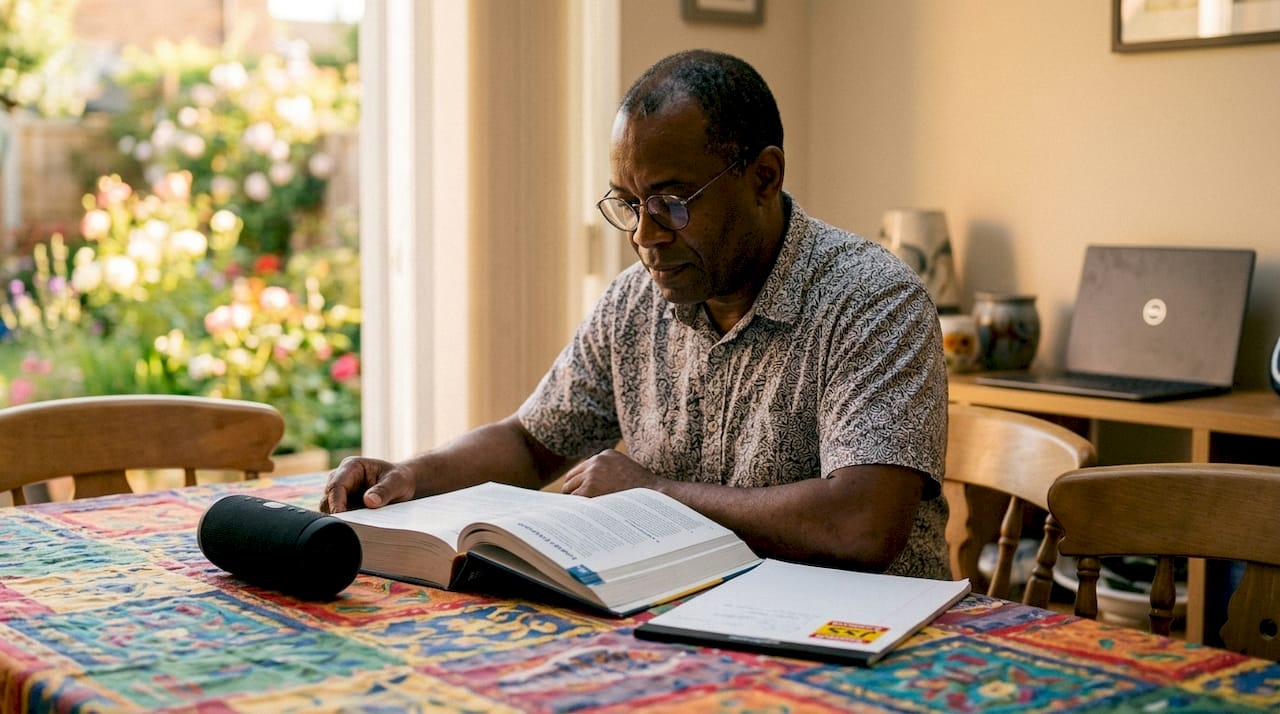
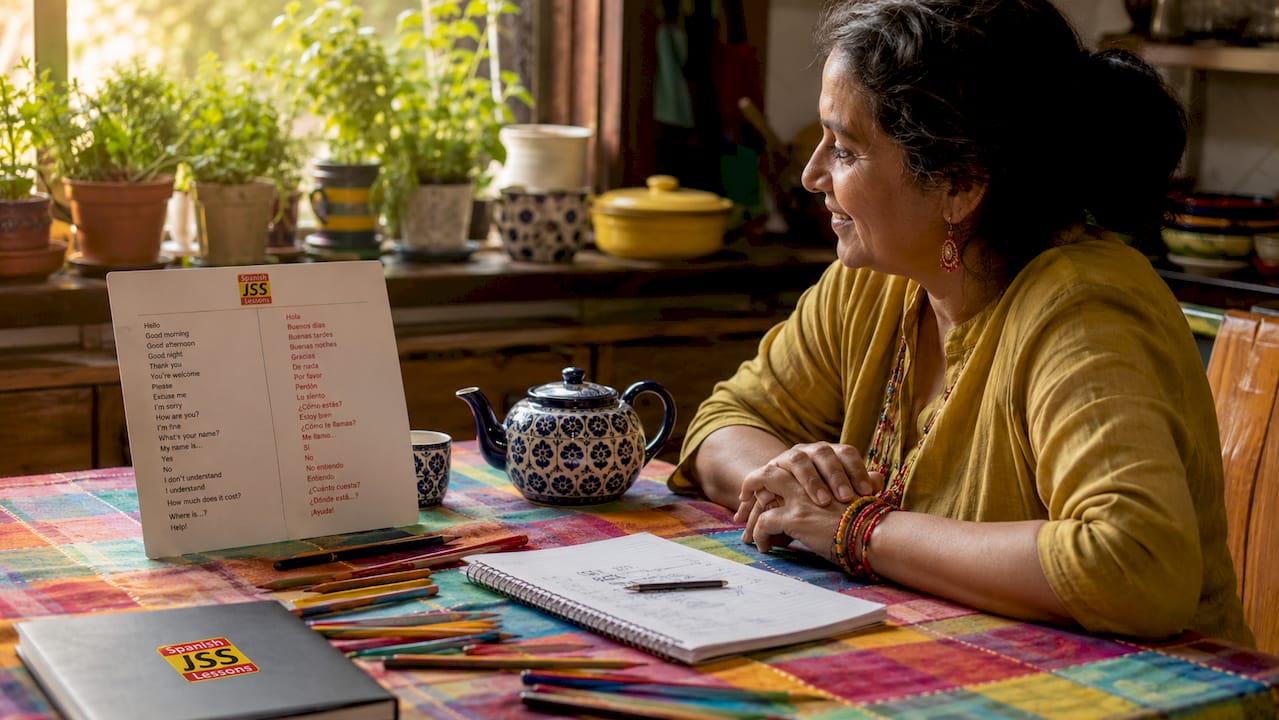
Practicing Spanish phrases at kitchen table

Locals respond well to clear, confident Spanish, even when it is simple. A well-delivered short sentence beats a hesitant long one every time. Use this travel phrase guide as a starting point, then build your own personal list based on the situations you encounter most often.

Here are seven expressions worth knowing before any conversation:

  1. ¿Puedes repetir eso, por favor? (Can you repeat that, please?)
  2. No entiendo bien, ¿puedes hablar más despacio? (I do not understand well, can you speak more slowly?)
  3. ¿Cómo se dice…? (How do you say…?)
  4. Perdona, ¿dónde está…? (Excuse me, where is…?)
  5. Quiero… (I would like…)
  6. ¿Cuánto cuesta? (How much does it cost?)
  7. Muchas gracias, muy amable. (Thank you very much, very kind of you.)

Filler phrases are equally valuable. When you lose the thread of a conversation, expressions like “A ver…” (Let me see) or “Es que…” (The thing is…) or “Pues...”(Well) buy you a moment to gather your thoughts without going silent.

Pro Tip: Practise your responses to common follow-up questions such as “¿De dónde eres?” (Where are you from?) or “¿Cuánto tiempo llevas aquí?” (How long have you been here?). These come up constantly, and having a smooth, rehearsed answer keeps the conversation moving naturally. Explore the Spanish learning tools at James Spanish School to build this kind of practical fluency.

Listen actively and use context clues

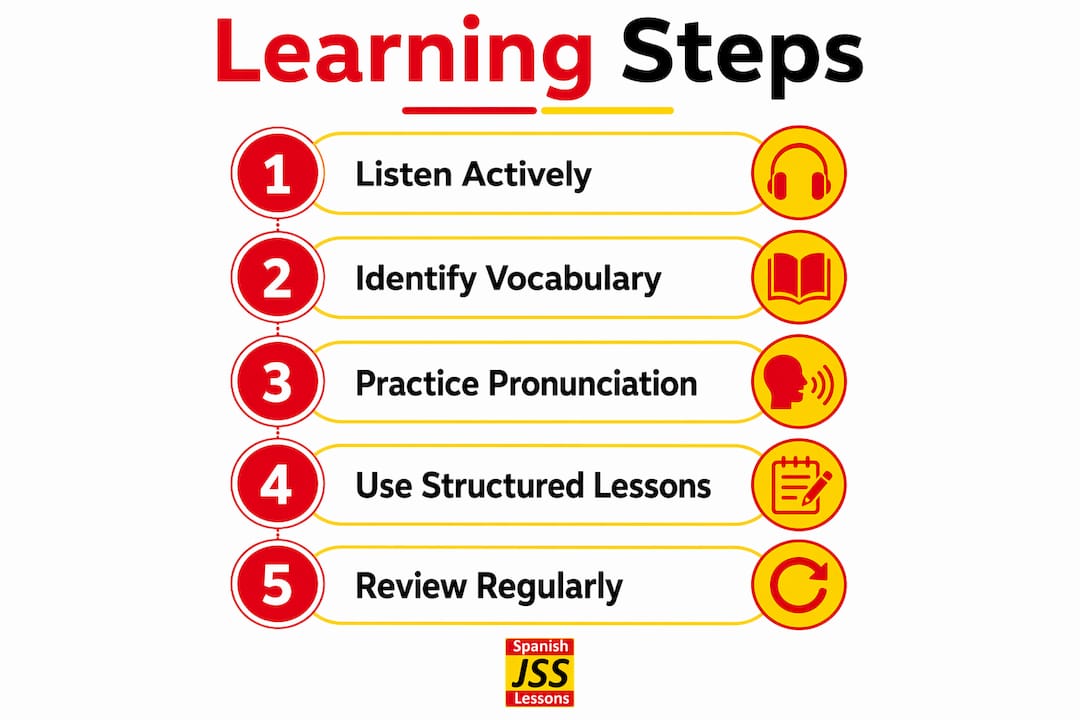
Strong phrases help, but listening well adds another layer to keeping the conversation local. The machine-gun speed of native Spanish can feel overwhelming at first, but you do not need to catch every word. You need to catch enough.

Context cues are vital for picking up meaning when individual words slip past you. A baker gesturing at a tray of bread while saying something you half-catch is almost certainly talking about that bread. A bus driver pointing at a sign is probably telling you about the route or the fare. Use what you can see to fill in what you cannot hear.

Here are practical ways to sharpen your active listening:

  • Watch the speaker’s hands, face, and eyes for meaning
  • Listen for key nouns and verbs rather than trying to process every word
  • Use the setting itself as a clue to likely vocabulary
  • Nod and use small affirmations like “Sí, sí” or “Claro” to show you are engaged
  • Ask for clarification rather than pretending to understand

This table shows common situations and the kinds of phrases you are most likely to encounter:

Situation Likely phrases What to listen for
Café or bar “¿Qué va a tomar?” Drink or food order
Shop “¿Le ayudo en algo?” Offer of assistance
Transport “El próximo es…” Stop or destination name
Market “Son dos euros.” Price or quantity
Pharmacy “¿Tiene receta?” Prescription or symptoms

For more language context advice on reading situational cues, the resources at Spain on Foot offer useful real-world examples. Practising with locals in these everyday settings is also something James Spanish School actively encourages through its practising with locals guidance.

Stay in Spanish when challenged

Listening well sets you up, but real-world interactions sometimes put you on the spot. A local switches to English, you panic, and suddenly you are both speaking English. It happens to almost every learner. The key is having a plan before it happens.

Persisting in Spanish is essential, and locals genuinely appreciate the effort even when it is imperfect. Here is what to do when the conversation starts to drift:

  • Smile and continue in Spanish regardless of what language they use
  • Say “Prefiero practicar mi español, si no te importa” (I prefer to practise my Spanish, if you do not mind)
  • Ask them to slow down rather than giving up
  • Accept that some mistakes are inevitable and keep going anyway
  • Celebrate small wins, a completed transaction in Spanish is a genuine achievement

Here is a clear comparison of what happens depending on your approach:

Approach Short-term outcome Long-term outcome
Switching to English Easier in the moment Slower progress, missed practice
Persisting in Spanish Slightly uncomfortable Faster fluency, greater confidence
Asking for slower speech Brief pause in conversation Better comprehension over time
Mixing both languages Conversation continues Confusing habits form

For Spanish persistence tips that go beyond the basics, it is worth reading about how other learners have navigated this exact challenge.

Pro Tip: Learn “¿Puedes hablar más despacio, por favor?” (Can you speak more slowly, please?) and use it without embarrassment. It is a polite, natural request that any Spanish speaker will respect. Building conversation confidence is a gradual process, and asking for slower speech is a sign of commitment, not weakness.

Engage locals with authentic topics

Staying in Spanish is easier and far more enjoyable when you have engaging topics ready. Textbook conversations about the weather or abstract grammar exercises do not prepare you for the real thing. What works is talking about things Spaniards actually care about. Looking at the local newspaper online before going to the neighbourhood bar can allow you to raise a subject of immediate local interest.

Personal and local topics help sustain Spanish conversation far better than formal or generic chat. When you show genuine curiosity about someone’s world, they naturally open up and the conversation flows. This is where connecting with locals becomes genuinely rewarding rather than just a language exercise.

Here are topics that consistently spark good conversations with Spaniards:

  • Food and recipes: Ask about a local dish, a market ingredient, or a family recipe. Spaniards are passionate about food and love sharing knowledge.
  • Fiestas and festivals: Every town has its own celebrations. Asking about the local fiesta shows respect and curiosity.
  • Football: Even a basic question about the local team can open a long and enthusiastic conversation.
  • The neighbourhood: Ask how long someone has lived there, what has changed, or what they recommend nearby.
  • Regional identity: Spain is deeply regional. Showing awareness of local culture, whether Andalusian, Catalan, or Galician, earns real respect.

Open-ended questions work best. Instead of “¿Te gusta el fútbol?” (Do you like football?), try “¿Qué piensas del partido del domingo?” (What do you think about Sunday’s match?). The first invites a yes or no. The second invites a conversation. That distinction matters enormously when your goal is cultural Spanish learning through genuine human connection.

Avoid overly formal language or phrases that sound lifted straight from a grammar book. Spaniards speak naturally and colloquially, and matching that register, even imperfectly, makes you far more approachable.

Take your Spanish to the next level

The strategies in this article will give you a strong foundation for real conversations in Spain. But having the right phrases and tactics is only part of the picture. Structured learning that is built around everyday Spanish life makes all the difference.

https://jamesspanishschool.com

James Spanish School was founded by James Bretherton, a dual-native speaker who has lived in Spain for 40 years. His 100-lesson online course is built specifically for English-speaking adults living in Spain, covering both sentence-building and ear-tuning so you can follow fast, natural Spanish. There are no grammar terms, no countdown clocks, and no pressure. Just practical, real-life Spanish for conversations with neighbours, shop staff, tradesmen, and local officials. If you are ready to stop switching to English and start truly connecting with the people around you, this is where to begin.

Frequently asked questions

Why do locals in Spain often switch to English?

Many Spaniards switch to English out of genuine helpfulness, but signalling your preference for Spanish from the very first word makes a significant difference to how the conversation unfolds.

What should I do if I get stuck for words?

Use filler phrases like “A ver…” or “Pues” to buy yourself a moment, and seek clarification in Spanish rather than reverting to English. Clear, confident Spanish, even when simple, keeps the conversation on track.

How can I politely ask a Spaniard to slow down?

Say “¿Puedes hablar más despacio, por favor?” to gently request slower speech. Persisting in Spanish and asking for help is something locals genuinely respect.

Are certain topics better for starting conversations in Spanish?

Yes. Local culture, food, and festivals are consistently the best conversation starters with Spaniards, as they invite enthusiastic, open-ended responses rather than brief yes-or-no answers.


Categories
Insights

Master basic Spanish: beginner steps for real conversations

You’re standing at a café counter in Malaga, the waiter is waiting, and your mind goes completely blank. It happens to almost every beginner. The good news is that this frustration is not a sign you’re bad at languages. It’s a sign you haven’t yet built a reliable system. This guide gives you that system: a practical, step-by-step framework for mastering basic European Spanish so you can start speaking from day one with greetings, introductions, polite requests, and everyday needs.

Table of Contents

Key Takeaways

Point Details
Start with essentials Focus on understanding and learning everyday phrases for greetings and needs first.
Active recall matters Use daily speaking and writing routines to fix phrases in your memory.
Tackle common mistakes Address tricky grammar and pronunciation early to avoid confusion.
Test your progress Check your skills by simulating real conversations and practical checkpoints.

What you need to begin: tools and expectations

Before you learn a single phrase, it helps to know exactly what you’re aiming for. The goal here is not fluency. It’s reaching a level where you can handle simple, familiar situations: buying bread, asking for directions, introducing yourself to a neighbour. That’s a genuinely achievable target, and require roughly 60 to 100 hours of focused exposure to cover the core communication you need.

That might sound like a lot, but spread across daily 30-minute sessions, you’re looking at four to six months of comfortable, pressure-free learning. The key word is focused. Passive listening while you cook dinner won’t get you there. Active engagement will.

Here are the tools worth having from the start:

  • A vocabulary notebook (physical or digital) for your personal word bank – you can do that with WordAmigo
  •  dictionary app such as WordAmigo for quick lookups
  • Flashcard software, again part of the WordAmigo system for spaced repetition practice
  • A reliable beginner course that explains Spanish in plain English, not grammar jargon
  • A pronunciation tool to hear how words actually sound in Spain – again WordAmigo
Tool Purpose Cost
WordAmigo Build your personal word bank 49.95
WordReference app Quick, accurate translations Free
WordAmigo Spaced repetition for recall already will have
Beginner course Structured sentence building Varies
WordAmigo Pronunciation audio Hear real Spanish speech Free/paid

One myth worth busting immediately: adults are not worse language learners than children. Adults actually have a significant advantage because they can use logic, pattern recognition, and deliberate strategy. Children learn through years of immersion. You can shortcut that process considerably with the right approach.

Pro Tip: Before you start any lesson, write down ten words or phrases that are specific to your life. If you’re moving to Spain, you might need words for your local market, your doctor’s surgery, or your town hall. A personalised word bank beats a generic vocabulary list every time.

Step 1: Memorise practical phrases for daily life

With your tools ready, it’s time to focus on the phrases you’ll actually use. Forget abstract grammar rules for now. The fastest route to confidence is memorising a core set of phrases that cover the situations you’ll face most often.

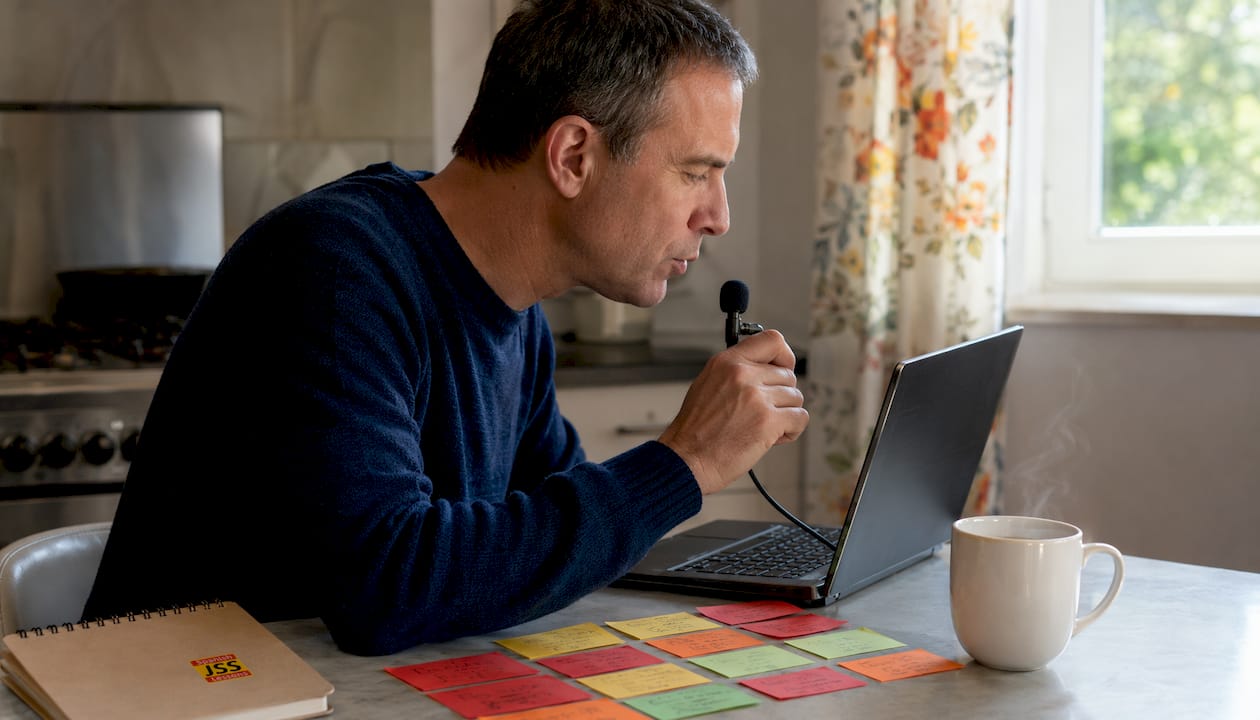
Man practicing Spanish phrases at kitchen counter

Think in groups. Greetings and farewells. Introductions. Polite requests. Asking for help. Everyday needs like shopping, ordering food, and catching a bus. These five groups cover the vast majority of beginner interactions.

Here’s a comparison of the phrases you need most:

English Spanish When to use it
Good morning Buenos días Morning greeting
Good afternoon Buenas tardes Afternoon greeting
Please Por favor Any polite request
Thank you Gracias After receiving help
Excuse me Perdona / Perdone Getting attention
Do you speak English? ¿Hablas inglés? When you’re stuck
I don’t understand No entiendo Asking for clarity
How much does it cost? ¿Cuánto cuesta? Shopping
Where is…? ¿Dónde está…? Asking directions
I would like… Quiero… Ordering or requesting

Your non-negotiable first phrases to memorise are:

  • Hola (hello) and Adiós (goodbye)
  • Por favor (please) and Gracias (thank you)
  • Me llamo… (my name is…)
  • No entiendo (I don’t understand)
  • ¿Puedes repetir, por favor? (Can you repeat that, please?)
  • ¿Dónde está…? (Where is…?)
  • Quiero… (I would like…)

Why do these matter so much? Because they are conversation openers. Once you say Hola, quiero un café, por favor, you’ve started a real exchange. With a course that focuses on Spoken Spanish you will find they have hundreds of Spanish sentence examples that show how these building blocks connect into natural speech.

Pro Tip: Practise these phrases aloud, alone, until they feel completely automatic. Say them in the shower, on a walk, while waiting for the kettle. The goal is zero hesitation before you ever use them with a native speaker.

Step 2: Use active recall and simple practice routines

Knowing your phrases is one thing. Having them ready when you need them is another. The difference comes down to how you practise. Passive review, reading over your notes, is far less effective than active recall methods such as spaced repetition, shadowing, and sentence writing.

Active recall means forcing your brain to produce Spanish, not just recognise it. Cover the Spanish column in your table and say the phrase from memory. Write a sentence without looking at your notes. These small acts of retrieval are what build genuine fluency.

Here is a simple daily five-step routine:

  1. Review (5 minutes): Go through yesterday’s flashcards and say each phrase aloud.
  2. New input (10 minutes): Learn three to five new phrases or words from your course.
  3. Shadowing (5 minutes): Listen to a short audio clip of native Spanish and repeat each sentence immediately after, matching the rhythm and tone.
  4. Sentence writing (5 minutes): Write three original sentences using today’s new vocabulary.
  5. Self-test (5 minutes): Cover your notes and recall everything from today’s session.

That’s a 30-minute session. Consistent and manageable. Shadowing deserves a special mention because it does two things at once: it trains your ear to follow natural speech patterns, and it trains your mouth to produce sounds correctly. It’s one of the most efficient tools available to a beginner.

“Daily 30 to 45 minutes of active exposure using spaced repetition, comprehensible input, and shadowing produces significantly faster results than longer but passive study sessions.”

You can find structured grammar exercises that complement this routine and help you build sentences with confidence rather than guesswork.

Step 3: Fix common mistakes and Spanish ‘gotchas’

Now you’re practising, it’s essential to get ahead of the mistakes that trip up almost every English-speaking beginner. Some of these are predictable, and knowing them in advance saves you from cementing bad habits.

The biggest stumbling block for most beginners is ser versus estar. Both mean “to be” in English, but they are not interchangeable. Ser is used for permanent or defining characteristics: nationality, profession, identity. Estar is used for temporary states or locations: how you feel today, where something is right now. A simple rule: if it could change tomorrow, use estar.

Gender agreement catches people out too. Every Spanish noun is either masculine or feminine, and the adjective must match. Un libro rojo (a red book, masculine) versus una mesa roja (a red table, feminine). A quick checking trick: always ask yourself whether the noun ends in -o (usually masculine) or -a (usually feminine), then match your adjective accordingly.

False friends are another trap. Embarazada does not mean embarrassed. It means pregnant. Sensible does not mean sensible. It means sensitive. These strategic recall techniques help you flag and remember these tricky exceptions before they cause awkward moments.

Here are the top five beginner mistakes and their fixes:

  • Mixing up ser and estar: Learn one clear rule for each and test with real examples.
  • Forgetting gender agreement: Check noun endings and match adjectives every time.
  • Translating word for word from English: Spanish sentence order is different. Learn phrases as whole units.
  • Ignoring pronunciation: A mispronounced word can mean something completely different. Use audio tools.
  • Relying on false friends: Keep a short list of the most common ones and review it regularly.

You can practise basic sentence structure with exercises that highlight these exact patterns so you build correct habits from the start.

Pro Tip: Record yourself saying five sentences, then play them back. You’ll immediately notice pronunciation issues and hesitations that you don’t catch when speaking in real time. It feels uncomfortable at first, but it accelerates improvement faster than almost anything else.

How to check your progress quickly

After focused practice and error correction, you need a reliable way to know whether it’s actually working. Self-assessment is not about being harsh on yourself. It’s about building genuine confidence before you step into a real conversation.

Here is a simple self-test routine:

  1. Ordering food: Can you walk through a full café order in Spanish without hesitating? Un café con leche y una tostada, por favor.
  2. Asking directions: Can you ask where the nearest pharmacy is and understand a simple reply?
  3. Making introductions: Can you introduce yourself, say where you’re from, and ask someone’s name?
  4. Handling a problem: Can you say you don’t understand and ask someone to speak more slowly?
  5. Shopping: Can you ask the price of something and respond to the answer?

If you can do all five comfortably, you’re at a solid A1 level. If one or two feel shaky, that’s your signal to repeat those specific scenarios rather than moving on. Adults excel with strategic recall and targeted repetition rather than trying to absorb everything at once.

Role-play is one of the most underused self-check tools. Set up a pretend scenario at home: you’re at a market stall, a doctor’s reception, or a bus station. Talk yourself through it out loud. It feels silly, but it mirrors the pressure of a real situation far better than silent revision.

When you can handle all five checkpoints without notes, you’re ready to move beyond the basics.

Next steps: take your Spanish further

Building a solid foundation with the right phrases, a consistent practice routine, and an awareness of common mistakes gives you a real head start. But structure and self-study only take you so far. Having a guide who explains Spanish in plain, straightforward English, without drowning you in grammar terminology, makes the whole process faster and far less frustrating.

https://jamesspanishschool.com

James Spanish School was built precisely for English-speaking adults who want to speak real, everyday Spanish rather than pass an academic exam. Founded by James Bretherton, a dual-native speaker who has lived in Spain for 40 years, the school uses a method called Radical Simplification. The 100-lesson course covers sentence building and ear-tuning so you can follow fast spoken Spanish, and everything is available on demand, 24/7, with no expiry date and no pressure. If you’re ready to move from hesitation to genuine confidence, it’s a natural next step.

Frequently asked questions

How long does it take to master Spanish basics?

With daily practice, most adults can reach a working A1 level in 60 to 100 hours, covering the core communication needed for everyday situations such as greetings, shopping, and asking for help.

Should I start with vocabulary or grammar?

Start with key vocabulary and practical phrases first. Avoiding grammar-first overload prevents the stalling that stops so many beginners in their tracks, and it builds real confidence much faster.

What’s the fastest way to remember new Spanish words?

Use spaced repetition and active recall by producing words from memory rather than just reading them. Writing or saying a word from scratch is far more effective than passive review.

How can I avoid mixing up ser and estar?

Learn one simple rule for each verb: ser for defining characteristics, estar for temporary states and locations. Strategic recall with real examples cements the difference far more reliably than memorising abstract grammar rules.


Categories
Insights

On-demand Spanish learning: what it means for you

Forget the image of sitting in a draughty evening class, textbook open, waiting for the teacher to call your name. Most adults assume that learning Spanish properly means fixed schedules, homework deadlines, and a classroom. That assumption is simply wrong. Self-paced digital resources like pre-recorded courses and apps have changed everything, giving you genuine access to practical Spanish whenever you want it. Whether you want to chat with your Spanish neighbours, handle a visit to the local health centre, or simply feel less lost on holiday, on-demand learning puts you in control from day one.

Table of Contents

Key Takeaways

Point Details
Flexible access You can learn Spanish anytime and anywhere with on-demand resources.
Practical focus On-demand learning prioritises real-world communication and cultural understanding.
Personalised pace Self-paced courses let you repeat lessons or accelerate based on your needs.
Easy start Getting started only requires basic technology and motivation.

Defining on-demand Spanish learning

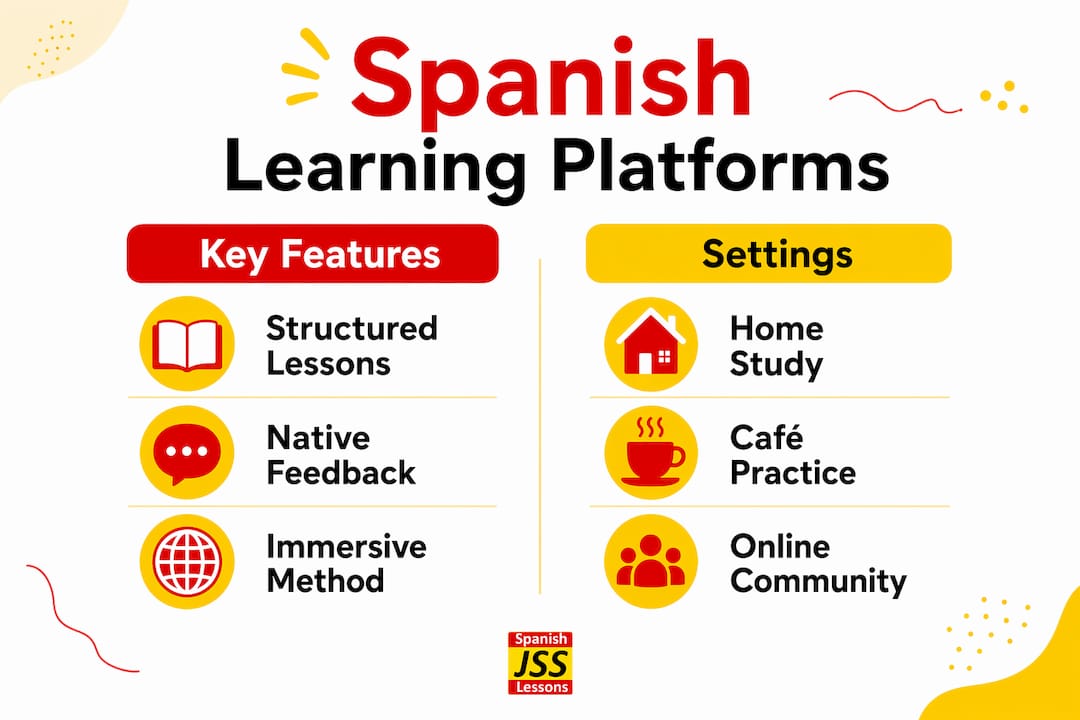
So what does “on-demand” actually mean when we talk about learning Spanish? In plain terms, it means you access your lessons whenever you choose, from wherever you happen to be, using a phone, tablet, or laptop. There is no timetable to follow and no class to catch up with if life gets in the way.

Digital resources for learners cover a wide range of formats. These include apps like Duolingo or Babbel, YouTube channels run by native speakers, subscription platforms with structured courses, and specialist schools offering pre-recorded lesson libraries. The common thread is flexibility. However you need to choose the course you do very carefully. 

What separates on-demand learning from casual YouTube browsing is purpose. Good on-demand resources are built around practical, everyday Spanish. Think ordering food at a local bar, greeting a tradesman at your door, asking a pharmacist for advice, or understanding what the council letter actually says. This is the kind of Spanish that matters in real life, not the kind that helps you pass an academic exam.

“On-demand Spanish learning puts practical, everyday conversation at the centre, not grammar drills or test preparation.”

If you want a Spanish course like no other that is built entirely around this philosophy, you will find that the best options strip away unnecessary complexity and focus on what you genuinely need to say.

  • Access lessons 24 hours a day, 7 days a week
  • Learn on any device, at home or abroad
  • Revisit difficult topics as many times as you need
  • Focus on real conversations, not academic exercises
  • Progress at your own pace without pressure

How on-demand Spanish learning works

With a clear definition in place, it helps to understand the mechanics. On-demand digital resources use a combination of pre-recorded video or audio lessons, interactive exercises, and progress tracking to keep you moving forward steadily.

Most platforms include features such as quizzes after each lesson, voice recognition tools that check your pronunciation, and spaced repetition systems that bring back vocabulary at the right moment before you forget it. Some include chatbot conversations that simulate real exchanges. Others, like James Spanish School, use dedicated pronunciation assessment and memory tools such as WordAmigo, which contain all these feature, alongside carefully structured lesson sequences.

Here is a straightforward way to get started with any on-demand resource:

  1. Choose your platform based on your goals, budget, and preferred learning style.
  2. Set a specific goal, such as holding a five-minute conversation with a neighbour within three months.
  3. Block out regular time in your week, even if it is just twenty minutes on a Tuesday morning.
  4. Complete the introductory lessons without skipping, even if some feel easy at first.
  5. Use the review features to revisit anything that does not stick immediately.
  6. Track your progress using the platform’s built-in tools or a simple notebook.
Feature What it does Why it helps
Spaced repetition Revisits vocabulary at timed intervals Locks words into long-term memory
Voice recognition Analyses your spoken Spanish Improves pronunciation accuracy
Progress tracking Shows lessons completed and scores Keeps motivation high
Offline access Downloads lessons for use without Wi-Fi Lets you learn anywhere
Lesson replay Unlimited replays of any lesson Removes pressure to get it right first time

Pro Tip: Set a recurring reminder on your phone for your chosen learning slot. Consistency beats intensity every time. Twenty minutes daily will outperform a two-hour session once a fortnight.

Exploring conversational Spanish methods that are built around real dialogue rather than grammar tables will make those daily sessions feel far more rewarding.

Comparing on-demand and traditional Spanish learning

Understanding how on-demand platforms work makes it easier to weigh them against the traditional alternatives. Both approaches have genuine strengths, and knowing the difference helps you choose wisely.

Self-paced on-demand learning removes the fixed schedule entirely, which is the single biggest barrier for most working adults. Traditional night classes or private tutors require you to show up at a set time, every week, regardless of what else is happening in your life.

Man using Spanish app on sofa

Factor On-demand learning Traditional classes
Schedule Fully flexible, any time Fixed weekly slots
Location Anywhere with a device Classroom or tutor’s location
Pace Entirely your own Set by the teacher or group
Accent exposure Multiple accents and dialects Usually one teacher’s accent
Accountability Self-directed External pressure from teacher
Cost Often lower, one-off fee Ongoing weekly cost
Personalisation High, choose your own path Limited by group needs

Advantages of on-demand learning:

  • Learn at 6am, midnight, or during a lunch break
  • Exposure to a wide range of regional Spanish accents
  • Repeat any lesson without embarrassment
  • Pay once and access content indefinitely
  • Tailor your focus to the situations you actually face

Challenges to be aware of:

  • Requires self-discipline without external deadlines
  • No live conversation partner built in, but AI assessment.
  • Quality varies enormously between platforms
  • Easy to stall if motivation dips

The key insight is that on-demand learning rewards people who are motivated by real goals. If you want to speak Spanish because you live in Spain, visit regularly, or work with Spanish speakers, that practical motivation is usually enough to keep you going.

Real-life advantages: practical skills and cultural insights

This is where on-demand learning genuinely earns its place. Practical, everyday skills are the whole point, and the best on-demand courses are built around the situations you will actually encounter.

Infographic comparing on-demand and traditional Spanish learning

Imagine arriving at a Spanish market and being able to ask the stallholder about the cheese, understand the answer, and respond naturally. Or picture calling your local council office and following what the person on the other end is saying without panicking. These are not fantasy scenarios. They are exactly what focused on-demand learning prepares you for.

Cultural knowledge matters just as much as vocabulary. Spanish communication has its own rhythms and customs. People greet each other differently depending on the region. Builders stop for a mid-morning snack that is almost sacred. Queuing works differently in a Spanish bank than it does in a British post office. Understanding these nuances stops you from accidentally causing offence or simply looking confused.

Good on-demand resources weave this cultural context into the lessons themselves, using audio clips of native speakers, short video stories, and real-life scenarios rather than invented textbook dialogues.

  • Ordering food and drink confidently at a bar or restaurant
  • Asking for directions and understanding the reply
  • Speaking to health workers, pharmacists, and receptionists
  • Handling tradesmen and understanding quotes
  • Chatting with neighbours about everyday topics
  • Understanding humour, idioms, and informal expressions

Pro Tip: Prioritise resources that use recordings of real native speakers rather than computer-generated voices. The difference in natural rhythm and pronunciation is enormous, and your ear will thank you for it later.

Getting started with on-demand Spanish learning

If you are ready to begin, the process is simpler than most people expect. On-demand resources are designed to welcome complete beginners, so there is no prior knowledge required.

  1. Pick your platform by reading user reviews and checking whether the content focuses on practical conversation rather than grammar theory.
  2. Define your goal clearly, for example: “I want to order food and ask for directions confidently within six weeks.”
  3. Create a realistic schedule that fits your actual life. Three sessions of twenty minutes per week is far better than an ambitious plan you abandon after a fortnight.
  4. Join an online community of fellow learners, whether a Facebook group, a forum, or a course community. Shared progress keeps motivation alive.
  5. Review what you have learned at the end of each week, even briefly. This cements new vocabulary and highlights gaps.

When choosing a resource, look for these qualities:

  • Practical content focused on real conversations, not grammar tables
  • Positive user reviews from people with similar goals to yours
  • Clear support if you get stuck or have questions
  • Transparent pricing with no hidden renewal fees
  • Flexibility to learn at your own pace without expiry dates

Common pitfalls to avoid:

  • Signing up for three platforms at once and spreading yourself too thin
  • Setting unrealistic goals like “fluent in a month”
  • Skipping the speaking and listening practice in favour of reading only
  • Stopping after the first difficult lesson instead of replaying it

For a broader look at what is available, the best language learning apps guide from PCMag offers a useful starting point for comparing options across different budgets and learning styles.

Explore innovative Spanish courses

If everything above resonates with you, James Spanish School was built with exactly this kind of learner in mind. James Bretherton has lived in Spain for 40 years and speaks Spanish as a dual native. His A Spanish course like no other uses Radical Simplification to strip out confusing grammar jargon and replace it with plain English explanations that actually make sense.

https://jamesspanishschool.com

The 100-lesson course covers both sentence-building and ear-tuning, so you can follow fast spoken Spanish as well as produce it. Everything is available on demand, 24/7, with no expiry date and no countdown clock. You also get WordAmigo for pronunciation support and genuine cultural insider knowledge woven throughout. If a core lesson does not teach you something new, James will credit you with extra practice modules at no cost. That is a promise worth taking seriously.

Frequently asked questions

What makes on-demand Spanish learning different from night classes?

On-demand learning lets you study at any hour and from any location, without the fixed weekly timetable or classroom setting that night classes require. Self-paced digital resources mean your schedule, not the teacher’s, dictates when you learn.

Can I achieve conversational Spanish only with on-demand resources?

Yes, many on-demand platforms focus specifically on practical conversation and include interactive features that build real-life speaking and listening skills. The key is choosing a resource that prioritises everyday practical skills over academic grammar.

Are on-demand Spanish courses suitable for complete beginners?

Absolutely. Most platforms are designed to guide true beginners from the very first word, with clear introductions and the ability to replay lessons as often as needed. Starting at any time is one of the core advantages of this format.

What technology do I need for on-demand Spanish learning?

All you need is a smartphone, tablet, or computer with a reliable internet connection. Digital learning tools are designed to work across all common devices without any specialist software or equipment.


Please ask questions
from Lesson pages